
Pantheism
Why a blog article about Pantheism? I have long been searching for an explanation, or if you wish, a belief system, that – to me – made sense about existence. I was raised a Christian, but left the church community when I became a young adult. I did no longer believe in a ‘creator-deity’ (‘God’ as entity) and the church community felt too dogmatic for me. In the years following I ‘researched’ various religious and esoteric philosophies and believe systems, not finding what I was looking for, until I came across Pantheism … and that made sense to me!
WHAT IS PANTHEISM?
Pantheism derives from the Greek word πᾶν pan (meaning “all, of everything”) and θεός theos (meaning “god, divine”). Simply said: ‘All = God’ or ‘everything = divine.).
Pantheism is thus the philosophical and religious belief that reality, the universe, and nature are identical to divinity or a supreme entity.
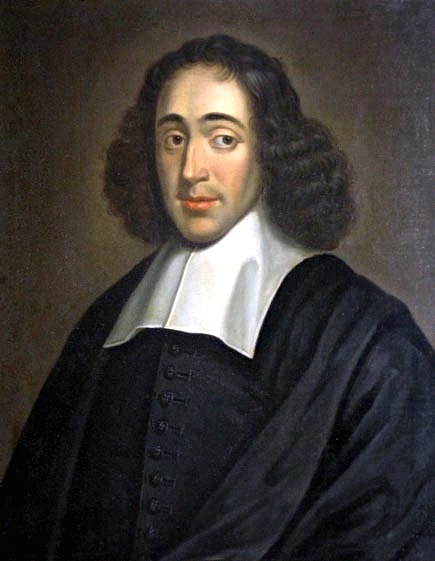
The term Pantheism was coined by John Toland to describe the philosophy of Spinoza. Since ‘Spinozism‘ predates the concept of Pantheism entirely, it is more a predecessor to pantheism than a variant.
In case you wonder, why do you consider yourself a Pantheist and not a ‘Spinozist’ then? Well, Spinoza’s philosophies and ideas go much further and are much broader in topic (involving religion, politics, et cetera) then ‘just’ his philosophical ideas that birthed Pantheism. It is only that particular philosophical idea I like writing this blog about, and will leave the rest of his work to the real Spinozists.
Dualist Pantheism is “the belief that there are two major types of substance, physical and mental/spiritual.”
Now, if we are talking about two separate, distinct, independent substances, the mind-body-problem might be considered an issue: “The mind–body problem is a philosophical problem concerning the relationship between thought and consciousness in the human mind and body. This problem arises because mental phenomena appear to be qualitatively and substantially different from the physical bodies on which they appear to depend.”
Metaphysics offers various ‘solutions’ to this problem, Physicalism (the view mental/spiritual substance doesn’t exist, all is physical) being one of them, Functionalism another. Mentalism, the opposite of Physicalism, could be an approach,: “The All is Mind; The Universe is Mental (not physical)”, according to the Principe of Mentalism (←article on Roel’s World), as described in The Kybalion. The latter is an intriguing thought, in particular for a person like me, often ‘residing’ in my ‘headspace’ (mind).
BUT … why would Dualism be an issue in the first place? Most people with a deeper interest into spirituality, religion and esoterica, would not see the problem that Metaphysics have. Why chose for ‘disintegrative (either/or) thinking’ (splitting)? To me life, the world, existence isn’t just black or white. That disintegrative thinking feels too ‘limiting’ to me. I do feel ‘Integrative (both/and) thinking’ gives existence so much more layers, much more depth, more meaning, due to the various shades of grey in between ‘black and white’ (dualism / duality / polarity).
Let’s set the ‘mind-body problem’ aside for now, it’s primarily a ‘problem’ Metaphysics has, I have no intention (nor the knowledge required) to fix their problem.
DUALISM
Dualism is a philosophical or theological view that reality is composed of two distinct and opposing aspects, such as mind and body, good and evil, or physical and mental properties, conscious and subconscious, Yin-Yang, Sun-Moon, male-female, the checkered floor, Square & Compasses, 2 columns, et cetera… all symbols of dualism.
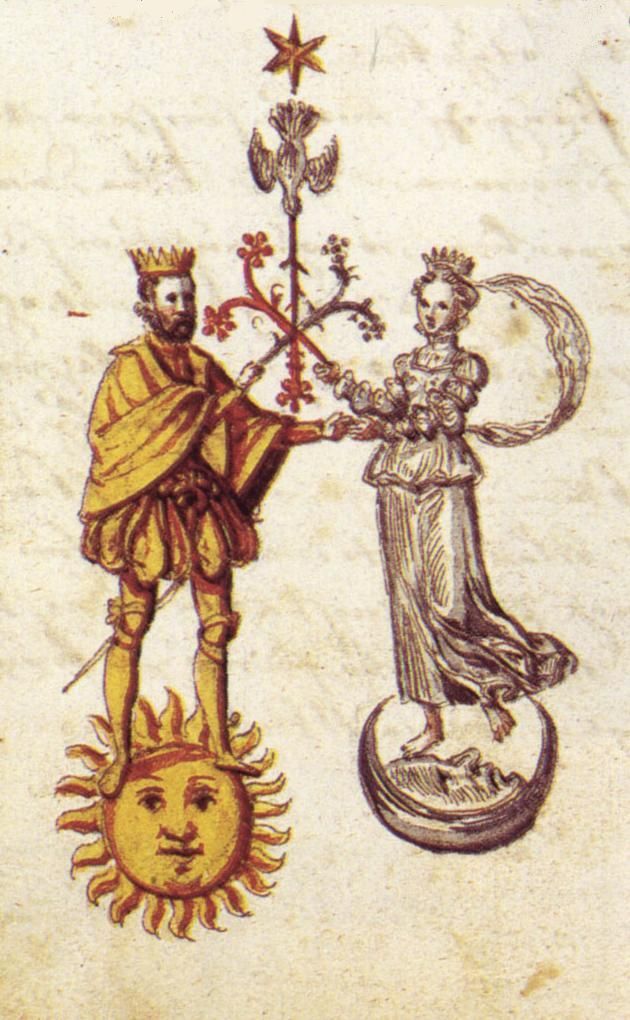
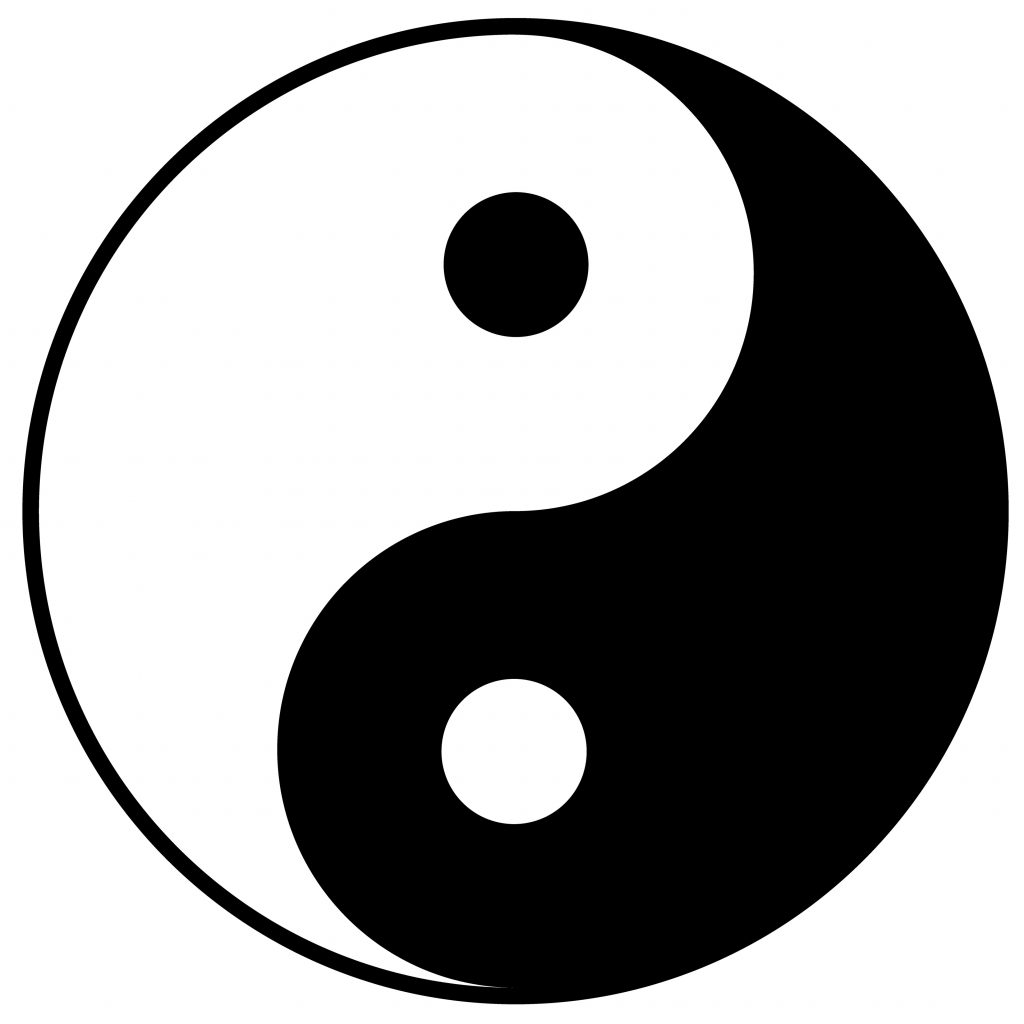
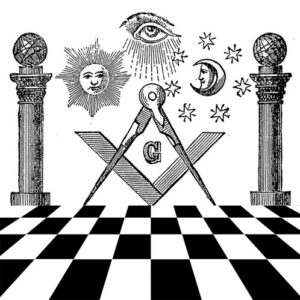
In the philosophy of mind, dualism is the theory that the mental and the physical – or mind and body or mind and brain – are, in some sense, radically different kinds of things. In religion, dualism means the belief in two supreme opposed powers or gods, or sets of divine or demonic beings, that caused the world to exist.
The Principe of Polarity (The Kybalion) states that opposites are various degrees of the same essence, teaching balance and transformation.
Plato argued that, as the body is from the material world, the soul is from the world of ideas and is thus immortal. He believed the soul was temporarily united with the body and would only be separated at death, when it would return to the world of Forms. Since the soul does not exist in time and space, as the body does, it can access universal truths.
ONENESS IN SUBSTANCE – DUALITY THROUGH ITS MODIFICATIONS (MODES)
Even though dualism is called ‘philosophical’ or ‘theological’ and thus might sound like a ‘man-made concept’, dualism is as old as existence. And with that I don’t mean just human existence, but that of the universe. Dualistic phenomena are part of nature as well.
Someone who was much aware of that, was the earlier mentioned Baruch Spinoza with his philosophical predecessor of Pantheism. Spinoza argues that only one substance is absolutely infinite, self-caused, and eternal. He calls this substance “God”, or “Nature”. He takes these two terms to be synonymous (in the Latin the phrase he uses is “Deus sive Natura”).
According to Spinoza’s metaphysics the whole of the natural universe consists of one substance (God or Nature, what’s in a name, right?), and its modifications (modes).
Even though Dualist Pantheism holds there are two major type of substance, physical and mental/spirit, I consider these two types different manifestations (‘modes’ as Spinoza called them) of the same “substance”.
Parmenides, that lived much earlier then Spinoza, also described the ‘unity of nature’ (that what Spinoza would call substance) and it’s variety (what Spinoza would call ‘manifestations’ or ‘modes’):
In the Way of Truth (a latter section of the poem ‘On Nature‘), Greek Philosopher Parmenides (c.506 BC) distinguishes between the unity of nature and its variety, insisting in the Way of Truth upon the reality of its unity, which is therefore the object of knowledge, and upon the unreality of its variety, which is therefore the object, not of knowledge, but of opinion.
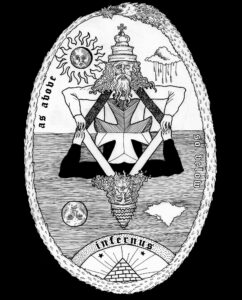
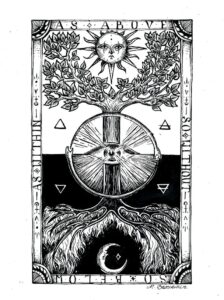
‘As Above, So Below‘ is a well know paraphrase, the 2nd verse from the Emerald Tablet (and cryptic Hermetic text, attributed to Hermes Trismegistus), that also symbolises a duality in oneness. German alchemist, physician and philosopher Paracelsus (c. 1493) wrote:
“Nature being the Universe, is one, and its origin can only be one eternal Unity. It is an organism in which all natural things harmonise and sympathise with each other. It is the Macrocosm. Everything is the product of one universal creative effort; the Macrocosm and man (the Microcosm) are one. They are one constellation, one influence, one breath, one harmony, one time, one metal, one fruit.” — Paracelsus (‘Philosophia ad Athenienses’)
The Stoics (Ancient Greeks), had their Sympatheia (The Concept of Universal Connection), which they described as a cosmic interconnection shared among all past, present and future life forms.
“Meditate often on the interconnectedness and mutual interdependence of all things in the universe […] all things are mutually woven together and therefore have an affinity for each other.” — Marcus Aurelius
They were not alone in believing that everything is connected …
“As a net is made up of a series of ties, so everything in this world is connected by a series of ties. If anyone thinks that the mesh of a net is an independent, isolated thing, he is mistaken. It is called a net because it is made up of a series of interconnected meshes, and each mesh has its place and responsibility in relation to other meshes.” — Gautama Buddha
“The Tao is beyond words, names and description, beyond form and non form, but yet is present in all things, all things are Tao.” The Tao also describes that existence and non-existence are both present simultaneously, but at different levels of awareness or consciousness.
Thus: Existence and non-existence are dualistic ‘modes‘, of the Tao (‘substance‘), present in all things.
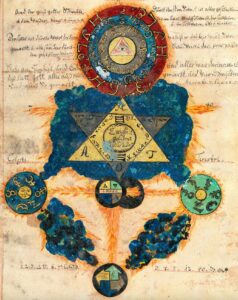
The Rosicrucians describe that the heavens and the earth were created out of the “ever-existing essence,” the Cosmic Root-substance called “Epigenesis” set in motion. “Out of the ever-existing essence (of space) the twofold energy formed the double heaven.”
Thus: Dualistic ‘modes‘ (twofold energy), forming a dualistic (double) heaven, all made of the one Cosmic Root-substance Epigenesis. ‘The Rosicrucian Cosmo-Conception‘ is though way more complex then the ‘double heaven’ mentioned above (with 7 Worlds with each 7 regions), but that is way too complicated to describe and explain in this article.
THE DUALISTIC VIBRATORY NATURE OF LIGHT AND SOUND
Light and sound (topics I have written a lot about before) can be described, both, as waves as well as in frequencies. The way we experience (register) light and sound are very different (sensory perception), as is their effect on the world around the person that perceives it.
Here Spinozism (2-types of substances) and the Kybalion with ‘The Principe of Vibration‘ (that states that all matter and energy is in perpetual motion) come together:
Light (mental/spirit) and sound (physical) can be seen as the different modes, from the one substance ‘vibration’. They are the ‘expressions’ of the vibratory nature of the One Universe.
“Everything in Life is Vibration” — Albert Einstein
MONISM
But, what if everything isn’t dualistic but would be of just one substance?
Something is monistic if it presupposes unity of the origin of all things; all existing things return to a source that is distinct from them. This requires not only unity of origin but also unity of substance and essence.

Neoplatonists stated that ‘the One’ (Monad) is the source of everything, beyond description or duality. Everything emanates from this singular existence, forming an interconnected reality.
Naturalistic pantheism, also known as scientific pantheism, is a form of pantheism, where ‘God’ is seen as the aggregate of all unified natural phenomena. Natural pantheists believe that God is the entirety of the universe and that God speaks through the scientific process.
With this interpretation of Pantheism there is no duality in substances (as with Dualist Pantheism), no distinction made between physical and mental/spiritual. Naturally, without dualism, the ‘mind-body problem’ is no issue here.
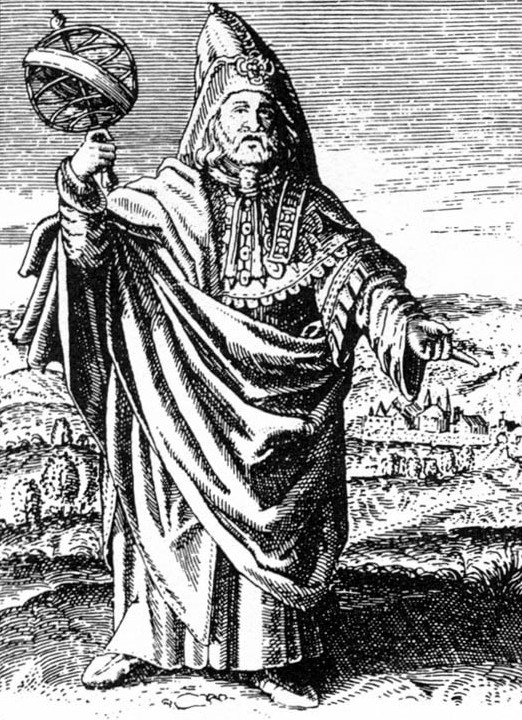
In chapter VII of The Kybalion (a Study of the Hermetic Philosophy of Ancient Egypt and Greece) is written:
“While ALL is in ‘THE ALL’, it is equally true that ‘THE ALL’ is in ALL.
To him who truly understands this truth hath come great knowledge.“
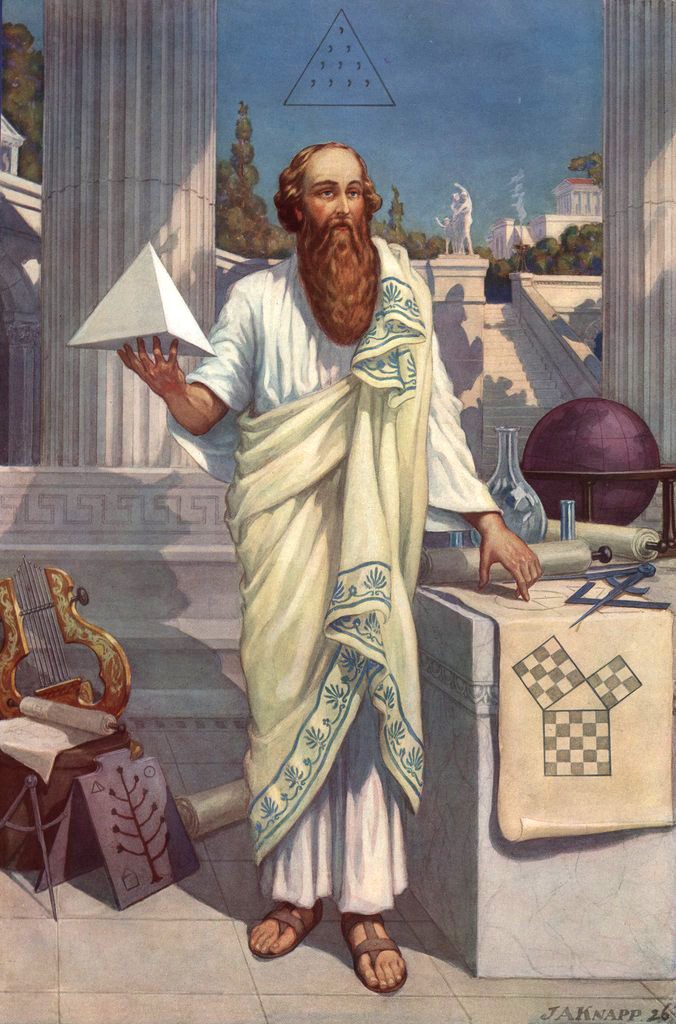
Following Maimonides, Spinoza defined substance as “that which is in itself and is conceived through itself“.
The Ein Sof in the Kabbalah (Jewish Mysticism) is the infinite, unknowable essence beyond any personal god. Everything in existence is seen as an emanation from this unity.
Schools like Zen Buddhism and Dzogchen emphasize that all things arise from the same fundamental emptiness (Śūnyatā) and are interconnected.
The Zen Buddhism / Dzogchen example above I find a bit tricky. Only if one would consider that ’emptiness’ and ‘fullness’ would be different ‘modes’ of the same substance (existence), one could consider this to be expressions of “Oneness”, as the examples mentioned above.
But, could “NOTHING” (emptiness) be the same as (The) “ALL”?
Tathātā (“suchness” or “thusness”) in Mahayana Buddhism describes the nature of reality free from conceptual elaborations and the subject–object distinction.
If there there is no conceptual elaborations and no distinctions between any and all subjects and objects, then I presume all is ‘from the same’, thus “All is One”?
ALMOST, BUT ‘NO DICE’
In some interpretations of Sufi Mysticism (Islamic Tradition), there is spoken about ‘Wahdat al-Wujud‘ (Unity of Being) “all existence being a manifestation of the divine, all things being one in divine reality“.
This might seem similar to all written above it, but unfortunately it is not. The Islamic Sufism teaches that ‘Allah Most High exists independently through Himself, none of His creation share in His existence‘. With other words, his creation the ‘all things being one” exclude Allah. The philosophies and religions above it did not differentiate between ‘the source of creation’ and ‘creation itself’. That thus separates Islamic Sufism from those before.
BUT WHAT ABOUT ‘GOD’?
Pantheism: ‘God’ is both the universe (immanent, physical) and beyond it (transcendent, mental/spiritual). Pantheism can reinterpret the idea of a “Supreme Being” (God) as the totality of existence rather than a personal deity.
Spinozism: Early in ‘Ethica‘ (Ethics) Spinoza’s metaphysics consists of one thing, substance, an absolutely infinite, self-caused, and eternal, and its modifications (modes). For Spinoza, the whole of the natural universe consists of one substance, and its modifications (modes). He calls that substance “God”, or “Nature” (the inherent character or constitution, particularly of the ecosphere or the universe as a whole). He takes these two terms to be synonymous (in the Latin the phrase he uses is “Deus sive Natura”).
To me ‘God’ is not an entity or deity. To me ‘God’ is a synonym of THE ALL (manifested as mental/spirit, a ‘creative’ force of nature), as well as the ALL (manifested as physical substance).
THE ALL & the ALL, ‘The Ein Sof’, the Śūnyatā, Tathātā, the Tao, Spinoza’s ‘substance’ … et cetera, with other words, ‘God’ is in everything and everything is in ‘God’.
To me this also means that we as human beings we are within ‘God’ but simultaneously have ‘God’ within’ and due to that are ‘co-creators’ of the ALL. See it as the creative ‘force’ outside and the creative ‘spark’ (divine spark) inside. As Above, So Below.
INTERCONNECTIVITY
The consequence – if everything is one, if everything is connected – is that we have to treat everything (our fellow men, nature, the world) with the utmost respect. After all, we are part of it and it is part of us. Sadly a substantial part of mankind has lost its connection with Nature, with the ALL, and because of that lack of connection and awareness mankind is destroying the world and with it itself.
“Sympatheia is a central concept in Stoic philosophy, referring to the idea of a universal connection between all things in the cosmos. This concept has important implications for Stoic ethics and physics, emphasizing the importance of living in harmony with the universal order and recognizing our interdependence.” — (source: stoicmentality.com)
“The World Pantheist Movement (WPM) promotes scientific pantheism, a nature-centred and naturalistic alternative to dogmatic supernatural religions. It is a form of spirituality strongly focused on Earth, love and care for Nature, human and animal rights.”
Sources
- Wikipedia (various pages)
- stoicmentality.com
- Various notes from various lectures.
