Blog » 432Hz Saxophone Redesign Lobby

Reading Time: 5 minutes October 14, 2014

432HZ SAXOPHONE REDESIGN LOBBY

I started this 432Hz Saxophone Redesign Lobby in December 2011, without much success. All companies I wrote e-mails and letters to did not seem to be interested. But In December 2014 – 3 years later – the 432Hz Sax was a fact, thanks to Enrico Marchioro and Borgani Saxophones.

► Read more about it in my blog article “Borgani 432 Sax“.

► Skip the introduction about this lobby and read more about “alternative solutions” for playing saxophone “in 432”.

WHY A “LOBBY” FOR REDESIGNING A SAXOPHONE FOR CONCERT PITCH A4=432HZ?

The Saxophone is an instrument with relatively limited tuning capabilities. The pitch of a saxophone can only be adjusted a little “mechanically” by pulling out or pushing in the mouthpiece. Yes, a saxophonist can use his/her embouchure and use alternate fingering to make intonation changes, but the instrument itself should be overall in tune to start with. 

A saxophone can not be pitched by adding extensions (unlike instruments with a cylindrical bore like Flute or Clarinet). The tone-holes have been placed in exact relationship with the length of the instrument and the change in diameter of the conical bore. If one would only extend the instrument, the position of the tone-holes would no longer be correct and there for result in some tones being out of tune.

In order to be able to play in tune with Concert Pitch A4=432Hz without limiting it’s playability the sax needs to be “redesigned”.

This “lobby” does not intend to replace the existing saxophones used. Instruments are often too much part of who we have become as artist and human being to set them aside. But we like to create the option for sax players to play in 432Hz when possible and desired. To add “new members” to the “saxophone-family”.

ADDITIONAL INFORMATION ABOUT THE SAXOPHONE AND THE CHANGE OF CONCERT PITCH

Most saxophones stay reasonably in tune when the pitch difference is small, +/- 2Hz higher or lower then the concert pitch instrument was designed for. So, a saxophone designed for the standard 440Hz concert pitch, would still sound reasonable when using by example concert pitch 442Hz or 438Hz.

Larger changes in concert pitch though, would cause an intonation difference between the registers that would be too large to correct with the embouchure alone, specially with uptempo music.

Mr. Fletcher James (Schiller Institute) mentioned about saxophones and pitch change (440Hz – 435/432Hz): 

  • There are 20-23 keys and keyholes to be adjusted, and there are all sorts of inter-linked mechanisms which would need to be re-sized. Existing jigs for manufacturing (which are essential for inexpensive mass production of metal parts) could not be used at all.
  • Because of the length of the scale, just pulling out the headjoint will affect the highest note 4 times as much as the lowest.
  • Because of the length of the scale, any attempt to just insert a little space at a couple of points in the instrument would probably end up causing a lot of tuning issues. 

PITCH STANDARDS BRASS & WOODWINDS

There are at present time two different concert pitch standards used for Brass and Wood-Wind instruments. These are the so called “Low Pitch” (LP = 440/442Hz) and “High Pitch” (HP = 456/457Hz). The High Pitch instruments are/were designed and build for American Brass bands and some Military Orchestras. Their sound is sharper / louder then the sound of the Low Pitch instruments in order to not be “overtaken” (sound/volume wise) by larges numbers of noisy people, street noise and battle noise. Most Brass and Wood-Winds (like Saxophones) are engraved with “LP” or “HP” to clarify the concert pitch the instrument was build for.

There use to be another pitch standard used in France only, the so called Diapason Normal with A4=435Hz. Till WWII such instruments were made in Europe (mainly in France, Belgium and Germany). There are also brass & woodwind instruments available at A4=394Hz and 410Hz, specially designed for particular classical music genres such as Baroque and there are some old historical wind instruments in museums that use A4=425Hz to A4=430.5Hz. These are rare instruments though and do not represent an international pitch “standard”.

ALTERNATIVE SOLUTIONS

Besides the option of having a 432-Sax build by Borgani, are there perhaps other solutions? The answer is yes, there are 3 alternative approaches of playing Saxophone in 432Hz.

1. USING HIGH PITCH (HP) INSTRUMENTS
Alan Gen, a member of the Sax On The Web forum, made a suggestion that could solve the issue of 432Hz and saxophones. He suggested using a HP (High Pitch) instrument (in various sources set as A4 = 456Hz / 457Hz) and transposing a semitone down. It might sound like a contradiction to “raise the pitch” in order to “drop it” but in practice it ain’t.

When lower A4=456Hz with a equal tempered semitone (-100 cents), you will end up with A4=430.4Hz. When lower A4=457Hz with a equal tempered semitone (-100 cents), you will end up with A4=431.4Hz. In both cases close to 432Hz. With other words, a HP instrument is pretty much “in tune” with A4=432Hz and can be perfectly in tune by pushing the mouthpiece in a tiny bit more the usually. The only thing one should do, is instead of providing sheet music for Bb (Soprano & Tenor) and Eb (Alto & Baritone) saxophones, is now to provide sheets written a semitone lower then normally for the saxophone is done.

2. USING INSTRUMENTS DESIGNED FOR THE “DIAPASON NORMAL”
Using a vintage sax made for the old French standard (Diapason Normal) of A4=435Hz would put you on a 3Hz difference. This would still require you to “pull out” your mouthpiece more then usual and might mean you have to make some additional intonation “corrections” with alternative fingering and/or embouchure, but is very well possible. More info in my blog article Vintage 435Hz Saxophones.

3. USING ALTERNATE FINGERING
With woodwind instruments like the saxophone it is possible to generate tones outside the normal 12-tone range of the instrument by using “alternate fingerings”. Examples of this are the 24-tone scale by Tony Hicks and the 128-tone scale by Philipp Gerschlauer. Some of the tones generated in 440Hz with the alternate fingerings in the 128-tone scale come pretty close to the tones of the 432Hz scale.

The exact fingerings used might differ with the instrument brand and model used and it will take you a lot of time to master those additional fingerings. It would be an interesting option to explore, because you would not need to purchase a different instrument. It is though very time-consuming if you wish to master your instrument this way.

WHAT’S NEXT?

At present time saxophone manufacturer Borgani is the only company who has produced a 432 Saxophone. This is a great step forward for those musicians, composers and music lovers that wish to play, compose for or listen to live saxophone using Concert Pitch A4=432Hz. Read more about it in my blog article “Borgani 432 Sax“.

The Borgani saxophones are handmade professional instruments. They are worth the investment if you are a pro, but for hobby saxophonists and beginners these great horns might be too costly.

The willingness for other manufacturers to (re)design saxophones for concert pitch A4=432Hz as well might increase if the number of saxophones requested to be build increase first. So, if you are a sax player, or know a sax player that would like to be able to perform tuned to 432 Hz, then feel free to join the 432Hz Saxophone Redesign Lobby group on Facebook so we can share thoughts  and ideas about it and stay “up-to-date” on the developments. 


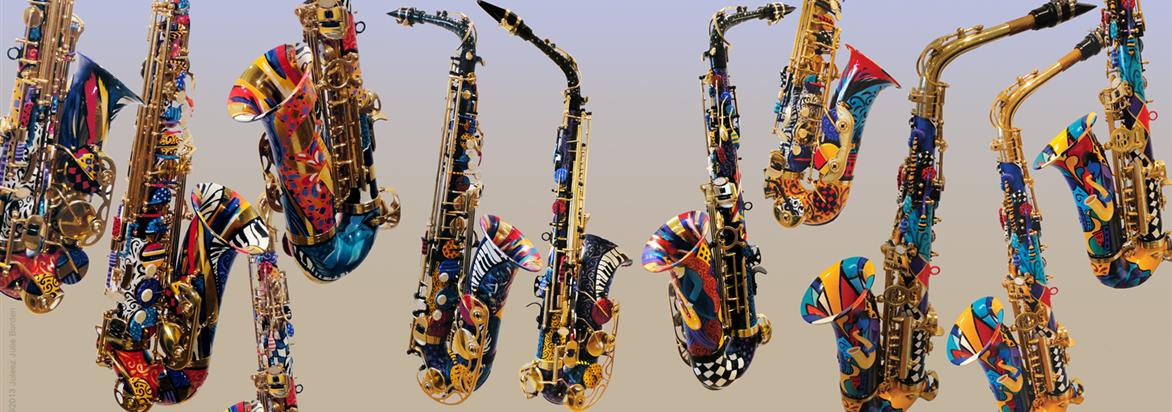
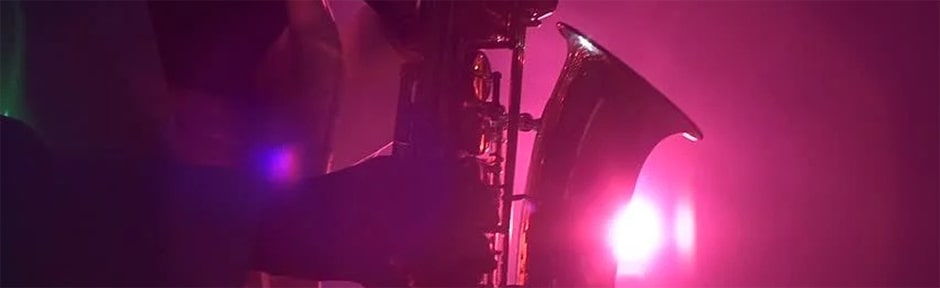
KUDOS: the background image used for the banner of this article was made by Ian Monk.

Creative Commons License

Blog » Vintage 435Hz (“Diapason Normal”) Saxophones

Reading Time: 3 minutesMay 23, 2014

VINTAGE 435HZ SAXOPHONES

GATHERED INFORMATION ABOUT (POSSIBLE) 435Hz SAXOPHONES.

This article contains info about vintage saxophones that might have been designed for Concert Pitch A4=435Hz, the so called “Diapason Normal”, the national concert pitch used in France between 1859 and WWII.

I became interested in those vintage horns during my search for a solution for performing with saxophone using Concert Pitch A4=432Hz. The difference between 435Hz and 432Hz is only 3Hz, with some practice (and getting acquainted with the instrument) intonation corrections with the embouchure would be manageable. 

At present time there is one saxophone manufacturer, Borgani, that has made the first 432Hz saxophone in December 2014. Read more about that in this article.

More information about 432Hz as Concert Pitch can be found here.


BUFFET, EARLY BUFFET-CRAMPON
  • Series I: 1866 to 1870; s/n 0 thru 792 (“Buffet”).
  • Series II: 1871 to 1887; s/n 793 thru 7xxx (“Buffet-Crampon, Cie.”).
  • 1887 to 1927; s/n 7xxx thru 29424 (“Evette-Schaeffer System”).

— Quote —“A Note On Pitch

France had several different pitch standards in the 19th century. When Buffet’s first sax was introduced, it was probably a A=435hz horn, which was the French standard of the time. By 1914, the new international standard pitch of A=440hz (“low pitch”) was introduced. Buffets around this time are stamped “LP” or “HP” — “HP” being “high pitch”: an American standard where A=457hz.

So, if you find one of these older horns, look for the “LP” stamp near the “Evette & Schaeffer” engraving. If you don’t see it, the horn might be fun to have as a collectible or if you do solo work (or work with electronic instruments), but not as a performance horn with modern ensembles.

— End Quote —

Side note: We could conclude that a vintage Buffer/Buffet-Crampon from before 1914 “might be” in concert pitch A4=435Hz IF the sax is WITHOUT the “LP” (low pitch) stamp engraved on the horn!

Source: http://www.saxpics.com/


EVETTE-SCHAEFFER SYSTEM

— Quote —

Low B models. These models, functionally and visually identical to earlier horns, were available (probably) as the low-cost or “introductory” line. Couesnon, Sax and other French-manufacturers also sold their low B horns as low-cost models … these horns may have been A=435hz horns (French standard pitch) and discontinued “around” 1914 when the A=440hz (low pitch) international standard was introduced.”

— End Quote —  

Source: http://www.saxpics.com/


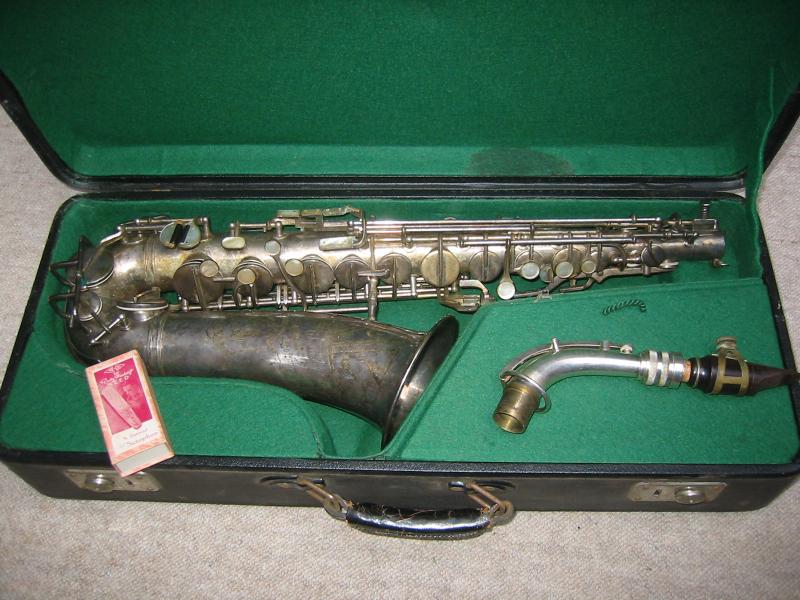
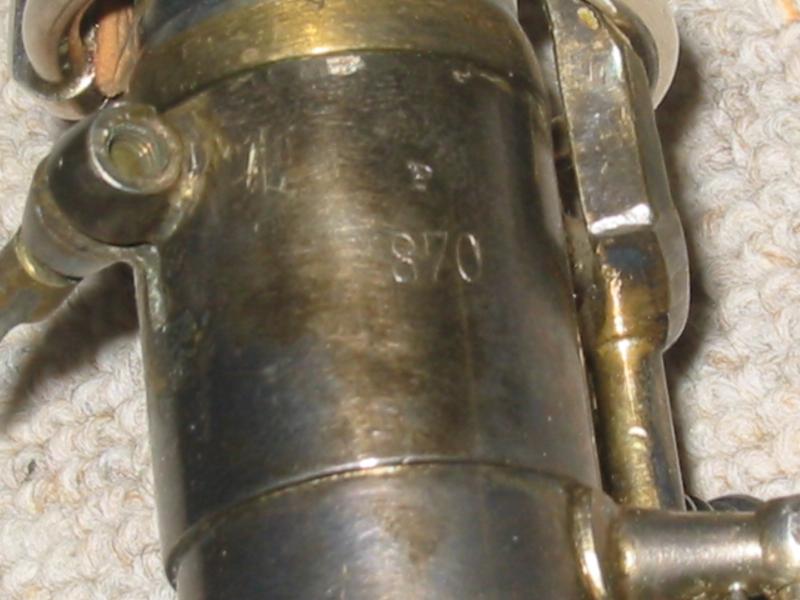
G.H. Hüller “870” SAXOPHONES
G.H. Hüller "870" 870

— Quote E. Weller — 

Bei der Angabe “870” … die bis 1939 übliche Normalstimmung von 435 Hz (= “Doppelschwingungen”, daher 870 einfache Schwingungen).”

— End Quote —

Translation:

With the specification “870” … until 1939 the usual standard tuning of 435 Hz (= “double vibration”, therefore 870 simple oscillations).”

Source: http://www.museum-markneukirchen.de

— Quote —

At A=435 the intonation on mine was really excellent. With the tuner set to A=440 it was still definitely good for a vintage sax, but it took some effort to keep the bottom end from being flat. To be honest, I think I’d have got used to it fairly soon: mouthpieces with smaller chambers helped. Serial number was 362XX, with 870 on the crook tenon receiver. This is the pitch: an octave above concert A at 435Hz (“Diapason normale”, a French standard used until 1939.) Some of the Hullers are marked 880 (i.e. an octave above A=440).”

— End Quote —

Source: “sax-ony “, (Distinguished SOTW Member/ Forum Contributor 2010), http://www.saxontheweb.net/.

… and …

— Quote —

I have wondered what is the meaning of the number “870” found on the receiver of every Huller saxophone that I’ve ever seen or seen pics of. Recently, I was reading something that seems to explain it. 

I read that 870 is the Paris standard pitch: A=435 (870/2). The Paris standard dates from 1859 and apparently is the only official standard…whatever that means.”

— End Quote —

Source: “xax“, (Distinguished SOTW Member), http://www.saxontheweb.net/.


Creative Commons License

Blog » 24-Tone Scale on Saxophone

Reading Time: 2 minutesFebruary 28, 2014

24-TONE SCALE ON SAXOPHONE (by Tony Hicks)

Tony Hicks demonstrates the 24 tone scale and plays a free improvisation demonstrating the use of this extended tonality in the video below. When I saw it, I knew it was something special.

My journey along the path to abstraction began four years ago when two unconventional professional collaborations, Crossing Roper Bar and Heretics Brew, challenged me to look beyond the conventional contemporary jazz vernacular in search of more contextually appropriate improvisation vocabularies. A range of atonal, microtonal and extended techniques began to emerge that expanded my musical conceptions and woodwind facility. Later, within the abstract electronic sound environment of the Expose Project, conventional musical vocabularies were deconstructed and instruments came to be viewed as generators of sound and texture rather than melody. I discuss amplification and recording techniques that facilitated the integration of a range of extraneous mechanical noises and sound field manipulations into the work. Instrument selection within the project is examined in relation to the evolution of these new vocabularies, and further insights gained through a deeper examination of evolving abstract expressions on the three instruments most commonly played in the project. Audio recordings illustrate this developmental process.

From Tony Hicks’ Masters Research thesis: “The path to abstraction: a practice led investigation into the emergence of an abstract improvisation language.

For most saxophone players a 24-tone scale might be of no use. But if you want to play Arab influenced music using the Arab Tone System, then the saxophone would normally be “too limited”. Not anymore, Tony Hicks shows us it is possible to use quarter tones as well. This scale might also come in handy when playing Bulgarian Ethnic music and might make it easier to play the distinctive ornamentation unique to Balkan music.

It’s not easy to figure out what fingering to use though. I have started experimenting a bit with it but have still a lot more studying to do before I will be able to play this 24-tone scale from top to bottom smoothly (as Tony Hicks does). 

Video source: http://digitalpill.tv/ 

ABOUT TONY HICKS

Tony Hicks studied classical saxophone in Melbourne with Dr Peter Clinch, reaching the national finals of the ABC Concerto and Vocal competition in 1984. In 1981 he traveled to New York for further study of composition and improvisation at the Eastman School of Music, saxophone with Joe Allard and Carmine Caruso, and flute with Harold Bennett.

Throughout his career he has been involved in numerous jazz groups, classical and avant-guarde music ensembles (Peter Clinch Saxophone Quartet 1976-1988, Elision 1993-4, Heretics Brew 2007), and many commercial music projects including over 70 professional theatre productions, recordings for film, television and major events, and live performances with international artists including Frank Sinatra, Stevie Wonder, Billy Cobham and Randy Brecker.

Recent post-graduate research at the Victorian College of the Arts has included documentation and analysis of the music of the Wagilak clan, incorporation of microtonality, extended techniques and electronic sound processing into his performance practice with avant-garde Australian sound artists David Tolley, Ren Walters and the Bent Leather Band, and a concurrent examination into the various philosophical perspectives of the emergent improvisation process.

For more info, visit Tony’s official website: https://tonyhicksax.wordpress.com


Creative Commons License

Blog » The Language of Improvisation

Reading Time: < 1 minuteFebruary 28, 2014

THE LANGUAGE OF IMPROVISATION (by Bill Evans)

I came across these videos on Youtube and enjoyed watching them so much that I decided to mention them on my blog, perhaps you will enjoy watching as much as I did. 

INTRODUCTION ON TRUEFIRE.COM

This is NOT a saxophone course per se. Matters not what instrument you play — The Language of Improvisation imparts a wisdom and attitude that will benefit any musician, at any stage in their development. Bill’s tutorials, examples and demonstrations not only clearly define the improvisational process, they guide you down an accelerated learning path free of tedious theory and exercises. Your level of understanding and your improvisational abilities will be lifted within the first fifteen minutes of digging into the course.

Bill covers a lot of territory in The Language of Improvisation; why Bebop is so fundamental to improvisation, how to learn to listen, how to build your vocabulary, the 2-5-1 and why its pivotal for all styles, how to tell a story with your solos, best practices for building solos, modal improvisation, intonation, the bandleader’s perspective, swing, dynamics, practicing tips and much more.

Source: http://truefire.com/sax-lessons/language-of-improv/


Creative Commons License

Blog » Favorite Saxophonists

Reading Time: 10 minutesJanuary 18, 2014

FAVORITE SAXOPHONISTS

In this blog I will share something about some of my favorite sax players with you … There are many great saxophonists that could have been in this article as well (like Charlie Parker, Sonny Rollins, Dexter Gordon, Joe Henderson, Art Pepper … to name a few) but, this is just a blog, not a book or something.

So, I will only write something about those sax players that had a special “impact” on me in this article!

You can click on the album covers for additional info about the albums.


COLEMAN HAWKINS

The very first Jazz albums I ever listened to were the albums “VERY SAXY” & “COLEMAN HAWKINS ENCOUNTERS BEN WEBSTER” a present from my grandfather who copied those vinyls on casette tape for me, when I was 12 years young. Two years later, just after my 14th birthday, my other grandfather bought me a second hand saxophone …

Those albums might not be “Jazz Album Must Haves“, but they are special to me and have been the reason I fell in love with the sound of the saxophone, so they’re worth being mentioned in my blog. 🙂

Below a youtube with “Blues for Yolande” (a piece from the album “Coleman Hawkins Encounters Ben Webster”) and the piece “Body and Soul”.

To mention Coleman Hawkins in my blog about my favorite saxophone players is not just a “sentimental” thing though. Even if “the Hawk” is mostly known for being one of the prominent jazz saxophonists of the Swing era, he was a great source of inspiration for many important younger generation saxophonists, such as Charlie Parker, Sonny Rollins and John Coltrane, to name a few. 

Some Jazz music historians actually think that it was not Charlie Parker but Coleman Hawkins who made the first “steps” in the development of Bebop Jazz. If you have listened to the piece called “Body & Soul” (youtube above – on the right) recorded by Coleman Hawkins in 1939, you know why.

[ More on Wikipedia ]

MY FAVORITE ALBUMS:

HAWKINS ENCOUNTERS WEBSTER
VERY SAXY
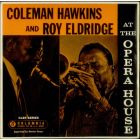
AT THE OPERA HOUSE
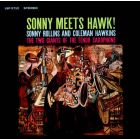
SONNY MEETS HAWK!

JOHN COLTRANE

My “relationship” with Coltrane’s music was not “love at first listen”, if I may phrase it that way. Perhaps because the first introduction to his music was that to his more “avant gardist-ish / free Jazz” work. Or, maybe at that time, I simply wasn’t ready and able to understand what he had to share with the world.

To be honest, I still prefer what people may consider his more “mainstream” work. That’s why I have selected “Blue Trane” and “My Favorite Things”…

[ More on Wikipedia ]

MY FAVORITE ALBUMS:

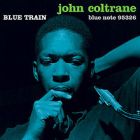
JOHN COLTRANE – BLUE TRAIN
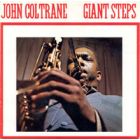
JOHN COLTRANE – GIANT STEPS
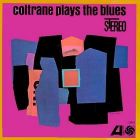
COLTRANE PLAYS THE BLUES
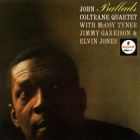
JOHN COLTRANE – BALLADS
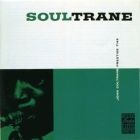
JOHN COLTRANE – SOULTRANE

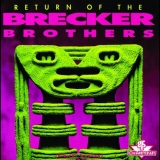
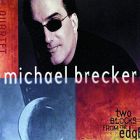
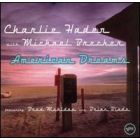
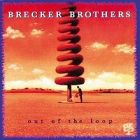
MICHAEL BRECKER

Michael Brecker … amazing tone, articulation, phrasing, the “souplesse” … both in “mainstream” Jazz as well as with The Brecker Brothers, one of my all-time favorite Jazz-Fusion bands. Michael is for me THE sax player that has touched me most with his playing. In particular the piece “The Cost Of Living” actually made me shed a tear or two … only a select few musicians have moved me that deeply with their performance.

The tracks selected though, are not those mentioned above. The first piece is called “Delta City Blues”. When I heard Michael Brecker playing this piece live, I was blown away … The second track is of a live registration of The Brecker Brothers (Michael & Randy Brecker). Michael Brecker’s solo in the piece “Spherical” (at about 21:02) is just awesome. Besides being a master tenorist, Michael Brecker also played the AKAI EWI (Electronic Wind Instrument) … watch Michael Brecker play EWI.

I am very happy that I have seen Michael Brecker perform live several times.

[ Michael Brecker Official Web Site ]

MY FAVORITE ALBUMS:

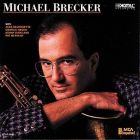
MICHAEL BRECKER
RETURN OF THE BRECKER BROTHERS
MICHAEL BRECKER – TWO BLOCKS FROM THE EDGE
CHARLIE HADEN – AMERICAN DREAMS
BRECKER BROTHERS – OUT OF THE LOOP

CANNONBALL ADDERLEY

Cannonball is still my all-time favorite alto saxophonist … his sound, his articulation, his timing … I simply love it.

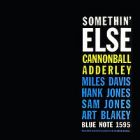
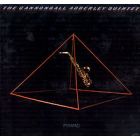
The first piece I’d like to share, is called “One for Daddy-O”, from the (must-have) album “Somethin’ Else”. I could have picked any one track from that album, for example the best ever version of “Autumn Leaves”, according to yours truly. The second track I added is a piece called “Book-ends”, from an album called “Pyramid”. This is an awesome irregular Funk groove.

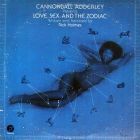
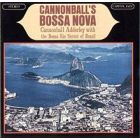
Naturally these two pieces are not enough to provide a full picture regarding Cannonball’s work. He “touched” on many different styles, like his album “Cannonball’s Bossa Nova” (as the title suggests an album with Bossa Nova’s), or the album “Soul Zodiac”, more of an experimental album.

[ More on Wikipedia ]

MY FAVORITE ALBUMS:

CANNONBALL ADDERLEY & MILES DAVIS – SOMETHIN’ ELSE
CANNONBALL ADDERLEY QUINTET – PYRAMID
LOVE, SEX AND THE ZODIAC – CANNONBALL ADDERLEY
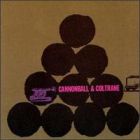
CANNONBALL & COLTRANE
CANNONBALL’S BOSSA NOVA

LOU DONALDSON

I always enjoy listening to Lou Donaldson, in particular his Soul-Bluesy & Latin-Funky grooves. His solos are tasteful, less is more … !

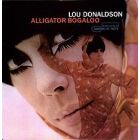
One of my favorite Lou Donaldson pieces “One Cylinder” is not available on Youtube, so I will pick another piece called “Alligator Boogaloo”, a live version in this case. Also from that album comes the piece “Aw Shucks!”, yet another soulful groove.

Years ago I was fortunate to see Lou Donaldson live at the North Sea Jazz Festival.

[ More on Wikipedia ]

MY FAVORITE ALBUMS:

LOU DONALDSON – ALLIGATOR BOOGALOO
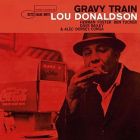
LOU DONALDSON – GRAVY TRAIN
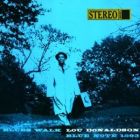
LOU DONALDSON – BLUES WALK

EDDIE HARRIS

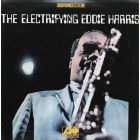
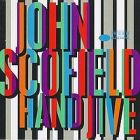
In the late 60’s, Eddie Harries was one of just a few sax players that started experimenting with the “Varitone” pickup and effects unit, turning his saxophone into an electronic instrument. A piece I picked for this article with Harris using the Varitone comes originally from an album called “The Electrifying Eddie Harris”.But the version I picked is a live rendition from the Montreux Jazz Festival. The second track I selected, is a piece called “Do Like Eddie” from John Scofield’s (one of my favorite guitarists) album called “Hand Jive”. As for overall sound and groove, I feel they have found a perfect match.

[ Eddie Harris Official Web Site ]

MY FAVORITE ALBUMS:

THE ELECTRIFYING EDDIE HARRIS
JOHN SCOFIELD – HAND JIVE
SWISS MOVEMENT
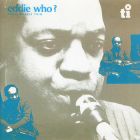
EDDIE HARRIS – EDDIE WHO?

HANK MOBLEY

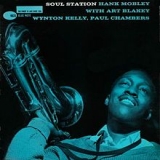
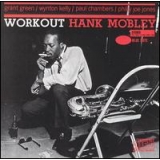
Mobley is my all-time favorite Hard-Bop tenorists. I like his sound and love the directions he takes during is solos. Two of his albums, “Soul Station” and “Work Out”, are in my opinion absolute “Must-Haves” if you would like to build a proper Jazz collection.

From the album “Soul Station”, I have selected the piece “Remember”, and from the “Work Out” album, I have picked “The Best Things In Life Are Free”.

More on Wikipedia ]

MY FAVORITE ALBUMS:


HANK MOBLEY – SOUL STATION
HANK MOBLEY – WORKOUT
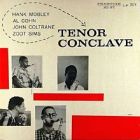
TENOR CONCLAVE
HANK MOBLEY – THE FLIP
TWO TENORS
CHARLIE ROUSE

Charlie Rouse is one of the last additions to my collection of recordings of Jazz saxophonists. Till 2011 I had never heard of this marvelous tenorist. Great sound and timing … and a definite personal favorite since 2011.

The first song I selected is a live rendition of “Epistrophy” by (and with) Thelonious Monk. The second piece is called “Hopscotch” from the album “Two Is One”.
[ More on Wikipedia ]

MY FAVORITE ALBUMS:

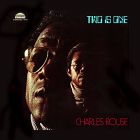
CHARLES ROUSE – TWO IS ONE
MONK IN TOKYO
CHARLIE ROUSE – YEAH
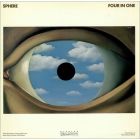
SPHERE – FOUR IN ONE


JOSHUA REDMAN

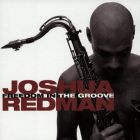
Joshua Redman has an amazing sound … I love the way he uses overtones in his play. Even though his more “mainstream” work is amazing, I do like his groovy stuff better, in particular his trio with Sam Yahel (Keys) and Brian Blade (drums), the line-up of the first track. On the second track you can hear the piece “Hide and Seek” by the Joshua Redman Quintet.
[ Joshua Redman Official Web Site ]

MY FAVORITE ALBUMS:

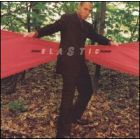
JOSHUA REDMAN – ELASTIC
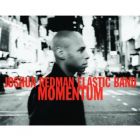
JOSHUA REDMAN – MOMENTUM
JOSHUA REDMAN – FREEDOM IN THE GROOVE

BRANFORD MARSALIS

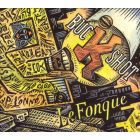
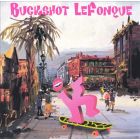
The reason why Branford Marsalis is in this blog article is not just because he’s a very good sax player. There is another reason, and that is that his Jazz-Hop project “Buckshot LeFonque” became (together with other projects like: Miles Davis’ “Doo Bop” album, Urbanator and JazzMatazz) a source of inspired for me to start making beats myself.

So, even though there are many more great “mainstream” Jazz pieces by Branford Marsalis that I could share with you in this blog, I have decided to just share two of my favorite Buckshot LeFonque pieces.

After the release of the first Buckshot LeFonque album (1994) they performed at the North Sea Jazz Festival, a concert I made sure I did not miss! 🙂

[ Branford Marsalis Official Web Site ]

MY FAVORITE ALBUMS:


MACEO PARKER

Maceo Parker is in my opinion the absolute Funkiest alto sax player, in the more “traditional” Funky way. What makes him different then most Funk saxophonists, is that he times different. You can say he drives the band with his punchy phrasing, and is truly a one-of-a-kind saxophonist.

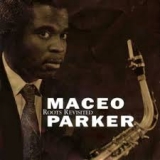
Even though he is most known for his “biting Funk licks”, the first track I like to share with you is one from the album “Roots Revisited”, my favorite Maceo Parker album. This album is a Soul-Blues & Swing “side-step” Maceo made in 1990. The second piece is the track “Let’s Get It On” (a Marvin Gaye original). This lovely version beats the original, but that might just be my opinion. Listen and judge for yourself. 😉

I am happy I have seen this living Funk Legend live a couple of times.

[ Maceo Parker Official Web Site ]

MY FAVORITE ALBUMS:

MACEO PARKER – ROOTS REVISITED
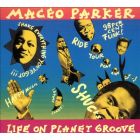
MACEO PARKER – LIVE ON PLANET GROOVE
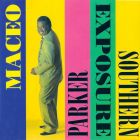
MACEO PARKER – SOUTHERN EXPOSURE
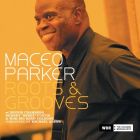
MACEO PARKER – ROOTS & GROOVES

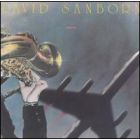
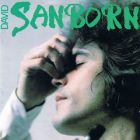
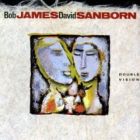
DAVID SANBORN

The first time I heard David Sanborn (I must have been 15 or so), was at my uncle’s place. He was a big “Jazz Rock” and Jazz-fusion fan and listened a lot to musicians and bands such as Tom Scott (saxophonist), Yellow Jackets, Weather Report, Lee Ritenour (guitarist) and David Sanborn. When I heard Sanborn music, I was amazed at the high tones (overtones) he could get out of his saxophone.

Later I found out Sanborn was not the first blowing harmonics, Earl Bostic (April 25, 1912 – October 28, 1965) did do so decades earlier, even more virtuous.

Years ago I was fortunate to see David Sanborn live at the North Sea Jazz Festival.

[ David Sanborn Official Web Site ]

MY FAVORITE ALBUMS:

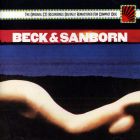
BECK & SAMBORN
TAKING OFF
SANBORN
DOUBLE VISION

OTHER FAVORITE ALBUMS:
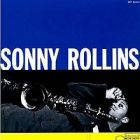
SONNY ROLLINS – VOL.1
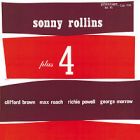
SONNY ROLLINS – PLUS 4
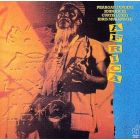
PHAROAH SANDERS – AFRICA
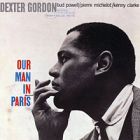
DEXTER GORDON – OUR MAN IN PARIS
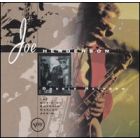
JOE HENDERSON – DOUBLE RAINBOW
ART PEPPER – WINTER MOON
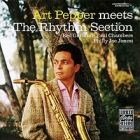
ART PEPPER MEETS THE RHYTHM SECTION
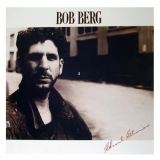
BOB BERG – SHORT STORIES
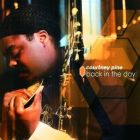
COURTNEY PINE – BACK IN THE DAY


Creative Commons License

Blog » Saxophone

Reading Time: < 1 minute
Blog » 128-Tone Scale on Saxophone

Blog » 128-Tone Scale on Saxophone

128-TONE SCALE ON SAXOPHONE (by Philipp Gerschlauer) Philipp Gerschlauer  demonstrates the 128 tone scale  in the video below. When I saw it, I was blown away!  Philipp Gerschlauer writes: "My quest was to explore microtonal...
Blog » 24-Tone Scale on Saxophone

Blog » 24-Tone Scale on Saxophone

24-TONE SCALE ON SAXOPHONE (by Tony Hicks) Tony Hicks demonstrates the 24 tone scale and plays a free improvisation demonstrating the use of this extended tonality in the video below . When I saw it, I knew it was something special. "My...
Blog » Beatbox Sax by Derek Brown

Blog » Beatbox Sax by Derek Brown

BEATBOX SAX BY DEREK BROWN I came across video by Derek Brown in one of the Saxophone groups on facebook. Most techniques he uses are known by many sax players (although not always performed as well). Derek goes one step further, he adds...
Blog » Favorite Saxophonists

Blog » Favorite Saxophonists

FAVORITE SAXOPHONISTS In this blog I will share something about some of my favorite sax players with you ... There are many great saxophonists that could have been in this article as well (like Charlie Parker, Sonny Rollins, Dexter Gordon,...
Blog » Great Unknowns on the Saxophone

Blog » Great Unknowns on the Saxophone

GREAT "UNKNOWNS" ON THE SAXOPHONE In this article I will post some Youtube tracks and links to the sites of various sax players that might not be very known to the general (mainstream) audience, but are just as great as some of the well known...
Blog » John Coltrane's Tone Circle

Blog » John Coltrane's Tone Circle

JOHN COLTRANE'S TONE CIRCLE My music is the spiritual expression of what I am: my faith, my knowledge, my being.- John Coltrane FOREWORD I do like to mention that I am no "authority" or "expert" when it comes to Coltrane's...
Blog » Odd, Arty & Rare Saxophones

Blog » Odd, Arty & Rare Saxophones

ODD, ARTY & RARE SAXOPHONES A short blog with images and bits of information about odd, arty and rare saxophones. GRAFTON The Grafton saxophone was an injection moulded, cream-coloured acrylic plastic alto saxophone with metal keys,...
Blog » Saxophone Troggle-Key System

Blog » Saxophone Troggle-Key System

TROGGLE-KEY SYSTEM By Stelling Brass & Winds and Dr. Nabb When browsing the web curious about inventions, improvements and variations of the mechanical work of the saxophone I came across the website onehandwinds.unk.edu . I wasn't...
Blog » The Geometry of John Coltrane's Music

Blog » The Geometry of John Coltrane's Music

THE GEOMETRY OF JOHN COLTRANE'S MUSIC My music is the spiritual expression of what I am: my faith, my knowledge, my being.- John Coltrane Note: this article is a "work in progress". There is a lot more to "figure out" about Coltrane's...
Blog » John Coltrane's Equinox

Blog » John Coltrane's Equinox

JOHN COLTRANE'S EQUINOX My music is the spiritual expression of what I am: my faith, my knowledge, my being.- John Coltrane https://youtu.be/9Zyr0IDaRXQ The reason I like to write something about Equinox is that it is a Minor...
Blog » The Language of Improvisation

Blog » The Language of Improvisation

THE LANGUAGE OF IMPROVISATION (by Bill Evans) I came across these videos on Youtube and enjoyed watching them so much that I decided to mention them on my blog, perhaps you will enjoy watching as much as I did.  INTRODUCTION ON TRUEFIRE.COM...
Blog » Vintage 435Hz ("Diapason Normal") Saxophones

Blog » Vintage 435Hz ("Diapason Normal") Saxophones

VINTAGE 435HZ SAXOPHONES GATHERED INFORMATION ABOUT (POSSIBLE) 435Hz SAXOPHONES. This article contains info about vintage saxophones that might have been designed for Concert Pitch A4=435Hz, the so called "Diapason Normal", the national concert...
Blog » Why is the Saxophone a Woodwind Instrument?

Blog » Why is the Saxophone a Woodwind Instrument?

WHY IS THE SAXOPHONE A WOODWIND INSTRUMENT? Many people (who do not know much about instrument design and their history) think the saxophone is a so called "brass instrument ". And, perhaps at first sight that seems logical, the saxophone is...
Famous Saxophone Solos & Riffs

Famous Saxophone Solos & Riffs

FAMOUS SAXOPHONE SOLOS & RIFFS Many of the big Pop hits (approx. 1 out of 3) between 1978 and the late 80s have saxophone riffs and/or solos. This had an enormous impact on the popularity of the instrument during that period, resulting in...
Famous Saxophone Solos & Riffs (Part 1 - The 70s)

Famous Saxophone Solos & Riffs (Part 1 - The 70s)

FAMOUS SAXOPHONE SOLOS & RIFFS (PART I - The 70s) Walk On The Wild Side (1972) #21 (Top 40) , #16 (US Billboard Hot 100) , #10 (UK Singles OCC) Saxophonist: RONNIE ROSS "Walk on the Wild Side " is een song by Lou...
Famous Saxophone Solos & Riffs (Part 2 - The 80s)

Famous Saxophone Solos & Riffs (Part 2 - The 80s)

FAMOUS SAXOPHONE SOLOS & RIFFS (PART II - The 80s) Just the Two of Us (1980) #11 (Top 40) , #16 (NL Single Top 100) , #2 (US Billboard Hot 100) Saxophonist: GROVER WASHINGTON JR. In 1980 "Winelight " was released,...
Famous Saxophone Solos & Riffs (Part 3 – The 90s)

Famous Saxophone Solos & Riffs (Part 3 – The 90s)

FAMOUS SAXOPHONE SOLOS & RIFFS (PART III – The 90s) Lily Was Here (1989/1990) #1 (Top 40) , #11 (US Billboard Hot 100) , #6 (UK Singles OCC) Saxophonist: CANDY DULFER In '89/'90 Dave Stewart  (Eurythmics) scored t...
Famous Saxophone Solos & Riffs (Part 4 – 2000-2015)

Famous Saxophone Solos & Riffs (Part 4 – 2000-2015)

FAMOUS SAXOPHONE SOLOS & RIFFS (PART IV – 2000-2015) FOREWORD ON PART 4 : Except for "Lazarus" by Bowie I do not like any of the tracks listed below . I added them to create a more complete picture for this blog article, some of the v...
Female Jazz Saxophonists

Female Jazz Saxophonists

Female Jazz Saxophonists The number of known top level female saxophone players is still relatively small in comparison with the sheer number of top level male saxophonists. That is both surprising and a bit sad as well because those female saxophone...
Sa-X-Mas Christmas Songs With Saxophone

Sa-X-Mas Christmas Songs With Saxophone

Sa-X-Mas Christmas Songs With Saxophone For saxophone lovers there are many X-mass songs online from known and less known saxophonists. Specially since the growing popularity of “Smooth Jazz” in the 90s using the saxophone as lead instrument for...
SA-X-MAS: "Have Yourself a Merry Little Christmas" With Saxophone

SA-X-MAS: "Have Yourself a Merry Little Christmas" With Saxophone

SA-X-MAS: "Have Yourself a Merry Little Christmas " With Saxophone In this article I focus on one of the two all-time-favorites of mine: "Have Yourself a Merry Little Christmas ". It turns out I am not the only one that feels like that about...
SA-X-MAS: "The Christmas Song" With Saxophone

SA-X-MAS: "The Christmas Song" With Saxophone

SA-X-MAS: "The Christmas Song" With Saxophone In this article I focus on one of the two all-time-favorites of mine: "The Christmas Song ". It turns out I am not the only one that feels like that about this song, it is a favorite among many saxophonists....
SA-X-MAS: Christmas Songs With Saxophone

SA-X-MAS: Christmas Songs With Saxophone

SA-X-MAS: Various Christmas Songs With Saxophone For the saxophone lovers there are many X-mass songs online from known and less known saxophonists. Specially since the growing popularity of "Smooth Jazz" in the 80s and 90s using the saxophone...