A philosophical, semiscientific, contemplative blog by Roelant (Roel) Hollander about Music, Sound, Saxophone, Photography, Arts, Sacred Geometry, Esoterism, Freemasonry, and more …
Category Archives: Music Theories and Concepts
Blog articles about philosophical and (semi)scientific music theories and concepts, including tuning concepts and temperaments.
The Factor 9 concept is mentioned in the video called “Sonic Geometry: The Language of Frequency and Form” (by Eric Rankin and Alanna Luna). In this article we will take a closer look at the Factor 9 “formula”, it’s relationship to the Harmonic Series and the difference between the Factor 9 and “standard” temperamental implementation.
The “base frequency” or “Fundamental” of this grid is 9Hz. The other tones are the result of the implementation of the Harmonic Series. Depending on the Harmonic used as “starting point” of the a scale a different Musical Interval System is formed.
The number of tones in the scale formed from the Harmonic Series relates directly to the number of the Harmonic you start with. If you start from the 15th Harmonic, you would end up with a 15-Tone scale. This is not only the case when you use 9Hz as base frequency for this concept, this is simply the “nature” of the Harmonic Series.
For example:
12TH HARMONIC (TONIC A): 12-TONE SYSTEM
When we use A2=108Hzthe first degree of the scale (12th-24th Harmonic of 9Hz) to it’s octave A3=216Hz, we would end up with a 12-Tone Temperament. On octave above 216Hz we find A4=432Hz.
14TH HARMONIC (TONIC C): 14-TONE SYSTEM
When we use C3=126Hzthe first degree of the scale (14th-28th Harmonic of 9Hz) to it’s octave C4=252Hz, we would end up with a 14-Tone Temperament.
16TH HARMONIC (TONIC D): 16-TONE SYSTEM
When we use D3=144Hzas the first degree of the scale (16th-32nd Harmonic of 9Hz) to it’s octave D=288Hz, we would end up with a 16-Tone Temperament. D4=288Hz is a pretty familiar frequency for those who have been exploring 432-Tuning. We find the D4 at 288Hz with various 12-Tone Temperaments, such as the Pythagorean Temperament (in combination with Concert Pitch C4=256Hz or A4=432Hz) and Maria Renold’s “Scale of Fifths“. If you would like to use the 16-EDO system with Concert Pitch A4=432Hz, all frequencies (listed in the 3rd column) need to be pitched up with approximately 62 cents, the 16-EDO scale has “A4” at 416.8Hz, instead of 432Hz.
FACTOR 9 12T vs. 12-EDO vs. FIBONACCI-8 vs. RENOLD-I
The most “common” 12-tone scale belongs to 12-TET (12-Tone Equal Temperament) or 12-EDO (Equal Divisions of the Octave). I will try to “visualize” the difference between the “Factor 9 Temperament” and 12-TET in this article. If you do not know what a tuning system is made of, then please do read this article on my blog: Tuning Basics.
ABOUT 12-TET or 12-EDO
“12–EDO, perhaps better known as 12TET since it really is a temperament, is the predominating tuning system in the world today. It achieved that position because it is the smallest equal division which can seriously claim to represent 5-limit harmony, and because as 1/12 Pythagorean comma (approximately 1/11 syntonic comma) meantone, it represents meantone.
It divides the octave into twelve equal parts, each of exactly 100 cents each unless octave shrinking or stretching is employed. Its has a fifth which is quite good at two cents flat. It has a major third which is 13+2/3 cents sharp, which works well enough for some styles of music and is not really adequate for others, and a minor third which is flat by even more, 15+2/3 cents. It is probably not an accident that as tuning in European music became increasingly close to 12et, the style of the music changed so that the defects of 12et appeared less evident, though it should be borne in mind that in actual performance these are often reduced by the tuning adaptations of the performers.“
Below a table with cents, ratios and more, comparing 12-EDO with FACTOR 912T, Fibonacci-8 and Renold-I, based on A=108Hz. I have transposed the complete scale in order to include 432Hz in the table so we start from A3=216Hz.
Degree
Tone
12-EDO
Factor 9 12T
Fibonacci-8
Renold-I
0
A3
216
216
216
216
1
A#/Bb
228.8
234
230,4
229,1
2
B
242.5
252
240 or 243
243
3
C
256.9
270
259,2
256,4
4
C#/Db
272.1
288
270
273,4
5
D
288.3
306
288
257,7
6
D#/Eb
305.5
324
303,8
305,4
7
E
323.6
342
324
324
8
F
342.9
360
345,6
343,6
9
F#/Gb
363.3
378
360
364,5
10
G
384.9
396
384 or388,8
386,5
11
G#/Ab
407.8
414
405
410
12
A4
432
432
432
432
All frequencies above are rounded up to 1 digit behind the decimal point.
Below an example of a piece using the Factor 9 12-Tone scale (as listed above) by Derrick Scott van Heerden:
FACTOR 9 16-TONE By Derrick Scott van Heerden
“The factor 9 scale is really a harmonic scale, a one octave portion of the harmonic series repeated over octaves and played as a music scale on a multi-tonal instrument.
The long vertical column on the right (of the chart) shows the harmonic series for 9 Hz, while the bottom half shows the portion that makes the factor 9 scale repeated over 4 octaves to the right and left. There are a few missing notes in the factor 9 scale chart in the movie, here you can see that there are really 16 tones in each octave (16th to 31st harmonic).
Image on the right: “This scale / slice of the harmonic series contains many intervals found in ‘pure’ versions of our 12 tone equal temperament scale and makes it seem obvious that our modern day 12 tone scale must have it’s roots in the harmonic series.“
The most significant disadvantage of the Factor 9 Temperament is the specifications of some instruments, in particular acoustic instruments. Some acoustic instruments without temperamental issues are for example: the human voice, fret-less string instruments (like the Violin family), Trombone (a wind instrument without valves or tone-holes), the Harp and percussive instruments.
Naturally one could compose and produce music with modern Synthesizers, software with micro tuning capabilities or design / invent a new instrument based on this Temperament.
For instruments without micro-tonal tuning capabilities would be difficult to use the Factor 9 system, even in a 12-Tone scale.
NOTATION (SHEET MUSIC)
Up to a 14-tone scale the present notation system would work fine (adding a B#/Cb and E#/Fb to the scale). Notation of a 15-tone scale (or larger) using the traditional notation system can be a bit “tricky” and would require some time to study to be able to read it “prima vista“.
A 15-tone scale would look something like this (Easley Blackwood‘s notation system for 15 Equal Temperament):
A 24-tone scale would already require 3 variations in sharps and flats (24 Equal Temperament “Arab Tone System”):
SONIC GEOMETRY FIRST VIDEO: MISTAKES IN THE FACTOR 9 GRID
IMPORTANT FOOTNOTES ABOUT THE MOVIE “SONIC GEOMETRY:
Some numbers listed are simple miscalculations, but a more crucial mistake is that tones are missing in their grid!!!The scale/temperament displayed in the movie is a 13-tone system. But, after comparing the grid with the Harmonic Series we can conclude the grid shown in this video (12:52) is incorrect. Instead of a 13-tone system it would generate a 12 / 14 / 16-tone system if the implementation is done properly.
Also the “build-up” of the grid starts wrong, the “Factor 9” temperament is based on the tone D being 9Hz. If we set D as the first tone of the scale, then the first two frequencies listed in the 1st column belong to the “great octave” (stacking of 4.5Hz), while the rest of the tones listed in the first column belong to the “small octave” (above the “great octave”, stacking of 9Hz).
Movie screenshot:
Missing frequencies:
130.5(between C and C# in column 1) – “great octave” (stacking of 4.5Hz)
139.5 (between C# and D in column 1) – “great octave” (stacking of 4.5Hz)
243 (between 234 in column 1 and 525 in column 2) – “small octave ” (stacking of 9Hz)
486 (between 456 in column 1 and 504 – missing – column 3) – “1-line octave” (stacking of 18Hz)
504 & 522 (between 486 – missing – and 540 in column 3) – “1-line octave” (stacking of 18Hz)
972 (between 936 in column 3 and 1008 in column 4) – “2-line octave” (stacking of 36Hz)
1044 (between 1008 in column 4 and 1080 in column 4) – “2-line octave” (stacking of 36Hz)
1944 (between 1872 in column 4 and 2016 in column 5) – “3-line octave” (stacking of 72Hz)
2088 (between 2016 in column 5 and 2160 in column 5) – “3-line octave” (stacking of 72Hz)
Miscalculations: B in column 2 has to be 468 instead of 456, 643 in column 3 has to be 648 and 3755 in column 5 has to be 3744.
Another footnote to make is related to what is being said in the movie about Concert Pitch and instruments. In the movie Eric Rankin mentions that most modern musical instruments have been tuned to 432 for decades (until A4=440Hz became the International Standard). This is not correct, 432Hz has never been a standard, and only some old instruments seem to / might have been build for (or close to) 432Hz as Concert Pitch such as 435Hz (Diapason Normal). There are many old instruments in museums, as well as old Pitchpipe (Church) organs with various pitches ranging between A4=360Hz up to A4=460Hz. Instruments for Baroque music (1600-1750) for example, were designed for a Concert Pitch 415Hz.
I came across the “Twelve True-Fifths Tuning” concept (by Maria Renold) through a facebook friend, Brain T. Collins, who mentioned this tuning concept on his web site, the Omega432.com. Brian T. Collins refers to the page of Graham H Jackson where the “Twelve True-Fifths Tuning” concept is explained. This concept is a great alternative implementation of the Pythagorean Temperament.
NOTES:
The frequencies listed in this blog article are the result of the original “Scale of Fifths” tuning method (discovered in 1962), also referred to as “Renold I” Temperament. Maria Renold later found out that Henricus Grammateus had constructed a similar scale in 1518 (source: Jorgensen, 1991, p.332).
In her work Maria Renold used alternative names for the black keys of the piano. C#/Db = “delis“, D#/Eb =”elis“, F#/Gb = “gelis“, G#/Ab = “alis” and A#/Bb = “belis“. For this article I will use the common tone names instead.
Maria Renold did continue experimenting and developing her concept, with the “Renold II” (also known as “Middle Tuning” temperament as result. This Renold-II temperament is described in the article Renold-II Temperament.
WHY AN ALTERNATIVE FOR THE PYTHAGOREAN TEMPERAMENT?
Well, the Pythagorean Temperament works with the stacking of perfect fifths. But, when we stack 12 perfect fifths, we do not end up at a the same note we started, but approximately a quarter-tone above. With other words, we don’t end up with a circle but a spiral. This actually happens with any perfect (pure, natural) interval (except for the octave) when stacked (and that does not work very well with a closed musical interval system). In order to close the circle, one or more 5th’s should be slightly decreased to end up with a perfect circle. Maria Renold though came up with an tempered version of the Pythagorean Temperament, using mostly Perfect Fifths and still create a working closed circle.
Graham H. Jackson explains on his site:
“For the “twelve true-5ths tuning”: you first set C at 256 Hz. Then you tune the 7 “white keys” by the circle of 5ths, using however natural 5ths. Then you divide the octave at C exactly in half (which can be done handily with a special tuning fork), and tune the 5 “black keys” by natural 5ths to that F#.
You end up with two series of natural 5ths: one of 7 notes, and one of 5 notes, linked by an “unnatural” interval of an augmented 4th (which is actually the same augmented 4th found in the equal-tempered system).“
SO, HOW DOES THAT WORK?
We know that the perfect fifth uses the ratio 3:2. We use the following formula for calculating the fifth:
When we follow the Circle clockwise, we go up a fifth. The outer “ring” with the capital letters is the Major Circle of Fifth, with inside the parallel minor Circle of Fifths.
As suggested by Graham H. Jackson, we start with from the tonic of the the C Major scale (the white keys on the piano). Now, the C Major scale contains the following tones: C – D – E – F – G – A – B.
When we start with C3=128Hz (as Renold suggested) and implement the formula we get the following:
In this article I will use the tone frequencies between C4=256Hz and C5=512Hz so it will be easier to “compare” to the tone frequencies on the modern standard.
If we continue stacking 5ths (• 3 / 2) after B6 (1944Hz), we pass Gb, Db, Ab, Eb and Bb, ending up with F10=22143.375Hz. If we would stack another 5th on top, we end up at C11=33215.0625Hz.
!!! A perfect C11 relative to C4=256Hz would be C11=32768Hz, not C11=33215.0625Hz !!!
With other words, the fifth between F10 and C11 would be imperfect. If we bring that F10=22143.375Hz back to F4, we will end up with 345.990234375Hz. This is about 4Hz higher then the “harmonic mean”. So, we have to use a different method, to get the harmonic mean right. This is where mathematical formulas can help us out.
CALCULATING THE ARITHMETIC, GEOMETRIC AND HARMONIC MEANS
When we calculate the means in between C4 = 256Hz and C5 = 512Hz we get the following
The arithmetical mean formula: (256 + 512) / 2 = 384Hz (G, the 5th above C). The geometrical mean formula: √ (256•512) = 362.038671968Hz (F# or Gb, the dim. 5th above C). The harmonic mean formula: (2•256• 512) / (256 + 512) = 341.333∞Hz (F, the 4th above C).
The arithmetical mean G = 384Hz was already part of the scale (the first perfect 5th we stacked on the C). Now we have calculated the harmonic mean as well, we can add F = 341.333∞Hz to the scale and we have completed the C Major scale.
C
D
E
F
G
A
B
C
256
288
324
341.333∞
384
432
486
512
If we start from the geometrical mean between C4 and C5, the F# (or Gb), stack 5 perfect fifths, and bring them back in between C4-C5, we get the following Major Pentatonic Scale of F# (or Gb):
F#/Gb
C#/Db
G#/Ab
D#/Eb
A#/Bb
362.039
271.529
407.294
305.470
458.205
Note: the frequencies noted above are rounded off on 3 digits behind the dot.
When we combine the C Major Scale and the F#/Gb Major Pentatonic Scale, we get the following Chromatic Scale from C:
C
C#/Db
D
D#/Eb
E
F
F#/Gb
G
G#/Ab
A
A#/Bb
B
C
256
271.5
288
305.5
324
341.333∞
362
384
407.3
432
458.2
486
512
In modern music we use only 12 tones. The consequence of this choice is that it is impossible to create a perfect system (a perfect circle of intervals using only perfect intervals), the natural “movement” sound makes when only using perfect intervals is spirally. And you can’t expect to see a spiral if you are drawing a perfect circle right? When we use Maria Renold’s “Scale of Fifths” concept and like to use a closed circle, then we end up with “just another” tempered version of the Pythagorean Temperament.
When we use the tone frequencies as listed above and calculate the amount of cents (rounded off) in between the Fifths, you notice that most intervals are about 0.1 cent off (lower or higher) from the 702 cents of the Perfect Fifth (Just Intonation). There are though two intervals – the Fifths between B and Gb/F# and between Bb/A# and F – that are smaller then the other 10 intervals:
C
G
D
A
E
B
Gb F#
Db C#
Ab G#
Eb D#
Bb A#
F
C
701.9
701.9
701.9
701.9
701.9
690
701.9
702.1
702.1
701.7
647.5
701.9
When we rearrange the circle chromatically we end up with semitones of 101.8-102.1 cents between every semitone, except in between between E-F and B-C, the only two semitone intervals of the Diatonic Scale:
C
C# Db
D
D# Eb
E
F
F# Gb
G
G# Ab
A
A# Bb
B
C
101.8
102.1
102.1
101.9
90.2
101.8
102.1
101.9
101.9
101.9
101.9
90.2
Below a list with the differences in cents and ratio between the Equal Temperament (present standard) and Maria Renold’s “Scale of Fifths” Renold-I Temperament, both using the Scientific Concert Pitch C4=256Hz.
TONE
12-TET C4=256Hz
M. R. SCALE OF FIFTHS
CENTS DIFFERENCE
RATIO f2 / f1DIFFERENCE
C4
256 Hz
256 Hz
0
0
C#/Db
271.2 Hz
271.5 Hz
1.9140234664560511
1.0011061946902655
D
287.4 Hz
288 Hz
3.6104998468059137
1.0020876826722338
D#/Eb
304.4 Hz
305.5 Hz
6.244825443055806
1.0036136662286466
E
322.5 Hz
324 Hz
8.033583088810076
1.0046511627906978
F
341.7 Hz
341.333∞ Hz
-1.858725915674287
-0.9989269339576626
F#/Gb
362 Hz
362 Hz
0
0
G
383.6 Hz
384 Hz
1.8043087084650533
1.0010427528675703
G#/Ab
406.4 Hz
407.3 Hz
3.8296946774990657
1.002214566929134
A
430.5 Hz
432 Hz
6.021689719949426
1.0034843205574913
A#/Bb
456.1 Hz
458.2 Hz
7.952746136304442
1.00460425345319
B
483.3 Hz
486 Hz
9.644782878502031
1.005586592178771
C5
512 Hz
512 Hz
0
0
For tuning by ear three tuning fork are needed: C4=256Hz,A4=432Hz and “gelis” (F#/Gb)=362,04Hz (Renold 1). How to tune by ear is described (scheme included) in Maria Renold’s book
Here an example how the Renold I temperament sounds (in comparison with Equal Temperament):
RENOLD-II
An alternative for the Renold-I Temperament (in particular for acoustic instruments) is the Renold-II Temperament.
Note: I do not guarantee the files bellow will work with your hardware and software setup. In case it does not, then try creating and exporting the “Scale of Fifths” yourself with Scala. Please, do feel free to send me a message if the provided files do not work for you, preferably with some info about the hardware, operating system (version) and software you have used.
“The Scale Of Twelve Fifths” (and more) can be found in the book “Intervals, Scales, Tones and the Concert Pitch C = 128Hz“. by Maria Renold. Information about “The Scale Of Twelve Fifths” can be found at Chapter 13, 21, 24 & 25 of this book.
Why is it that certain intervals, scales and tones sound genuine and others false? Is the modern person able to experience a qualitative difference in a tone’s pitch? If so, what are the implications for modern concert pitch and how instruments of fixed tuning are tuned?
Maria Renold tackles these and many other questions, providing a wealth of scientific data. Her pioneering work is the result of a lifetime’s research into Western music’s Classical Greek origins, as well as a search for new developments in modern times. She strives to deepen musical understanding through Rudolf Steiner’s spiritual-scientific research, and she also elucidates many of Steiner’s often puzzling statements about music.
The results of her work include the following discoveries: that the octave has two sizes (a ‘genuine’ sounding octave is bigger than the ‘perfect’ octave); that there are three sizes of ‘perfect’ fifths; that an underlying ‘form principle’ for all scales can be found; and, most importantly, the discovery of a method of tuning the piano which is more satisfactory than equal temperament. She also gives foundation to some of Rudolf Steiner’s statements such as: ‘c is always prime’ and ‘c = 128 Hz = Sun’.
MARIA RENOLD (1917-2003) spent her childhood in the United States, where her parents emigrated to found a eurythmy school in New York. She studied eurythmy and later violin and viola and toured with the Bush Chamber Orchestra and the Bush String Quartet. One of Maria Renold’s deeply-felt questions concerned the correct concert pitch. When she heard of Rudolf Steiner’s concert pitch suggestion of c = 128 Hz she put it into practice immediately, and experimented with it over many years in America and Europe. She also discovered a new method of tuning the piano, closer to the tuning of stringed instruments, arriving at the concert pitch of a4=432 Hz. First published in German in 1985, her book has become a modern classic of musical research.
A HOROLOGICAL AND MATHEMATICAL DEFENSE OF THE “PHILOSOPHICAL PITCH”
In this article Brendan Bombaci will shortly introduce his work: “A Horological and Mathematical Defense of Philosophical Pitch”. Even though I can not use his concept for my own music productions (since my saxophones are “stuck” in 12-TET at 440Hz), I do think it is worth the read for those interested in micro-tuning and temperament.
Roel
INTRODUCTION
I propose an alteration of the concert pitch standard outlined in ISO 16. As of now, it is set to A440 (A=440Hz), which has been chosen subjectively (rather than empirically as based upon the mathematical or geometrical values of art composition), as most all other concert pitch standards have been chosen throughout history. I have sought out various ways to make a compositionally cogent concert pitch standard, and I have succeeded at finding one that is perfectly tailored to synchronize with both the sexagesimal timekeeping system upon which all music is measured, and the 5 Limit Tuning system. It is well-known that this form of just intonation is the most consonant of all tuning systems, including that of equal temperament (whether or not equal temperament mostly corrects for the arguably noticeable near-Wolf fifths of just intonation). In as much, it is perfectly suited to be the model tuning system for this innovative new pitch standard, especially when one considers its fractional values for deriving each note of the chromatic scale. I will now explain both of my justifications in detail with some corroborative horological references.
TIME IN
It should be imagined that Western music, with an original meter basis of 4/4 that originally hinged upon the second hand of the clock for metering rhythm (a la the 120bpm Roman standard for marches) even before the second was academically identified [7], should have a pitch frequency that is similarly correlated. When tuning music to A440, most of the pitch frequencies are not whole numbers; the first octave of B (B1), for example, is 61.74Hz. If this were set to 60Hz instead, being the only note of the chromatic scale which comes close to synchronizing with the clock as a fractal continuance of the sexagesimal system, we would find the middle C note, C256, at the “scientific” or “philosophical” pitch of Joseph Sauveur (a mathematician, physicist, and music theorist) [1] and Ernst Chladni [1, 2], “the father of acoustics.” At the first octave of C, we would have the value of 1Hz, perfectly matching the second hand complication (movement).
Using 5 Limit Tuning set to C256, the frequencies of notes C4 (256), G4 (384), E4 (320), D4 (288), and B4 (240) are reducible to, respectively: 1, 3, 5, 9, and 15. You may notice that these notes, C, E, G, B, and D respectively, rearrange to a set of “stacking thirds,” in perfect chordal harmony. With the lowest C also standing in for its multiples of 2, 4, 8, 16, and 32, all of the numbers which are member to that set of stacking thirds are the very same numbers which comprise the numerators and denominators by which every chromatic note is derived (except 45, but this is still a harmonic of 15). This makes for more mellifluous tonal vibrations. In addition, the numbers 1, 2, 3, 4 and 5 represent the most commonly used values for meter in classical and modern music (with the 3 also standing in for its multiple of 6). There are important historical implications to this system, making it more geometrically, and even astronomically, intrinsic.
The helek (helakim, pl.) is an ancient and still used unit of time in Hebrew horology [4], which the second was extrapolated from. Further preceding helakim were the Babylonian names barleycorn or she, but no matter which name is used, all effectively mark the passage of 1/72nd of one degree of celestial rotation in a day. There are 1080 helakim per hour, and therefore 25920 helakim per day (and that many years in one astronomical Precession of the Equinoxes). This gives a discrete measurement unit that relates each minute to a visibly interesting astronomical cycle that has captured the imaginations of many cultures worldwide. Half of a day is akin to half of a precession of equinoxes, thereby; and likewise, periods of 2160 helakim are similar to the 2160 years of one astrological Age, meaning there are 12 Signs that pass in one day. Many historical European clock towers, such as the Torre dell’ Orologio in Venice, graphically purvey this along with the 24 hour segments. The conversion between helakim and seconds is this: 1 helakim = 3.333 seconds, or 60 seconds to every 18 helakim. 72 helakim, like the 72 years that pass in one degree of celestial precession, are equal to 4 minutes. 4 minutes multiplied by the whole 360 degrees equals 1440, the amount of minutes in one day. This is also the frequency in Hertz of the F# (the 7th interval, or perfect chromatic center) when tuned with the Philosophical Pitch and 5-Limit Tuning System.
Making the transition from helakim to seconds would only be a matter of deciding that the sexagesimal Babylonian calendar and navigational system should apply to a momentary measure for better precision. Musicians of the Middle Ages would have noticed that the divisionally attractive twelve factors of that system (1, 2, 3, 4, 5, 6, 10, 12, 15, 20, 30, and 60) are perfectly coherent with four of the five stacking thirds frequencies of the new 5 Limit Tuning system which was designed to fix Pythagorean tuning dissonance in thirds intervals. With the addition of the fifth stacking third (9/18/36hz, etc.: the 2nd interval D note), they altogether cross-correlate with all aforementioned time measurement references within the Precession of Equinoxes, paying ultimate homage to the more prolific origins of timekeeping.
On a more esoteric note, the contemporary system also corresponds in some cases to culturally relevant “sacred” geometrical figures, whether or not any ancient musicians played note values that represented the same cosmic motions their timing system held to. Some of the latter include the conversions: 1440/3.333 = 432.0432 (considered by some to be a “spiritually” correct concert pitch value), 360/3.333 = 108.0108 (roughly a quarter of 432), and 72/3.333 = 21.60216 (representing a figure resonant with half of the first solution, 432.0432). These are all numbers of Biblical, Gematria (Hebrew numerological), Buddhist, and Hindu reference, with the latter two being angle degrees within a pentagram that reference the phi ratio (and Fibonacci sequence) – a fundamentally common pattern which all biological matter utilizes for efficient growth – and the faces of the dodecahedral Cosmic Microwave Background itself [6]. Interesting as they are, these solutions are not the note values we should make standard, but rather intriguing sign posts that show the astro-horological bases for certain compositional conventions in both secular and religious visual (including architectural) and sonic art.
For the sake of remaining true to horology in sonic form, harking back to but making better sense than the “Music of the Spheres,” the usefulness and the intricate aesthetics of tuning to C256 is inarguably better than any other standard. It also becomes far more intuitive to explain, due to whole number relationships, how various notes interact with one another and with tempo bases. Any “brighter” compositional sound, such as desired by proponents of A440, can be manifested by simply transposing a song. Although doing so alters interval relationships (because just intonation is not equally tempered), just as playing in any key other than C256 generally will within this system, it offers a new way to realize music in the same way that modes within a key provide mood and depth. Many Western composers prefer this and use just intonation specifically to achieve enhanced dramatic effect; some people who do so are: John Luther Adams, Glenn Branca, Martin Bresnick, Wendy Carlos, Lawrence Chandler, Tony Conrad, Fabio Costa, Stuart Dempster, David B. Doty, Arnold Dreyblatt, Kyle Gann, Kraig Grady, Lou Harrison, Michael Harrison, Ben Johnston, Elodie Lauten, György Ligeti, Douglas Leedy, Pauline Oliveros, Harry Partch, Robert Rich, Terry Riley, Marc Sabat, Wolfgang von Schweinitz, Adam Silverman, James Tenney, Michael Waller, Daniel James Wolf, and La Monte Young. Perhaps, with the rationality I provide in this article, many more yet will.
REFERENCES
Bruce Haynes. History of Performing Pitch: The Story of “A,” pp 42,53 (Lanham, Maryland: Scarecrow Press, 2002).
Ernst Florens Friedrich Chladni. Traitéd’acoustique, pp 363 (Paris, France: Chez Courcier, 1809)
Hebra, Alex. Measure for Measure: The Story of Imperial, Metric, and Other Units, pp 53 (The John Hopkins University Press, 2003)
Mackey, Damien F. The Sothic Star Theory of the Egyptian Calendar: A Critical Evaluation, abr. ed. (Sydney, New South Wales, Australia: University of Sydney, 1995).
Luminet, Jean-Pierre, Jeffrey R. Weeks, Alain Riazuelo, Roland Lehoucq, and Jean-Phillipe Uzan. Dodecahedral Space Typology as an Explanation for Weak Wide-Angle Temperature Correlations in the Cosmic Microwave Background. Nature 425:593-595.
Sachau, Edward C. The Chronology of Ancient Nations. Kessinger Publishing.
“432 IS THE SQUARE ROOT (√) OF THE “SPEED OF LIGHT”.
(PSEUDOSCIENCE)
Some people like to suggest that 432Hz is the most natural concert pitch due to a presumed relation to the speed of light:
“432 is the square root of the Speed of Light”.
432 = √186624
The calculation above is correct … but does NOT make the statement right.
The actual speed of light is not exactly 186624, but (depending on the source) 299792458 meters/s. = 186282.397 miles/s. That is about 341.603 miles per second off. If you would use that number instead to calculate the square root, you get:
√186282.397 = 431,60444506515453634375
Some sources (nasa.gov) mention 186000 miles/s. If we use this number to calculate the square root:
√186000 = 431,277173057
In both examples above we speak about the Speed of Light in a vacuum.
The difference between 432 and 431.6 or 431.2 might look insignificant, but I am pretty sure a math or physics teacher would not except “432” as answer, if the “assignment” was to calculate the square root of the Speed of Light (186282.397 or 186000 miles/s).
Besides that, only if we use miles as unit of length for the Speed of Light, we come close to 432 when calculating the square root. Usage of the mile as an official unit of measurement is largely confined to the United Kingdom, the United States, and Canada. If we would use other units, like meters (√299792458 = 17314,51581766) or yards (√327857018.81 = 18106,822438241), or other miles, we would not end up with ≈432 as the square root.
USING UNITS …
Another thing we can say about this theory, is that – if you want to compare or “relate” two “things” with one another – you have to use values that work for/with both ‘things’.
But we are not!
We are trying to relate the unit Hz (a particular number of occurrences of a repeating event per unit time) to the unit of speed“miles per second” (the magnitude of the velocity – the rate of change of its position)
After all, we are not talking about 186282.397Hz, but 186282.397 miles/s. when we speak about the Speed of Light.
The unit “speed” and “Hz” can not simple be related, compared or exchanged 1 on 1 by one another!
CONDITIONS & DIFFERENCES SOUND AND LIGHT WAVES
Only when electromagnetic waves (radio, microwave, infrared, the visible spectrum we perceive as: visible light, ultraviolet, X-rays, and/or gamma rays) propagate* through a VACUUM, the electromagnetic waves “propagates” with the Speed of Light, at 186282.397 miles/second. Under other conditions (through a medium) light propagates slower.
* Some scientist, theorists and natural philosophers such as Walter Russell state that waves of light do not propagate but ‘reproduce’ each other from wave field to wave field of space. The planes of zero curvature, which bound all wave fields, act as mirrors to reflect light from one field into another. This sets up an appearance of light as traveling, which is pure illusion.
The properties of a sound wave always depend on the properties of the medium it travels through: no medium (vacuum) = no Sound. Sure, space isn’t a complete vacuum (specially gas clouds could be counted as “medium”), nonetheless … The speed of sound in air (c) = 343 meters/s at 20°C. The speed of sound through air could vary slightly, depending on the temperature, pressure and humidity. The speed of sound in water is about 4 times faster than this.
Do you see the first “problem” we run into?
We practically try to relate a particular frequency through a medium (air) to the Speed of Light (186282.397 m/s.) in a “vacuum” (= no medium) in which the speed ofsound waves would be pretty much “0” (nonexistent)!!!
OTHER DIFFERENCES:
The frequencies of visible light and audible sound differ from each other by more than ten orders of magnitude. Audible acoustic range: roughly 20 Hz to 20,000 Hz vs. visible optical range: roughly 380 trillion Hz to 760 trillion Hz.
Light waves are composed of transverse waves in an electromagnetic field, while sound waves are mechanical longitudinal waves (alternate compression and expansion of matter).
The denser the medium, the greater the speed of sound. The opposite is true of light.
The speed of light in a medium is constant. The velocity of sound waves can change.
Electromagnetic waves, including light is a “stream of particles” (photons). Sound does not consist out of particles.
Light waves can be polarized, but sound waves cannot.
CONCLUSION?
When simply looking at the numbers “432” and “186624” (186282.397) without proper context, one could easily draw wrong conclusions.
No matter how we look at it, there is no real direct relationship between the tone / frequency of 432Hz and the Speed of Light. The “432Hz & the Speed of Light” story is a pseudo-scientific fantasy.
IS THERE NO OTHER RELATIONSHIP BETWEEN SOUND AND LIGHT?
Some online sources state that 440Hz replaced 432Hz as Standard. That is incorrect. 432Hz has NEVER been a National or International standard.
So far I have not found much information about old 432Hz tuning forks, generally good physical proof that a particular pitch was used. I did come across a couple of references to 433Hz tuning forks:
Around 1820: A=433Hz, London. “Pitch approved by Sir George Smart, conductor of the Philharmonic.”
Around 1850: Broadwood Piano Co. tuner “low pitch” is said to be equal to A=433Hz.
I have not been able to find any other sources that provide concrete information with proper historical references to support the rumor. This does not mean no instruments were made that use 432Hz (like for example “Tibetan Bowls”). 432Hz was nonetheless never a standard Concert Pitch. There for I have to conclude this rumor is simply one of those “myths” that go around, concerning 432-tuning.
Alexander J. Ellis. “On the History of Musical Pitch,” Journal of the Society of Arts, (March 5, 1880). Reprinted in Studies in the History of Music Pitch, Amsterdam: Frits Knuf, 1968
Ratios made with the first 5 (unique) numbers of the Fibonacci series (1, 2, 3, 5, 8) are related to key intervals of musical temperaments:
1/1 = Tonic
2/1 = Octave
2/3= Just Fourth
3/2 = Just Fifth
3/5= Just minor Third
5/3 = Just Major Sixth
5/8= Just Major Third
8/5 = Just minor Sixth
Some of the 13 tone interval ratios of 12-Tone scale contain numbers not found in the Fibonacci series, like the Perfect Fourth with ratio: 4/3. But you can use alternative mathematical formulas to replace those with using only Fibonacci numbers, in the case of the Perfect Fourth you could use 2/3·2 or2/3(8va). 8va = ‘ottava’ = transpose an octave up.
For my 12-Tone “8-Fibonacci” I will use the numbers 1, 2, 3, 5 and 8 for the ratio formulas.
WHEN USING A4=432HZ AS BASE:
Ratios with Fibonacci Numbers
Note in Scale
Musical Interval
When A4=432Hz
1/1
A3
Tonic (1/1)
216Hz
28/35
A#/Bb
Pythagorean Minor Second (256/243)
230.4Hz
5·23232/8
B
Pythagorean Major Second (10/9)Just Major Second (9/8)
240Hz243Hz
3/5 (8va)
C
Just Minor Third (6/5)
259,2Hz
5/8 (8va)
C#/Db
Just Major Third (5/4)
270Hz
2/3 (8va)
D
Just Fourth (4/3)
288Hz
32·5/25√2/1
D#/Eb
Just Tritone (45/32)Equal-Tempered Tritone (26/12)
303,75Hz305,470…Hz
3/2
E
Just / Pythgorean Fifth (3/2)
324Hz
8/5
F
Just Minor Sixt (8/5)
345,6Hz
5/3
F#/Gb
Just Major Sixt (5/3)
360Hz
24/3232/5
G
Pythagorean Minor Seventh (16/9)Just Minor Seventh (9/5)
384Hz388,8Hz
·5/8
G#/Ab
Just Major Seventh (15:8)
405Hz
2/1
A4
Octave (2/1)
432Hz
WHAT ABOUT THE OTHER FIBONACCI NUMBERS?
Well if we use the next 2 numbers of the sequence for ratios we can add several more tones. The ORANGE bars are the tones related to number 13, the PURPLE bars to number 21. Here are a few …
Ratios with Fibonacci Numbers
Note in Scale
Musical Interval
When A4=432Hz
21/5 (-15ma)
A#↓/Bb↑
?
226,8Hz
13/3 (-15ma)
B↓
?
235Hz
3/21(22ma)
B↑
?
246,857…hz
8/13 (8va)
C↑
?
265,846…Hz
13/21 (8va)
C#↓
?
267,428…Hz
13/5(8va)
Db↑
?
280,8Hz
21/8(-8va)
D↓
?
283,5Hz
8/21
E↑
?
329,142…Hz
5/13(15ma)
F↓
?
332,307…Hz
21/13
F↑
?
348,923Hz
13/8
F#↓
?
351Hz
21/3(22ma)
G↓
?
378
3/13 (22ma)
Gb↑/G#↓
?
398,769…
5/21(22ma)
G#↑
?
411,428…Hz
The arrows behind the tones (in column 2) tell you if the tones are a bit sharper (↑) or flatter (↓) in relationship to “8-Fibonacci”.
Naturally if you continue using more numbers of the Fibonacci Sequence (34, 55, …) you will be able to add many more tones in between those listed above … FIBONACCI TEMPERAMENTS:
if you ended up here at this article because of Dr. Horowitz’ critics (at www.waronwethepeople.com/roels-world/) about my article (written on the 2nd of October 2013) and me in person, then you might like to read my thoughts about what he wrote.
I suggest though that you read this article below (from top to bottom) first before you do.
In various online sources, a series of frequencies are listed as “The Ancient Solfeggio Frequencies” as been revealed by Dr. Joseph Puleo and Leonard G. Horowitz.
The proclaimed “Solfeggio frequencies” are:
UT – 396 Hz – Liberating Guilt and Fear
RE – 417 Hz – Undoing Situations and Facilitating Change
MI – 528 Hz – Transformation and Miracles (DNA Repair)
FA – 639 Hz – Connecting/Relationships
SOL – 741 Hz – Awakening Intuition
LA – 852 Hz – Returning to Spiritual Order
In Dr. Horowitz’s concept 3 more frequencies are listed (963, 174 and 285, totaling 9 frequencies), but since only those 6 above have “sol-fa syllables” it seems logical to look at those primarily, to find out of the proclaimed relationship with solmization (and thus the “Solfeggio Tones) and the proclaimed frequencies do actually exist.
THE WORD “SOLFEGGIO”, WHAT DOES IT ACTUALLY MEAN?
Let’s have a look in the dictionary. Since this note is written in English, I will refer to what is written in English / American dictionaries.
a. a scale, esp (in medieval theory) one starting on the G on the bottom line of the bass staff
b. the whole range of notes
3. (Physics / General Physics) Physics the range of chromaticities that can be obtained by mixing three colours
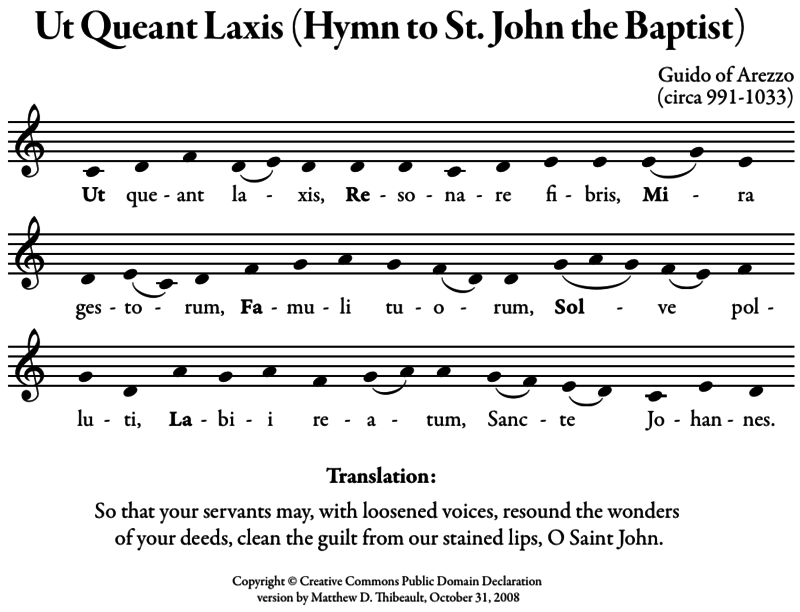
[from Medieval Latin, changed from gamma ut, from gamma, the lowest note of the hexachord as established by Guido d’Arezzo + ut (now, doh), the first of the notes of the scale ut, re, mi, fa, sol, la, si, derived from a Latin hymn to St John: Ut queant laxis resonare fibris, Mira gestorum famuli tuorum, Solve polluti labi reatum, Sancte Iohannes]
NOTE:If you come across definitions of Solfeggio in other official dictionaries in other languages that do not match these below, then please do let me know, so I can update this article. Thanks!
WHAT DOES WIKIPEDIA SHARE ABOUT “SOLFEGGIO”?
In music, solfège (French pronunciation: [sɔl.fɛʒ], also called solfeggio, sol-fa, solfedge, or solfa) is a pedagogical solmization technique for the teaching of sight-singing in which each note of the score is sung to a special syllable, called a solfège syllable (or “sol-fa syllable”). The seven syllables commonly used for this practice in English-speaking countries are: do (or doh in tonic sol-fa), re, mi, fa, sol (so intonic sol-fa), la, and ti/si …
The use of a seven-note diatonic musical scale is “ancient”, though originally it was played in descending order.In the eleventh century, the music theorist Guido d’Arezzo developed a six-note ascending scale that went as follows: Ut, Re, Mi, Fa, Sol, and La.
The names were taken from the first verse of the Latin hymn Ut queant laxis, where the syllables fall on their corresponding scale degree (except for “si”).
“Ut” was changed in 1600 in Italy to the open syllable Do, at the suggestion of the musicologue Giovanni Battista Doni, and Si (from the initials for “Sancte Iohannes”) was added to complete the diatonic scale. In Anglo-Saxon countries, “si” was changed to “ti” by Sarah Glover in the nineteenth century so that every syllable might begin with a different letter.
In the Elizabethan era, England and its related territories used only four of the syllables: mi, fa, sol, and la. “Mi” stood for modern ti, “fa” for modern do or ut, “sol” for modern re, and “la” for modern mi. Then, fa, sol and la would be repeated to also stand for their modern counterparts, resulting in the scale being fa, sol, la, fa, sol, la, mi, fa. This was eventually eliminated by the 19th century, but it was (and still is in a few rare circumstances) used in the shape note system, which gives each solfège syllable a different shape.
Movable do, or solfa, in which each syllable corresponds to a scale degree. This is analogous to the Guidonian practice of giving each degree of the hexachord a solfège name, and is mostly used in Germanic countries.
Fixed do, in which each syllable corresponds to the name of a note. This is analogous to the Romance system naming pitches after the solfège syllables, and is used in Romance and Slavic countries, among others.
NOTE: There are various alternatives mentioned on Wikipedia about the possible origin of the Solfeggio Syllables. BUT, since Dr. Joseph Puleo and Leonard G. Horowitz refer to Guido d’Arezzo in their “Ancient Solfeggio Frequencies” theory, I will do so too, in order to “test” the proclaimed “relationship” between the frequencies and syllables.
THE SYLLABLES
In the online sources about “The Ancient Solfeggio Frequencies” there is a passage about “hidden entries from Webster’s Dictionary and the Original Greek Apocrypha” that provided “definitions of each of the original syllables“.
Precise references and background information about these “hidden entries” and related “definitions” are not mentioned, and can there for not be confirmed or proven as their proclaimed “functions” or unique “qualities”. I do hope I will find more information about this subject, it is an intriguing topic. So, what can we say about the Solfeggio Syllables?
There are two solfège systems (Source: Wikipedia):
1. The “Fixed Do” system: links the syllables to a specific tone, where “Do” represents “C”.
“Fixed Do” Solfeggio Syllable tone connection:
C = (Ut / Do)
D = (Re)
E = (Mi)
F = (Fa)
G = (Sol)
A = (La)
B = (Si / Ti)
! ! ! According to Horowitz C5 = 528Hz. Horowitz also lists Mi = 528Hz. In the “Fixed Do” system Mi = E, NOT C. So, what to think of that? You can’t have both C and E at 528Hz.
2. The “Movable Do” system: does not link the syllables to a specific tone (or frequency), but to the relationship between (the position of) the tones in the scale. The “Do” is always the tonic, the first degree of the scale. If – for example – a composition is written in G Major, then the tone “G” would be the first degree and there for the “Do”. This “Movable Do” system, was the system that Guido d’Arezzo is said to have used.
IF Guido d’Arezzo used the ‘movable Do’ system, then we may conclude that relating specific ‘tone names’ (C, D, E, et cetera) and/or ‘tone pitches’ (frequencies) to the Solfeggio Syllables is not logical (or even possible). Any tone could be a “Do” (as long as that tone would be the tonic of the tonality) and the particular frequency of that “Do” would furthermore depend on Concert Pitch and Temperament as well.
WHAT IF GUIDO D’AREZZO USED THE “FIXED DO”?
In the table below I only show 6 of the 9 frequencies provided by Dr. Horowitz. The reason for this is that only 6 of the proclaimed frequencies are paired with one of the 6 initial (original) Sol-fa Syllables. Even if we would at the much later added “SI” or “TI” then there would be still 2 frequencies without syllable.
As mentioned earlier, according to Horowitz C5 = 528Hz. Horowitz also lists Mi = 528Hz. In the “Fixed Do” system Mi = E, NOT C. You can’t have both C and E at 528Hz with the “Fixed Do” system. So, we have to chose …
If the “fixed Do” system was used, then we may assume that “Ut” (or “Do”) relates (according to Dr. Puleo and Leonard Horowitz) to the tone “C”, and because they list UT at 396Hz we will presumed C=396Hz, not 528Hz, as it is listed as “Mi”. In comparison with the 12-TET scale under concert pitch A4=440Hz, there are some major differences.
In the table below I start with UT or C at 396Hz as suggested by Michael Walton and later published by Dr. Horowitz.
TONE
SOLVEGGIO FREQUENCY
12-TET A4=440HZ
CENTS DIFFERENCE
APPROX. SEMITONE DIF.
UT / DO
396Hz
523.251Hz (C5)
482.40328002554713
5
RE
417Hz
587.330Hz (D5)
592.9487362857523
6
MI
528Hz
659.255Hz (E5)
384.3584140878282
4
FA
639Hz
698.456Hz (F5)
154.0239638067158
1.5
SOL
741Hz
783.991Hz (G5)
97.63626019691937
1
LA
852Hz
880.000Hz (A5)
55.9801119585857
0.5
Could there be a logical reason for these tones to differ so much?
The answer is YES, the frequency of a tone is related to the used concert pitch and temperament. For those who are not familiar with the terms, more information about these terms can be found here: Concert Pitch &Temperament.
From what we have read so far, we could conclude that Guido d’Arezzo (991/992 – 1050) worked on his Solfeggio system in a period when there was no standard concert pitch. In the past a variety of concert pitches have been used for A4, from 360 Hz (in England) up to 460 Hz (in Germany).
According to Dr. Puleo and Leonard Horowitz “LA” (A) should be 852Hz. At present time A5=880Hz. This is a difference of 55.9801119585857 cents, that is only little more then a quarter-tone. The concert pitch A4 would then be around 426Hz (depending on the temperament used), a concert pitch that could have been used in the past.
With concert pitch alone we’re not there yet. Especially if you keep in mind that the temperament used nowadays (12-TET – 12 Tone Equal Temperament), has not always been the standard.
Earlier I mentioned that Guido d’Arezzo developed his Solfeggio system in between 991/992 (birth) and 1050 (death). It was not until around 1400 that the Pythagorean temperament was replaced with the “Meantone Temperament”. There for we may assume that in the time of Guido d’Arezzo the Pythagorean temperament (Circle of Perfect Fifths – CoPF) was used.
Now, let’s take the “Ancient Solfeggio Frequencies” and “line them up” the way they would, as if the Pythagorean temperament was used. Since ‘UT” is proclaimed to be 396Hz, we will start calculating the Circle of Fifths from the same frequency, so we can compare the result of going ’round the circle using perfect fifths. A perfect fifth = 701.96 cents. Note: the CoF frequencies are rounded up to the nearest whole number in this example.
SYS.
UT (C)
SOL (G)
RE (D)
LA (A)
MI (E)
FA (F)
HOR.
396Hz
741Hz
417Hz
852Hz
528Hz
639Hz
CoF
396Hz
594Hz
891Hz
1337Hz
2005Hz
34254Hz
The frequency outcome obove ranges over multiple octaves. The “Solfeggio Frequencies” are spread over two octaves (the frequencies of Ut (C) and Re (D) are located in the so called “1-line Octave” the other tones in the “2-line Octave”). The freqiencies of the CoF as listed above cover approx. 7 octaves.
In order for us to compare these frequencies, we have to bring some down a couple octaves in between C4=396Hz – C5=792Hz. Now, let’s compare these frequencies:
SYS.
UT (C)
RE (D)
MI (E)
FA (F)
SOL (G)
LA (A)
HOR.
396Hz
417Hz
528Hz
639Hz
741Hz
426Hz
CoF
396Hz
446Hz
501Hz
535Hz
594Hz
668Hz
From the information above, we may conclude that the Pythagorean temperament can be “ruled out” as temperament for the “Ancient Solfeggio Frequencies”, as well as any temperament that came after. Pythagoras supposed to have lived between approx. 495 – 570 BC.
It is almost certain that Paolo Diacono wrote his composition using the local musical “traditions” of that time, which would mean the Pythagorean temperament.
This means that IF Italian Benedictine monk and music theorist Guido d’Arezzo used a different temperament then Pythagorean, this must have been older then the Pythagorean temperament, or must have been “imported” from another region then the South of Europe. Horowitz does not provide any evidence what’s however though that this is the case. Zero proof!
Why would Guido d’Arezzo chose to use the ‘Ut queant laxis’ hyme for his syllables, if the actual tones / frequencies of that piece would not ‘match’ the tones frequencies as proclaimed by Horowitz? That would be rather strange, wouldn’t it? It just does not make sense to “link” the Horowitz numbers to those syllables.
Ancient history is the aggregate of past events from the beginning of recorded human history and extending as far as the Early Middle Ages or the Postclassical Era.
Although the ending date of ancient history is disputed, some Western scholars use the fall of the Western Roman Empire in 476 AD (the most used), the closure of the Platonic Academy in 529 AD, the death of the emperor Justinian I in 565 AD, the coming of Islam (early-7th century) or the rise of Charlemagne (740-814 AD) as the end of ancient and Classical European history.
Let’s place the by Puleo/Horowitz proclaimed sources in historical perspective:
“UT QUEANT LAXIS”
The Latin hymn “Ut queant laxis” – written by the Italian Benedictine monk Paolo Diacono (c. 720s – probably 799 AD) – was used as foundation for the creation of the Solfeggio Syllables. This places this Latin hymn in the Middle Ages, at best at the very end of the Ancient and European Classic Antiquity (not to be mistaken for the Classic Period in Music), the Late Antiquity (4th to 7th centuries AD).
GUIDO D’AREZZO
Guido d’Arezzo (991/992 – after 1033 AD) was an Italian music theorist of the “Post-Classical” history (that immediately followed ancient history). If Guido of d’Arezzo is the creator of the Solfeggio system – as proclaimed by Puleo/Horowitz as well (as the contributors of Wikipedia and most historical lecture on this subject) – then we can place Guido d’Arezzo in a time frame AFTER the Late Antiquity (4th to 7th centuries AD).
WITH OTHER WORDS: The Solfeggio System is thus not an invention from “ancient” times, but that of the “Post-Classical” period. using the term “Ancient” in relationship with “Solfeggio” is historically inaccurate, suggestive or perhaps “misleading” is a better word to describe it.
ANCIENTSOLFEGGIOTONE FREQUENCIES?
INTERMEDIATE “CONCLUSION”
We have looked at the term “Solfeggio” from a musicological point of view and we have “done the math” when it comes to temperaments and tuning, but none of it “matches”.
We have looked at the historical timeline to find out if the sources and the proclaimed “ancientness” align, and yet again, no proper match!
Could this mean that Horowitz simply “borrowed” a musical term and “glued” it onto “his own” (although Marko Rodin might disagree about that) number-concept?
Did Horowitz simply “gathered” different pieces of information, put in a blender, wrap it in a self-fabricated story and then “sell” it to the world as the “Ancient Solfeggio Tones”?
MEASURING FREQUENCIES (SHORT HISTORICAL TIMELINE)
For centuries it was thought that sound was so ephemeral that any attempt to capture it — to hold a ruler against it — would be a fruitless exercise. In fact, until the 17th century natural philosophers thought it absolutely illogical to make any attempt to quantify it or even theorize about its measurement.
One of the first discoveries regarding sound was made in the sixth century B.C. by the Greek mathematician and philosopher Pythagoras. He noted the relationship between the length of a vibrating string and the tone it produces.
The possibility that sound exhibits analogous behavior was emphasized by historical figures such as the Greek philosopher Chrysippus (c. 240 B.C.), by the Roman architect and engineer Vetruvius (c. 25 B.C.), and by the Roman philosopher Boethius (A.D. 480-524). The wave interpretation was also consistent with Aristotle‘s (384-322 B.C.) statement to the effect that air motion is generated by a source, “thrusting forward in like manner the adjoining air, to that the sound travels unaltered in quality as far as the disturbance of the air manages to reach.” Also Leonardo da Vinci came around 1500 to the conclusion that sound “travels”.
It wasn’t until 1638 when Galileo came with an explanation of the relation of pitch to frequency, consonance, and dissonance. The mathematical theory of sound propagation began with Isaac Newton (1642-1727), whose Principia (1686) included a mechanical interpretation of sound as being “pressure” pulses transmitted through neighboring fluid particles.
FREQUENCY ANALYSIS
In March 1676 the great British scientist Robert Hooke (1635-1703) described in his diary a sound-producing machine. Hooke noted a regular pattern of teeth produced music-like sounds, while more irregular teeth (on a wheel) produced something that sounded more like speech.
By 1834 the Frenchman Félix Savart (1791-1841) was building giant brass wheels 82cm across, with 720 teeth. Savart’s contribution was a mechanical tachometer connected to the axis of the toothed wheel. He calibrated a rotational scale with the tooth rate, and for the first time demonstrated that specific tones were associated with specific frequencies. He could determine the frequency of a tone heard in air by using his ear to match it with the toothed wheel and reading the frequency from the tachometer. He was using his ear and brain to do what a modern electrical engineer would call heterodyne analysis.
John Shore‘s* (1662-1752) contribution to the science of measurement was the invention* of the tuning fork — a frequency standard that was now available an that we can still refer to. According to the “432 Octaves” website it wasn’t John Shore who invented the tuning fork, but the Egyptians, but I have not seen sufficient evidence to confirm or deny this.
It wasn’t up to the “Electrical Era” when scientists could start measuring sound frequency more accurate, using a combination of tools, such as the Microphone (the carbon- button microphone invented by Thomas Edison and Emile Berliner simultaneously in 1876), the Galvanometer (to measure the tiny electrical currents inside the human body invented by Jacques-Arsène d’Arsonval in 1882), the Thermophone and a vacuum tube to amplify the output of the measurement microphone. These inventions made it possible – when combined – to measure sound frequencies accurately.
Side note: If you like to know more about how to use microphones, then perhaps you like to read: “3 Main Types Of Microphones Explained” by Jeremy Bongiorno.
What I like to make clear with this short historical “time-line”, is that in the time of Guido d’Arezzo no measurement tools exist, nor where philosophers and “scientists” much aware of the exact pitch (frequency) of tones. Guido d’Arezzo could not have know the frequencies represented by his “Do-Re-Mi”. It wasn’t until the “Electrical Era” when accurate measurements could be done regarding frequencies.
Thus, “linking” specific frequencies to the “Do-Re-Mi” is from an historical and scientific point of view pure speculation.
“ANCIENT SOLFEGGIO FREQUENCY” 444Hz vs 440HZ
According to Horowitz mankind started to get “out of sync” with the natural world after the world adopted a standardized tuning frequency of A4=440Hz.
HOROWITZ PROCLAIMED ABOUT 444HZ IN COMPARISON WITH 440Hz:
“More harmonious alternatives have been obviously suppressed. For instance, during the past decade, A=444Hz (C5=528Hz) analysis found this frequency more compatible with nature.“
Two notes in any just (pure) interval are members of the same harmonic series. Pure intervals are important in music because they naturally tend to be perceived by humans as “consonant“, with other words pleasing and HARMONIOUS. You can’t get more “natural”, more “harmonious” when it comes to musical tuning then when you use Just intervals.
This said, let’s have a look at some of the proclaimed frequencies:
The frequency C=528Hz is a Just minor third (ratio 6:5) above 440Hz. Both tones also match harmoniously with G=396Hz with ratio 4:3=528Hz (Perfect “Just” Fourth) and ratio 10:9=440Hz (Just Major second). 444Hz would in fact be LESS in tune with “nature” (LESS HARMONIC) in relationship with 528Hz, 444Hz requires C=532,8Hz, almost 5Hz too high to be “Just”.
HOROWITZ ALSO PROCLAIMED:
“Not coincidently metaphysically, the interval between A=440Hz (equivalent to F#=741Hz in the ancient original Solfeggio scale) and A=444Hz (C5=528Hz in the ancient original Solfeggio scale) is classically known as the Devil’s Interval in musicology, due to its highly aversive disharmonious sound made when these two notes are played simultaneously.“
440Hz metaphysically the equivalent to 741Hz? That sounds rather fancy, but what is he actually saying? What he seems to be saying is: “440Hz is in a theoretical, esoteric and hardtounderstand manner equalinvalue to 741Hz“. How does he figure that?!
Let’s take a look at this claim from a musicological standpoint:
440Hz and 741Hz are approx. 9 semitones (a Major sixth) apart. To be precise, F# (in12-TET at Concert Pitch C4=440Hz +900 cents) would be 740Hz (739.989) and the Pythagorean Major sixth (ratio 27:16, 906 cents) would be 742.5Hz. The tones 440Hz and 741Hz are obviously different tones, these tones are not each others “equivalent”, nor inversion, nor do they mathematically have anything in common. Even when you count up their numbers (something Horowitz likes to use as validation for his theory) values are different: 4+4+0=8, 7+4+1=12=3.
Let’s take another look at Horowitz’ claim, stripping it from it’s “clutter”:
“Not coincidently metaphysically, the interval between A=440Hz(equivalent to F#=741Hz in the ancient original Solfeggio scale)and A=444Hz(C5=528Hz in the ancient original Solfeggio scale)is classically known as the Devil’s Interval in musicology …
Oh, really? The “Devil’s Interval” or better known among musicologists, musicians, composers and sound engineers as a “Tritone“, is the interval between two tones that are 6 semitones (approx. 600 cents – depending on the temperament) apart. The difference between A4=440Hz and A4=444Hz of approx. 47.43 cents is (as mentioned earlier in this article) actually an interval called “Greater 37-limit quarter tone” and is used in temperaments such as 47-Limit and 311-EDO.
It might also be good to mention that the Tritone is commonly used in modern music. Take for example the commonly used Dominant 7 chord of C. It contains the following tones: C-E-G-Bb. The distance between the 3rd (E) and7th (Bb) is a Tritone. The Tritone or “Devil’s Interval” is nothing “spooky” or “mysterious” thus, and has nothing to do with the difference between 440Hz and 444Hz.
HOROWITZ “CONSPIRACY THEORY” ABOUT 440HZ AND GOEBBELS / NAZI GERMANY:
One of the most absurd claims Horowitz made is about the Rockefeller-Rothschild and Nazi Germany “connection” in relationship with the introduction of 440Hz as Concert Pitch:
“Ironically, and most revealing about the Anglo-American cartel arrangement, to persuade European musicians to accept this tuning, and the British Standards Institute (BSI) adoption of it in 1939, Rockefeller-Rothschild “black-op” officials employed Nazi party propagandist, Joseph Goebbels.
Lynn Cavanagh reviewed the history of standard musical tuning and determined that contrary to propaganda, and current consensus, it was 1939, not 1938, as the true year the British Standards Institute (BSI) adopted the A=440Hz standard promoted by the Rockefeller-Nazi consortium.“
“This knowledge best explains why so many musicians intuitively feel better tuning up, or down, a bit sharp or flat, from A=440Hz “standard tuning.”
I am pretty sure the misinterpretations, misinformation and “hocus-pocus” with musical terms and numbers in Horowitz’ “Ancient Solfeggio Tones” concept can not be labeled as “knowledge”. Words that do seem to fit Horowitz’ claims better are probably: “fiction”, “ineptness”, “incompetence”, “ignorance” … No real musician (or for that matter composer, musicologist, producer or sound engineer) would ever use those claims to validate this flawed concept.
“ANCIENT SOLFEGGIO FREQUENCIES” & 432HZ?
Because the Ancient solfeggio Frequencies concept by Horowitz included A4=444Hz, it is good to check that out as well. The difference between 444Hz and 432Hz is 47.434037023964734 cents. This interval (47.43 cents) with ratio 37:36 and Prime Factors 37:22·32 is actually an interval called “Greater 37-limit quarter tone” and is used in temperaments such as 47-Limit and 311-EDO. This though, has nothing to do with the “Ancient Solfeggio Frequencies” concept by Horowitz and Puleo, nor with the 432-Tuning concept.
In some online articles you can find information about the “Ancient Solfeggio Frequencies” and “432-Tuning” all mixed-up together, as if it is the same concept. Those who have spend a bit more time reading into all of this, should have noticed that Horowitz sets A4 to 444Hz, NOT 432Hz. Of course it is possible to create a “temperament” where you could add both frequencies, but there isn’t a single tuning system where multiple frequencies are used for a single tone. A4 can not be both 444Hz and 432Hz at the same time. That by itself should be enough “evidence” to point out that we are talking about two different 12-Tone tuning systems.
SCALES WITH BOTH 432Hz and 528Hz
Arithmetically (number theory) 528 is an abundant number (or “excessive” number), because the sum of its proper divisors (960) is greater than itself. Its abundance is 432.
The difference between 432Hz and 528Hz is 347.40794063398204 cents. That is 3 semitones (3×100 cents) plus 47.40794063398204 cents. The interval of 347.41 cents (ratio 11:9 and Prime Factors 11:32) is called the “Undecimal Neutral Third.”
“THE SACRED SOUND SCALE“: Bo Constantinsen created a tuning concept called “The Sacred Sound Scale” that places 424Hz (Ra-Tuning), 432Hz, 440Hz and 444Hz (& 528Hz) (Horowitz) within one tuning concept. The scale has 32+1 pure harmonic tones and the reference frequency of 256 Hz (Scientific Pitch). It comes from the Natural Ascending Series of Harmonics 32 to 64 of the 8 Hz Fundamental Tone, and represents its 6th double.
“THE PRECISE TEMPERAMENT SCALE“: In recent years Robert E Grant explored and shared the direct relationships between mathematics, geometry, cosmology and music, something I have been blogging as well since 2013 on Roel’s World. In June 25, 2021 Robert published an article about his Precise Temperament Tuning. It’s an interesting concept, I wrote an article about it.
MORE “SOLFEGGIO”?
Horowitz hasn’t been the only one labeling a particular series of numbers with the term “Solfeggio”. After his wake of publications various others have been “building upon it”, some probably unaware they are using a “borrowed” and unrelated musical term (referring to “Solmization”) for their work (often not at all related to music theory at all!).
Take for example the various “Solfeggio Magic Squares” and tables you can find online:
“Solfeggio Magic Square” by Richard Dobson“Solfeggio Magic Square” by Bob Philips“Solfeggio Magic Square” by Bob Philips“Solfeggio Magic Square” by David S. Poe
Now, to make this absolutely clear:
I don’t say their math is wrong, or that these numbers, these “magic squares” are of no value or so. On the contrary. I’m just saying that by calling them “Solfeggio” you create more confusion then clarity by using that musical term.
SO, WHAT ABOUT 396Hz, 417Hz, 528Hz, 639Hz, 741Hz & 852Hz?
In various online sources about the “Ancient Solfeggio Frequencies”, the following passage can be found:
“As we look at the six original Solfeggio frequencies, using the Pythagorean method, we find the base or root vibrational numbers are 3, 6, & 9. Nicola Tesla tells us, and I quote: “If you only knew the magnificence of the 3, 6 and 9, then you would have a key to the universe.” ~ L. Horowitz.
That source mentions the use of Pythagorean method (I presume the summing of digits to get to the “digital root” of a number). When we do so with the list of frequencies, we indeed get the numbers 3, 6 and 9. Well, many other number could lead back to 3, 6, or 9 … for example 111 (=3), or 411 (=6), 12321 (=9), et cetera. That fact alone does not tell us those numbers are important sound frequencies, now does it?
Then, about the Nicola Tesla reference, – as far as we know – Tesla referred to electromagnetic radiation, NOT sound. I have not been able to find any sources stating Nicola Tesla being an acoustician or sound/tone engineer, or even an “amature musician”, nor is it clear if – when making his statement – he mend sound, instead of electro-magnetic radiation. Electromagnetic waves and Sound waves are not “the same thing”. Their vibratory nature (specially not in the physical world) can not be “exchanged” one-on-one.
That we use the same word (Hertz) to define the number of cycles per second of a periodic phenomenon, does not mean all phenomenon measured in Hertz, have a direct 1 on 1 relationship. Not only for sound we use the term hertz, but for light (electromagnetic radiation) and radio frequency radiation as well, and even in computing we use the term Hertz for the CPU clock rate.
Guillermo (https://www.youtube.com/user/TranscendentalTones/) made a short video called “Busting the Solfeggio Frequencies Myth” (youtube below) about his search for “pure tones” and his view on the “Solfeggio Frequencies”. He stated:
“The numbers used for the “Solfeggio Frequencies” … have their place in sacred geometry, or in numerology, but no greater significance when used as a tone measured in Hertz. … Numbers themselves without the units are symbols. … Sound are not “symbols” but manifestations of the vibratory nature of the physical world. … The mistake made here, is one of mixing the archetypal representations with the human conventions.“
UPDATE: not long after Dr. Horowitz’ article “ROEL’S WORLD IS OUT TO LUNCH, OBSESSED TO DISCREDIT 528” (mentioned at the beginning of this blog article) was published this Youtube video created by Guillermo disappeared.
SO, IF NOT SOUND FREQUENCIES, WHAT ARE THESE NUMBERS THEN?
The frequencies proclaimed by Dr. Joseph Puleo and Leonard G. Horowitz, are misinterpreted “variations” on Marko Rodin Family Number Groups of 1,7,4 and 2,8,5 and 3,9,6. These Family Numbers Groups are nodes (not notes as in written tones) of how energy travels, and not actual (sound) frequencies themselves.
On the website “Harmonics of Nature” and interesting view is shared. The author suggests people might have been ‘listening to them wrong’.
Quote: “As the Second was not invented until the 16th century by watchmakers, numbers taken from the Old Testament of the Bible are not likely to refer to vibrations per second. They more likely refer to vibrations in the ancient measure of time, the Helek. When converted from vibrations per Helek to vibrations per modern Second, the Solfeggio numbers coincide precisely with harmonic frequencies of the Earth’s electromagnetic resonance, the Earth TonesTM!”
Many people wish to believe that when a story “pops-up” over and over again that it must be true. “Where smoke is, there ‘s fire” is often thought. Why would otherwise so many people write about it and support it? Well, it’s hard to see what’s going on when smoke gets in your eyes, perhaps there is too much smoke and not enough fire. Ever thought of that?
Just google on “Solfeggio” and you’ll find many more …
What is interesting is that pretty much all sites that support this concept are “New-Age” sites and sites by “conspiracy thinkers” (440Hz Goebbels Myth), hardly any serious (top-level) musicians, composers and sound engineers of any (but the New Age) genres support this concept.
On the other “side” there are only a few people besides myself that have questioned the “Ancient Solfeggio Frequencies” concept. Besides Guillermo mentioned in this article there are only a few who question / oppose the Horowitz concept like: skepdic.com, Richard Dobson and Derek Gedney.
Most of the blog articles about the “Ancient Solfeggio Frequencies” seem to have been written by people with good intentions (I presume), but hardly ever with proper music-theoretical and historical knowledge. Most of those sites/blogs provide info and tools/applications for free, but there are also sites/companies that use this concept to sell their products.
Now, you are free to believe what ever you wish to believe, but perhaps you might like to ‘dig’ a bit deeper and “make up your own mind” before you spend your money. Your choice!
SUM-UP & CONCLUSION
Wrong usage of term “Solfeggio” – a complete mismatch between Horowitz’ concept and actual music history and theory.
The proclaimed meaning of the syllables can not be confirmed, Horowitz does not provide any proper evidence to support his own claim.
Wrong usage of term “Ancient” – The proclaimed sources do not match the time frame to be called Ancient. Why creating the appearance something is older then it actually is?
The proclaimed frequencies do not match any temperament, not even known temperaments of “Ancient” times. If Horowitz / Puleo had really discovered an unknown ancient temperament, then why did they not provide any proper evidence to support their claim?
These frequencies could not have been know to Guido d’Arezzo when he created Solfeggio didactic system, the tools to measure and analyze frequency did not exist yet.
Horowitz contradicts himself several times, in particular with his usage of musicological terms, like for example the “Devil’s Interval” (Tritone). It is clear he does not have a proper understanding of music theory. Most obvious is his claim to use C5 = 528Hz that contradicts another claim his own frequency-syllable lists Mi = 528Hz. C is after all “Ut” (Do) according to the Fixed-Do System,
not “Mi” (the tone E).
Horowitz/Puleo did not ‘discover’ these numbers himself. The ‘front-runner’ in the last couple of decades concerning the numbers mentioned in Horowitz’ concept is Marko Rodin (family number groups) related to Vortex Mathematics.
Musicologically, mathematically and historically the ‘Ancient Solfeggio Frequencies’ 9-tone tuning concept is nothing more then a myth, a figment of Horowitz’ and Puleo’s imagination.
So sharing his flawed pseudo-scientific, pseudo-historical and pseudo-musicological concept as the ‘truth’ might not be in your own best interest. That is, if you like to been taken serious about your music and perhaps your good name and reputation as musician / composer / producer / sound engineer, in my opinion of course.
Do keep in mind though, when you criticize Horowitz’ concept in public you might be “badmouthed” by Horowitz. He tends to play’s the man, not “the ball”, when his believes are criticized.
ANCIENTSOLFEGGIOFREQUENCIES?
What ever these numbers are, they are not the o called “Ancient Solfeggio Frequencies”! Perhaps the most logical way to name those numbers is the “Rodin Family Number Groups”.
EPILOGUE
IMPORTANT: I do NOT proclaim that numbers such as 528 are without meaning, importance or value, perhaps even as tone frequencies for some people. BUT, I personally do not see how the “Ancient Solfeggio Frequencies” (as Puleo/Horowitz like to call them and explained their concept) could ever work in harmony within a proper 12-Tone musical interval system / temperament.
Of course we musicians and composers are free to experiment with any kind of tuning system, as what Bo Constantinsen did with his ‘Sacred Sound Scale’, mentioned earlier in this article. As member of the Xenharmonic community I have seen and heard wilder and more extravagant temperaments then the proclaimed “Solfeggio Frequencies”.
If the frequencies provided by Horowitz sound well to your ears, then by all means, enjoy working with them. Just don’t use or “cycle” his “silly” argumentation (flawed evidence / untruths) to explain why you like to use his concept, you might ‘fool’ people without propper musical education with it, but it makes you look rather “foolish” in the eyes of those who do really understand.
You won’t see / hear me using their concept, the combination of frequencies provided by Horowitz simply does not sound harmonious to my ears.
I had almost given up hope, but it turned out to be matter of time only before Dr. Horowitz finally discovered this article (that I wrote on October 2nd, 2013) and responded to it, it took him a while, this article was online for at least 5 years or so. Obviously his responds was far from “positive” to say the least, something that was expected of course. Would I be labelled a “counter-intelligence agent” as well, as some others who spoke out against the Ancient Solfeggio Frequency story as been told by Dr. Horowitz were?
Well, he finally did, if you’re wondering what he wrote, the you can read his responds to my blog article right here: www.waronwethepeople.com/roels-world/
Obviously with that many accusations, presumptions and claims, it would be appropriate to set some things straight, I’ve only done some with some things, if you are curious, then you can read my responds to Dr. Horowitz responds to this article right here >
On various sites that provide information about 432-tuning (Concert Pitch A4=432Hz or C4=256Hz + Pythagorean Temperament), the “Schumann Resonance” fundamental (at approx. 8 Hz) is often being put “on the table” as evidence: “8Hz is 5 octaves below C4=256Hz”.
HOWEVER, is it correct to state that there is a relationship between the Schumann Resonance and concert pitch A4=432Hz? Does this proclaimed “relationship” really validate the claim that using 432Hz as Concert Pitch is “better”, more “natural”, more “in sync with Earth”?
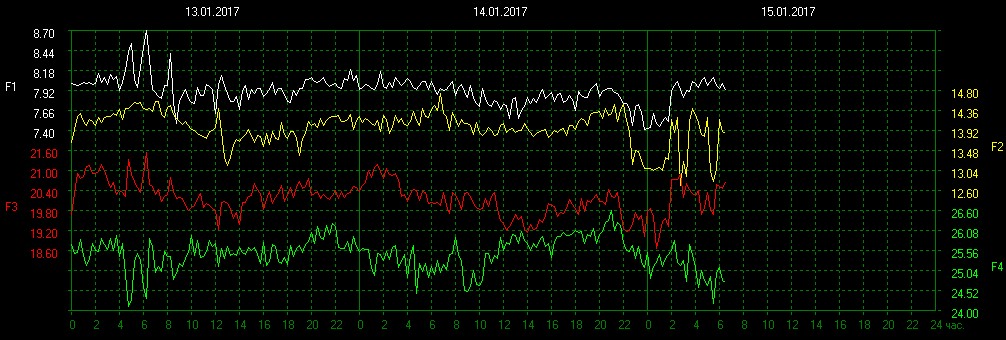
SCHUMANN RESONANCE FREQUENCY FUNDAMENTAL IS IN CONSTANT FLUX
Various sources (including Wikipedia and lunarplanner.com) make note of the resonance frequencies to be in flux, under the influence of “solar-induced perturbations to the ionosphere”. So the pitch of the resonance frequencies could even be lower or higher then the (by some 432 enthusiasts) proclaimed 8Hz.
“The Schumann Resonance frequencies were first calculated by physicist Winfried Otto Schumann in 1952, he reporting the lowest in the group to be about 10 Hz. They were later measured by the National Bureau of Standards at Boulder Colorado in the 1960’s where the 7.8 Hz nominal figure was discovered along with the 5.9Hz progressing overtones.“
“These resonances are NOT composed of fixed or specific frequencies any more than the collective mood of human surface consciousness is fixed. Changes occurring in these frequencies are quite normal and do not indicate anything out of the ordinary. All of these frequencies fluctuate around their nominal values. For example, the fundamental Schumann frequency fluctuates between 7.0 Hz. to 8.5 Hz. These frequencies vary from geological location to location, and they can even have naturally occurring interruptions.”
“In actuality, there are several frequencies between 7 and 50 Hertz that compose the Schumann Resonances. These frequencies start at 7.8 Hz and progress by approximately 5.9 Hz. (7.8, 13.7, 19.6, 25.5, 31.4, 37.3, and 43.2 Hz.).”
“There has also been rumor circulating in some esoteric circles about the 7.8 Hz. Schumann frequency increasing and that this implies a raising of the awareness or spirituality of human consciousness. In my opinion, both points are nonsense built upon misunderstandings about the fluctuating and multi-frequency nature of the Schumann Resonances and about the nature of frequencies in general. Even if it were true (which would require a significant change in the physical size of the Earth or in her surrounding atmosphere), an increase in frequency does not imply an increase in awareness — on the contrary if anything.”
In most sources an average of 7.8Hz is mentioned for the Schumann Fundamental. So, if we tune to C4=256Hz
(C-1=8Hz), would we then still be “in tune” with the Schumann Resonance Fundamental of 7.8Hz?
The 0.2Hz difference (in comparison with 8Hz) does not seem that much of a difference, but, when we look at 7.8Hz (C-1) and calculate C4 (the tone exactly 5 octaves above), we end up with C4=249,6Hz, a difference of 6.4Hz !!! with 256Hz. That is a rather large difference when it comes to tuning.
Other online sources do mention other frequencies when it comes to the fundamental: 7.83Hz or 7.86Hz. With only a decimal difference of .03Hz or .06Hz the result of the tone Frequency 5 octaves above, would generate a significant difference:
7.80Hz fundamental → C4=249.60Hz → A4=419.77Hz (12-TET) / A4=421.19Hz (Pythagorean)
7.83Hz fundamental → C4=250.56Hz → A4=421.39Hz (12-TET) / A4=422.82Hz (Pythagorean)
7.86Hz fundamental → C4=251.51Hz → A4=422.99Hz (12-TET) / A 4=424.42Hz (Pythagorean)
8.00Hz fundamental → C4=256.00Hz → A4=430.54Hz (12-TET) / A4=431.99Hz (Pythagorean)
8.03Hz fundamental → C4=256.89Hz → A4=432Hz (12-TET) / A4=433.5Hz (Pythagorean)
CONCLUSION …
Using the Schumann Resonance as “solid evidence” to “prove” the validity of A4=432Hz as concert pitch is rather “circumstantial” (some would say “pseudo-scientific”).
HOWEVER, since resonance is in flux, then it is reasonable to say the fundamental “can be”, “could become”, and “might have been” at exactly 8Hz at various (short) moments in time. So, from “moment to moment” using A4=432Hz might make your music “in sync” with the Schumann Resonance fundamental frequency, with “Earth’s vibratory nature” … and “out of sync” at other moments too.
And so does 440Hz at moments … when in flux the pitch rises …
As you can see, 8.18Hz and 8.15Hz in the examples above is well within the flux range of the Schumann Resonance Fundamental. You could say that 440Hz is equally valid as Concert Pitch as 432Hz if the Schumann Resonance Fundamental is “leading proof”. 😉


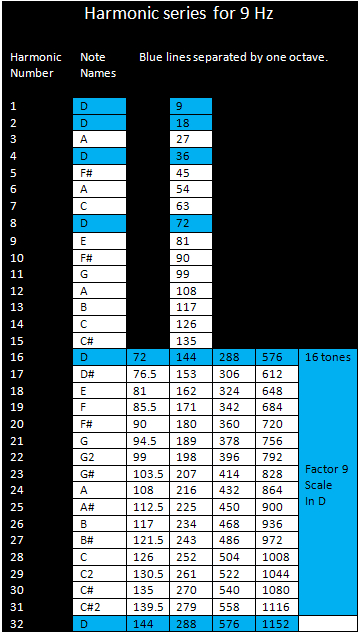


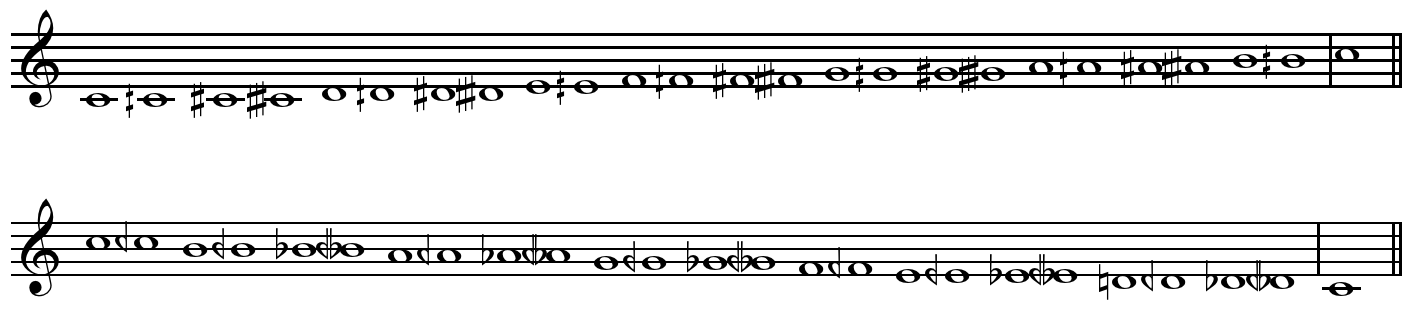
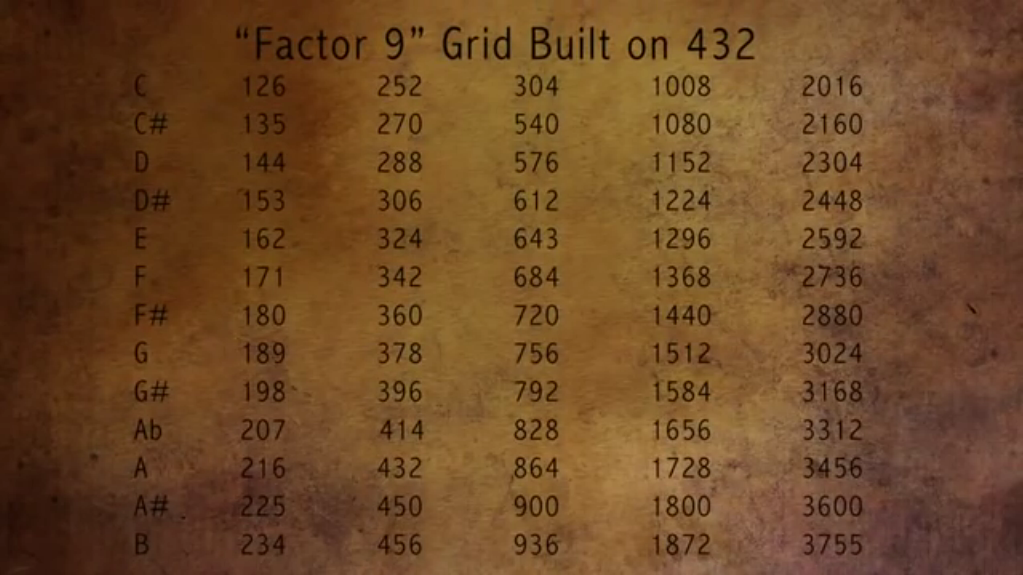

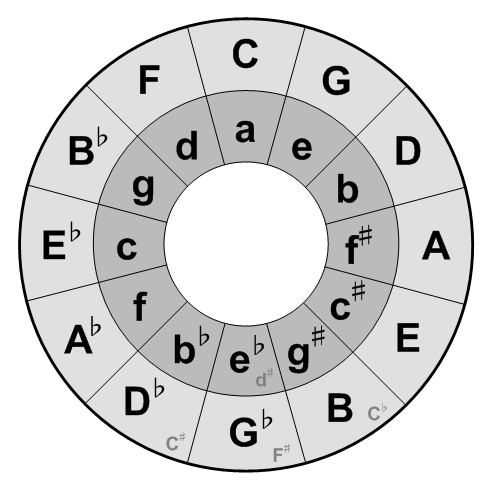 Now, let’s have a look at the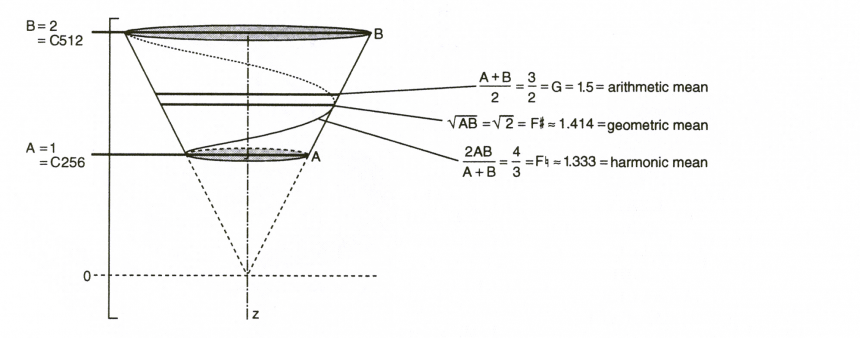
 ISBN
ISBN