
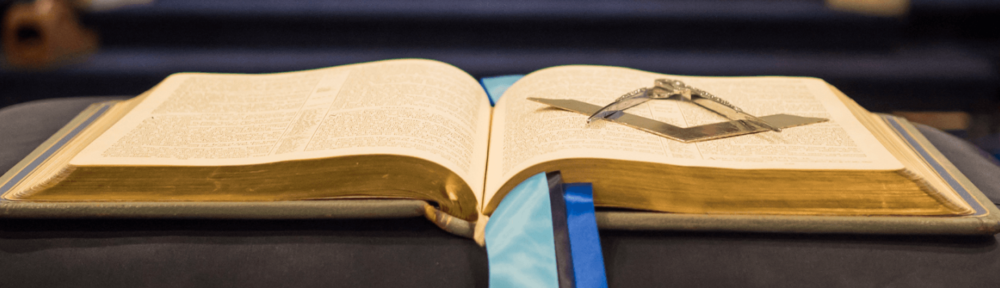
FREEMASONRY – WHAT DO FREEMASONS DO?
Introduction | Is Freemasonry a Mystery School? | What happens in the lodge … | Introduction and development of Masonic Symbols | Masonic Rites | Masonic Lodge | Freemasonry & Music
For more insights on it’s name and history, read: What’s in a name … Its Meaning, Origin & History | … and Proclaimed Predecessors
FREEMASONRY
‘A peculiar system of morality veiled in allegories and illustrated by Symbols’
A peculiar system of … say what?
Albert G. Mackey explains it as follows:
“Freemasonry is a science — a philosophy — a system of doctrines which is taught, in a manner peculiar to itself, by allegories and symbols. This is its internal character. Its ceremonies are external additions, which affect not its substance.“
So, what do Freemasons do?
Freemasons gather regularly to perform rituals and ceremonies. These rituals and ceremonies contain (a) narrative(s) that conveys a meaning not explicitly set forth in the narrative. They describe situations and events or express ideas by means of symbolic events, figures and / or their actions.
Besides performing rituals and ceremonies, there is another (even more?) important aspect to Freemasonry. That is one of self-improvement, or as sometimes mentioned: “Making good men better”. Not better then someone else, but a better version of oneself. Besides improving oneself, a Freemason also likes to play a role in improving the world. Charity, the voluntary giving of help, is one of the values of Freemasonry. Some prefer donating money, others prefer helping through ‘sweat, determination and hard work ’.
Throughout history, Freemasonry has profoundly influenced the construction of civil society by promoting principles of democratic coexistence and ethical values with its emphasis on reason, places mutual respect and the search for truth at the core of its philosophy.
Monotheism is considered the sole dogma of Freemasonry though. Belief in a ‘Supreme Being’ is required of every initiate, Freemasonry is not concerned though with theological distinctions, the conception of the ‘Supreme Being’ is left to the Freemason’s own interpretation. [ Read more about this on Roel’s World ]
Simply put: Freemasonry resembles ‘A philosophical and ethical Brotherhood of spiritual and philanthropic Freethinkers’.
Even though in theory any man above a certain age (differs from Lodge to Lodge) is welcome to join, it doesn’t mean one can just ‘walk in’ and participate. Most Lodges (buildings or chapters of Freemasons) will first have lengthy conversations with a candidate and once convinced the membership will benefit both the candidate and Lodge, an initiation ritual is held. This means Freemasonry is an exclusive ‘members only’ Brotherhood.
IS FREEMASONRY A MODERN MYSTERY SCHOOL?
The word ‘school’ is derived from the Greek ‘σχολή’, which means ‘free time’. Education was something for which one had to have free time. Freemasons ‘labour’ at the Lodge in their free time, the time that remains after they have fulfilled all their worldly obligations in the mundane world.
In Ancient Greece, there were no public schools; only wealthy children received education from private tutors. THE ‘school’ in Athens was Plato’s Akademeia. In this ‘school’, however, there were no classes or examinations. It was a place where wealthy thinkers conversed with each other, sharing viewpoints, with Plato’s ideas as a starting point. Aristotle’s Lyceum was similar, where Aristotle gave a lecture – what Freemasons call ‘symbolic lectures’ or ‘lectures of ‘the craft’, in the Netherlands (literally translated) are called ‘building pieces’ – twice a day.
The primary function of a mystery school is to preserve, perpetuate, and protect the ancient systems of enlightenment, manifestation, and transformation so that they can be practiced and shared today and for thousands of years to come.
These ancient brotherhoods (and sisterhoods) served “The Light” by offering teachings, performing rituals and ceremonies, and training the neophytes who will keep the ancient knowledge alive and accessible. Some mystery schools were initiatory (thus only for people that took the rite of passage, marking entrance or acceptance into a group or society), like with Pythagoras’ school (with a five-year initiation period of listening in silence). While evidence of these traditions and teachings can be found throughout history, the lineage of the mystery schools can be traced back at least 3,000+ years to the time of King Solomon, an important figure in Freemasonry. To me the description given above matches the essence of Freemasonry: an initiatory Brotherhood, performing rituals and ceremonies, preserving and protecting it’s traditions and teachings, with Brethren whom seek “The Light”.
In The Netherlands Brethren gather as well at the Lodge to listen to ‘lectures’ and small essays, in order to converse and share thoughts about it afterwards. These gatherings are called “Comparitie” (Dutch), meaning: an appearance to exchange knowledge, insights and experiences with one another in line with that lecture/essay. It’s not a debate or discussion, no judgements and no intent to convince others about one’s own views. It’s more like a ‘think tank’ where different ideas about the same topic are put together in order to broaden the horizon. Topics often relate to Freemasonry and it’s goals, as well as various spiritual and esoteric topics (such as Gnosis, Hermeticism, Kabbalah, Spiritual Alchemy, and more such topics, but may also be a very personal life story). To me those ‘Comparities’ resemble Plato’s Akademeia and Aristotle’s Lyceum.
‘WHAT EVER HAPPENS IN THE LOGDE, STAYS IN THE LODGE’
There is a good reason for some secrecy about what takes place at the Lodge. First of all the Brethren should be free to speak their minds, without being judged, no matter how extreme it might seem. The practically unlimited freedom to speak one’s mind, comes also with a huge responsibility to use that freedom wisely. Unethical behaviour like discrimination and racism are not tolerated, nor disrespectful behaviour towards other Brethren. Morals and ethics are fundamental in Freemasonry. And due to the intend to be dogma-free, it resembles ‘Freethought’. Naturally it might differ from country, Order or Lodge in what way this pans out. And because everything stays behind closed doors, the Brethren don’t have to worry something they say could ‘bite them in the ass’ in their regular, mundane (non-masonic) part of life.
There is yet another reason for secrecy. The rituals and ceremonies held in the Temple of Masonic Lodge are illustrated with many symbols and are veiled in allegory. This makes it for the non-mason – who hasn’t been educated in symbolism and the backgrounds of Freemasonry – difficult to interpret. Misunderstanding often lead to misinformation, disinformation and conspiracy theories. And there is a good reason for Freemasons to lack trust about the leadership in the mundane world. Throughout history there have been various attempts made to discredit or even ban Freemasonry (see Anti-Masonry), most speaking to the imagination were the Papal ban of 1738 until 1983, declared in Vatican City, Rome … and the ban by Hitler during WWII ( interesting story and symbolism: ❀ ). Fortunately nowadays in most countries one is free to be a Freemason. In some countries like the USA and UK, Freemasonry has become a (public) lifestyle one can be open and proud about.
Even though secret words, tokens and grips are used to make sure only members may enter, it doesn’t mean that Freemasonry is a “secret organisation” or “secret society”. It is, though, a society with secrets. Some things do stay behind closed doors, but ‘keeping secrets’ isn’t questionable per say. In fact, it’s common practice in society with many organisations. The members of a football team, for example, keep their game tactics secret before a match. A business strategy discussed among board members doesn’t leave the office. The military won’t share their troop deployments with the public, nor does the police before executing a raid. Lawyers are upholding the attorney-client privilege and we can all agree that it’s a blessing doctors and psychologist keep your secrets secret. There is nothing wrong with secrets if one’s intentions are sincere.
INTRODUCTION AND DEVELOPMENT OF MASONIC SYMBOLISM
The introduction of symbolism in Freemasonry was a gradual development that evolved over centuries. Early stonemason guilds used symbols related to their trade (like the square and compasses and other tools required for their labour) for practical purposes.
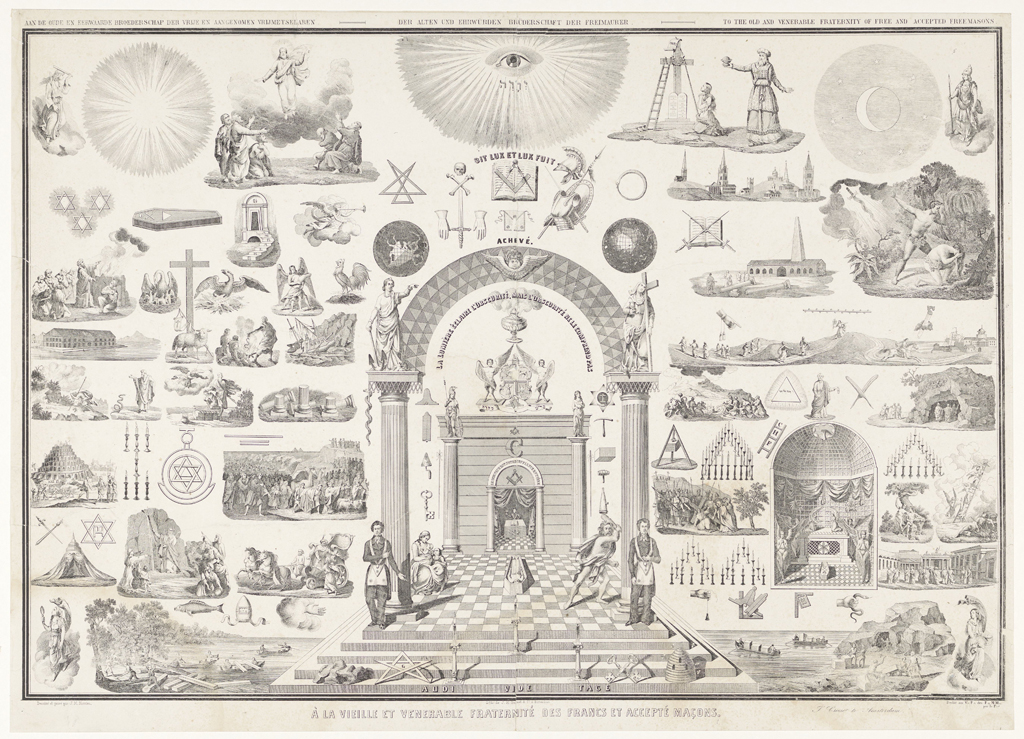
Over time, the symbols acquired more philosophical and moral meanings. Beginning in the late 16th and early 17th centuries, Masonic symbols were increasingly imbued with allegorical and moral meanings. However, the key period for the formal incorporation of Masonic symbolism, particularly through allegories and rituals, began with the formation of the Grand Lodge of England in 1717. James Anderson, a minister and Freemason, played a significant role in shaping early Masonic symbolism. He wrote the “Constitutions of the Freemasons” (published in 1723), which outlined Masonic history, principles, and the symbolic structure of Freemasonry. William Preston, an 18th-century Freemason, is known for his work “Illustrations of Masonry” (first published in 1772), which systematized Masonic rituals and elaborated on the symbolism used within the Craft. In the 19th century, Albert Pike, a prominent Freemason, expanded on the symbolic teachings of Freemasonry in his work “Morals and Dogma of the Ancient and Accepted Scottish Rite of Freemasonry“. He provided extensive interpretations of Masonic symbols and their philosophical underpinnings.
Besides the symbolism taken from Operative Masonry, also ‘Light Symbolism’ is used in and Blue Loge Rituals. A Freemason is symbolically a ‘Light Seeker’ (seeking truth, knowledge, wisdom, enlightenment). In the rituals are many symbolic references to light and darkness and many symbols used to emphasize it’s importance.
“So important , indeed, is it (Light), and so much does it pervade with its influence the whole Masonic system, that Freemasonry itself anciently received, among other appellations, that of Lux, or Light, to signify that it is to be regarded as that sublime doctrine of Divine Truth by which the path of him who has attained it is to be illuminated in his pilgrimage of life.” – Albert Mackey
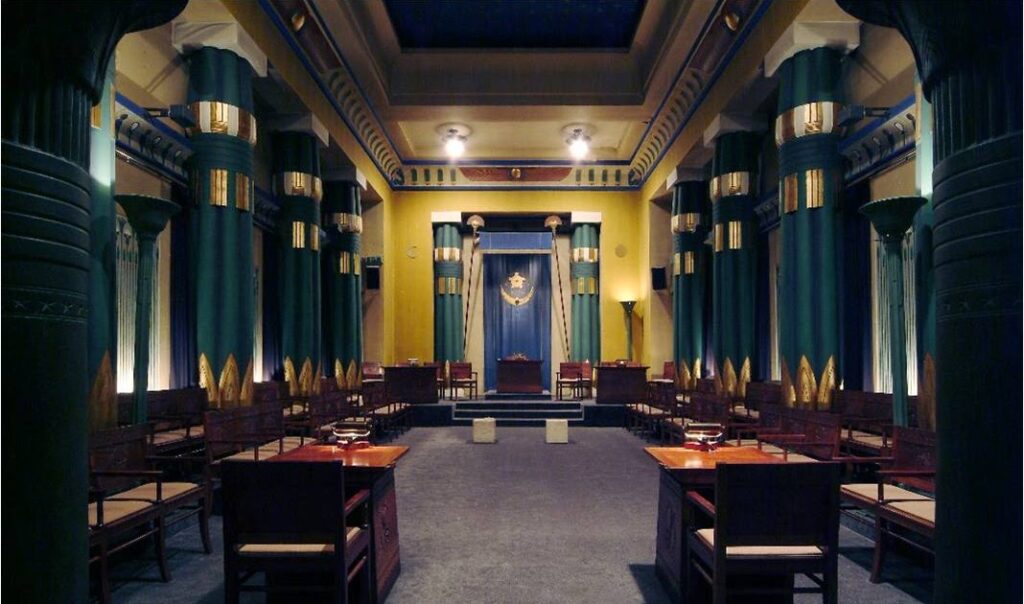
Some Lodges use additional symbolism, for example from Alchemy. In Rituals from another Orders also symbolism from Ancient Egypt play a role, like in the Ancient and Primitive Rite of Memphis-Misraïm. That Rite has no connection with the Blue Lodge Rites, thus is for this article of no further importance.
MASONIC RITE
As mentioned earlier, Rituals are core to Freemasonry, performed in Masonic Temples by the Brethren of the Lodge. Even though most Rituals can be found online or are described in books, I will not share their content in this article. Yes, that bit of ‘secrecy’ I took an oath to ‘what happens in the lodge …’
Not every Lodge uses the same Rites, that depends on the Order and/or Lodge itself. In time Rites changed as well. The most common Rites used in a “Blue Lodge” or ‘Symbolic Lodge” (first 3 degrees of Freemasonry) are:
◾ Emulation Rite (English Rite) / Ancient English Rite / Clermont Rite
◾ Scottish Rite (a.k.a. Ancient and Accepted Scottish Rite) | Rectified Scottish Rite
◾ French Rite (Rite Français, a.k.a. “the ritual”) / “Modern French Rite“
◾ Swedish Rite (In Scandinavia and the Nordic states)
MASONIC LODGE / CENTER / HALL
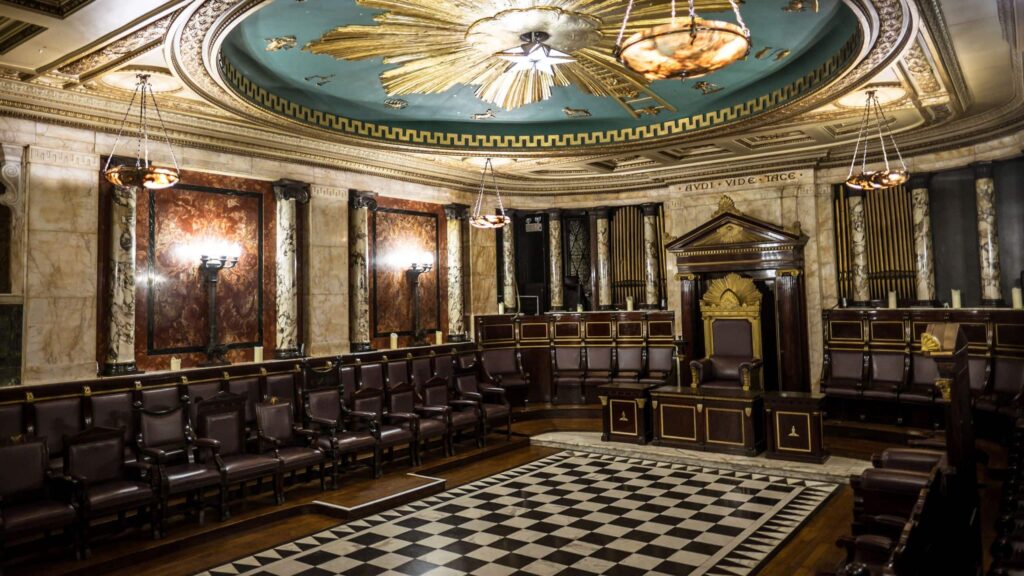
Freemasons gather regularly in a building called ‘Masonic Hall’, ‘Masonic Center’ or most commonly ‘Masonic Lodge’ to perform rituals and ceremonies.
“The term ‘Lodge’ is met with so early as the fourteenth century, and actual records of lodge assemblies in Great Britain are still preserved, dating from the year 1599, the succeeding century being especially rich in minutes descriptive of the initiation of ‘Geomatic’, or non-operative members, many of them were prominent and distinguished personages of that period.” (source: Masonic Records 1717-1894 – Second Edition – John Lane, F.C.A,)
In some countries the word ‘Lodge’ is also used to refer to a local ‘chapter’ (a local division) of Freemasons. A Lodge is thus both a building as well as a chapter. In the beginnings of Freemasonry Lodges (chapters) did not own a building (Masonic Lodge) to gather at. The Lodge (chapter) would meet regularly somewhere in town, but often at the local pub (when closed for it’s customers).
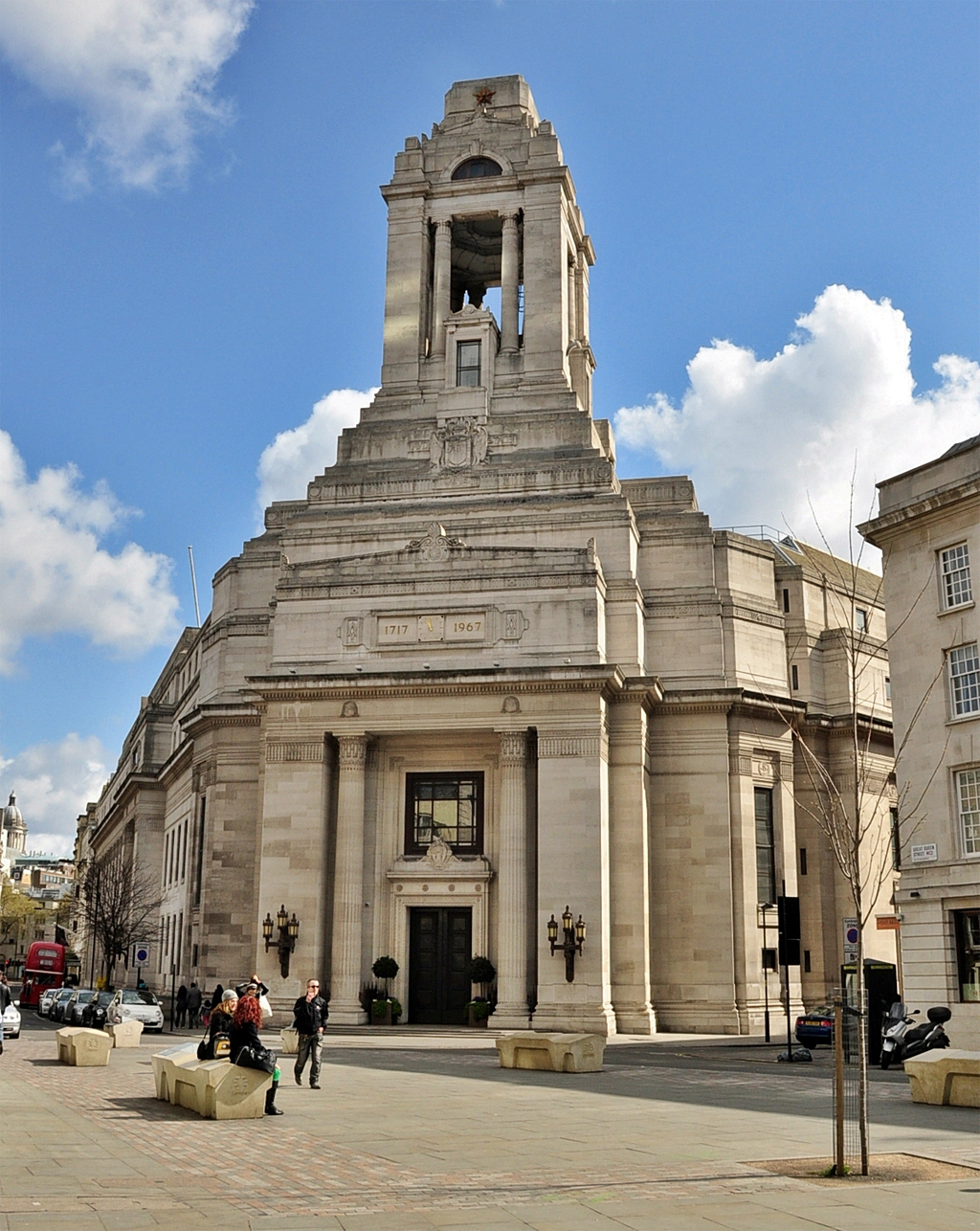
Depending on the Masonic Lodge (building), various facilities are housed.
The most important room is the ‘Temple’ where rituals and ceremonies are performed. A Temple is a place of worship as well as a building used for spiritual rituals and activities.
Even though the term ‘Temple’ might sound very ‘Christian’ or religious to you, Freemasonry is not a religion, nor a cult. Monotheism though, is considered the sole dogma of Freemasonry. This might sound contradictory to what I just wrote about Freemasonry not being a religion. Belief in a ‘Supreme Being’ is required of every initiate, it is an important distinction that separates Freemasonry from purely secular or philosophical organizations. Freemasonry is not concerned with theological distinctions though, thus the conception of the ‘Supreme Being’ is left to the Freemason’s own interpretation. In some countries, Orders and Lodges religion plays a lesser role, or hardly any role, except for the allegories and symbols used during rituals, ceremonies and the Masonic Method, or ‘Masonic Instruction’ (education). In Anglo-Saxons countries, Lodges lean a bit more towards Christianity, but Lodges are (under certain conditions) open for anyone to join (to be initiated), no matter your faith and what kind of ‘Supreme Being’ you believe in …
Being a Pantheist myself, you could imagine the concept of a ‘Supreme Being’ seemed hard to match with the lack of a separate or independent Deity in Pantheism (←article on Roel’s World). It is though less complicated then it appears, as I describe in ‘Freemasonry – ‘Grand Architect of the Universe‘ (GAOTU)‘ on Roel’s World.
LIKED WHAT YOU READ?
Has this article made you wonder if Freemasonry is something for you?
Be aware that rituals and ceremonies are essential, it’s Rituals is what differentiates Freemasonry from other Fraternities or Brotherhoods. If rituals, ceremonies, symbolism and allegories ‘ain’t your thing’, then Freemasonry isn’t for you. On the other hand if it is what you’re looking for, then making contact with a local Lodge is the way to go!
And last but not least I’d like to make a suggestion:
Don’t go digging online (except for information how to join of course). Most rituals can be found online if you dig deep enough. And there are many articles and Youtube videos that ‘expose what goes on in a Lodge’. Some of these are misleading or even odd conspiracy-like, others do actually tell you for example what’s going to happen when you are initiated. I suggest not reading and watching any of that. Some things you should not read but simply experience first, to make it a memorable and perhaps life-changing experience. Once you’re initiated I am pretty sure your Brethren will tell you what books and articles are worth watching. And no worries, nothing unlawful is allowed to happen in a Lodge, unlike what some silly conspiracy stories might suggest, it’s no cult, nor a criminal organisation. You enter the Lodge by free will and are always free to leave, if turns out Freemasonry ain’t for you.
Sources:
- Wikipedia (various pages – links in article)
- freemasonry.network
- Notes made during various lectures by various authors.
