

FREEMASONRY – WHAT’S IN A NAME … ITS MEANING, ORIGIN AND HISTORY
The origin of Freemasonry as well as its name seem somewhat veiled in mystery. In this article I’ll share some different theories on both her origin and history, as well as the meaning of ‘Free’ in Freemason(ry).
The word Freemasonry is a compound word, meaning 2 or more words being joined into one. In this case the words ‘free’ and ‘masonry. Masonry meaning ‘the art and craft of building and fabricating in stone, clay or brick’. The meaning of ‘Free‘ isn’t ‘written in stone’. There are various theories, often dependant on the historical interpretation of the origin of Freemasonry that varies as well. I will share a few interpretations in this article with you.
“The first mention of the English word freemason is in 1375, but we meet it in the Statutes of the Realm for the first time in 1459 (11 Hen. vin., c. xxii.), where the wages are fixed for a free mason, master carpenter and rough mason, respectively; evidently referring to different classes of workmen. There were many statutes where the distinction is made between freemason and ‘rough’ mason. ”
– Bro. G. W. Speth – Ars Quatuor Coronatorum vol. 10 (Quatuor Coronati Research Lodge)
The reference to ‘francs maçons’ (free masons) within the ‘Livre des Métiers’ is among the earliest mentions of the term in (French) historical documentation. In medieval times, continental Masons in France were gathered in a Franc-Mestier (Free-Craft), with special charges and rights; in 1315, King Louis X, “The Stubborn,” banned serfdom all over the French royal lands: so all his subjects became francs (free of serfdom) men, and masons among them thus Francs-Maçons.
There are two types of Free Masons: Operative Free Masons and Speculative (or Accepted) Freemasons.
OPERATIVE (FREE) MASONS
Operative (Free) Masons were craftsmen that primarily work with their hands (and tools), they actually build things.
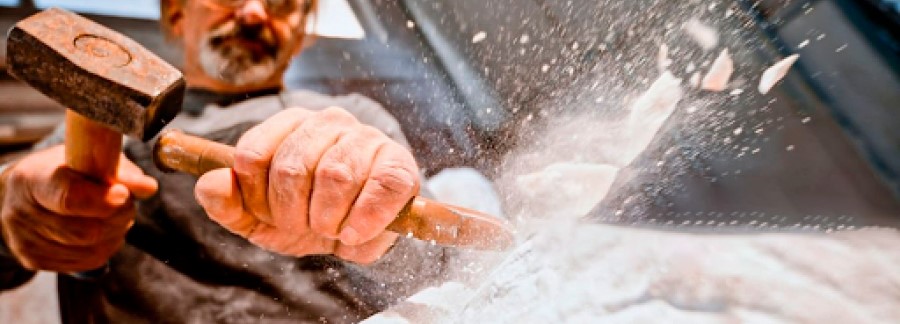
When Operative Masonry started is hard to say. In the middle ages for example, Masons were involved in building cathedrals and castles, as in ancient Rome and Greece, where they were involved in building temples, palaces and coliseums, even in Egypt Masons were involved by the building of temples and pyramids … It’s questionable if that far back in time those Masons were actually Operative ‘Free Masons’. The way Masons organized, was through a guild, an association of artisans who oversee the practice of their craft in a particular territory. The earliest historical references to Masonry guilds date back to c. 2254–2218 BC in the Akkadian Empire (unified Sumeria and Assyria).
In the Cooke Manuscript there is a claim made about the first Masons:
“Reason would that we should tell openly how, and in what manner, that the charges of mason-craft was first founded and who gave first the name of it of masonry. And ye shall know well that it [is] told and written in [the] Policronicon and in Methodius episcopus and Martyrus that Asure, that was a worthy lord of Sennare, sent to Nimrod the king, to send him masons and workmen of craft that might help him to make his city that he was in will to make.”
In Biblical chronology, Nimrod is placed in the generations after the Great Flood, as a descendant of Noah through Ham. This would roughly place him in the early post-Flood period, possibly around the time when ancient Mesopotamian civilizations like Sumer were forming, which is estimated to be in the late 4th millennium BCE to early 3rd millennium BCE. However, there is no direct archaeological evidence to pinpoint his exact reign or life.
It is important to note that throughout history not all Operative Masons were Operative Free Masons. With society becoming more complex and politically challenging, Operative (Free) Masons – often just skilled in their craft as stonemasons – figured it would be beneficial for their guilds if some members were educated in politics and science. Thus, distinguished men were admitted to their guilds, because of their political eminence, or their superiority as men of science. These new members passed through the rituals of the degrees, and were called Accepted Masons. These guilds thus became known as guilds of ‘Free and Accepted Masons’. Even when in time they became fully Speculative, they kept identifying themselves as “Free and Accepted.”
‘Free‘ in Freemason might suggest ‘a mason without a long-term commitment to any one employer’. This interpretation of ‘free’ applies primarily for Operative Free Masons. Free Masonry would thus be the craft of building and fabricating in stone, clay or brick without a long-term commitment to any one employer.
ANOTHER POINT OF VIEW
If it were that Freemason simply meant a mason free of a long-term commitment with any employer, company or gild of masons, if this were so, we should expect to see other craftsmen and gilds – besides those of the masons – adopting this working method. That though only happened occasionally.
In the essay “Free and Freemasonry: A Tentative Equiry” (published in Ars Quatuor Coronatorum vol. 10 of the Quatuor Coronati Research Lodge) Bro. G. W. Speth mentioned:
“It is a self-evident proposition that masons existed in goodly numbers long before any city gild of masons was formed ; and I think it may fairly be sustained that large numbers of highly-skilled masons must have been scattered up and down the country. ”
“The whole land was being covered with the most exquisite specimens of Norman and Gothic architecture, in the shape of Abbeys, Cathedrals, Monasteries, Castles, Chapels, etc., in cities, towns and the countryside alike. Masons of the highest skill existed, therefore, in great numbers, and these I will for the moment designate as ‘church-building masons’. ”
“A church-building mason, travelling mason, was immediately recognised and treated as a fellow, a co-member of the fraternity. The Old Charges enjoin that he shall be given employment, or failing that, helped to the next Lodge. Herein they differed from the city gilds of masons established later, who like all other craft gilds in towns, were strictly localised. Each citygild was an entity in itself, and recognised none as entitled to work within its jurisdiction except those who had served an apprenticeship to one of its freemen, or otherwise acquired its freedom. But the church-builders all belonged to one fraternity, and found work wherever church buildings were in course of erection.”
“A gild member in a city could always point to his indentures entered in his Company’s books, and to his freedom entered at the Guildhall. A church-builder could not do that. If his indenture existed in writing which is doubtful, it might be miles away, he must therefore have means to establish not only that he was at one time an apprentice to the craft, but also that he had served his full time, and had been passed a master of the craft. This he was enabled to do by secret grips, tokens, signs.”
“Some of the church-builders might join the gild, others would be contented to go on in the old way. Two events would inevitably occur. First, the city-gild would endeavour to force the church-builders into their own ranks, to compel them to take up the freedom of the city, and failing this they would attempt to prevent them exercising their craft. Secondly, they would complain of their admitting foreigners, i.e., travelling masons coming from elsewhere, to work within the city and its liberties. The church-masons would reply that these were old customs, that their own laws obliged them to find work for strangers coming over the country, and that, though within the city walls, they were not under the jurisdiction of the city authorities, inasmuch as they were working on church soil, which was extra municipal.”
Writer John R. Bennett shares the following view on the history:
“In the year 716 A. D. the English monk, St. Boniface, went into Germany and organized a special class of monks for the practice of building, under the name of Operarii, or Craftsmen, and Magestri Operum, or Masters of the Works. Some of them designed the plan of the building, others were painters and sculptors, and then there were those who were called ‘coementarii’, or stonemasons, who performed the practical labors of construction. Then, by degrees, the knowledge of the arts and sciences went from these monkish builders out into the world, and the laymen architects, withdrawing from the ecclesiastical fraternities, organized brotherhoods of their own. These independent brotherhoods now began to be called upon wherever an important building was to be erected, and eventually they entirely superseded the monkish teachers in the prosecution of the art of building. But now a new classification took place. The more intelligent of the laymen, who had received these secrets from the monks, were distinguished as architects from the ordinary laborers, or common masons. These brotherhoods of high artists soon won great esteem, and many privileges and franchises were conceded to them by the municipal authorities among whom they practiced their profession. Their places of assembly were called Lodges, and the members took the name of Free masons. Their patron saint was St . John the Baptist, who was honored by them as the mediator between the old and the new covenants, and the frirst martyr of the Christian religion. Such was the beginning of the brotherhoods of (free)Masons in Germany.”
“In the beginning of the tenth century a Fraternity of Architects was founded in France, and was similar to that of their German brethren. Originating like them, from the cloisters, and from the employment of laymen by the monkish architects, the connection between the Masons of France and the Roman Colleges of Artificers was more intimate and direct than that of the Germans. The principal seat of the French Fraternity was at Como, a city of Lombardy, from where the Lodges were disseminated over the kingdom, and who passed from country to country and from city to city under the name of “Traveling Freemasons.”
ACCEPTED (OR SPECULATIVE) FREEMASONS
Accepted (or Speculative) Freemasons were educated men, scholars. One of the differences with Operative Free Masons is that they do not apply ‘the craft’ for an employer, they symbolically apply ‘the craft’ for themselves (personal development) and their fellow Brethren, not by written contract but by vows put to words during their initiation and follow-up rituals while climbing the ladder of degrees. Generally speaking when we use the term Freemason/Freemasonry (compound word), we nowadays mean a Speculative Freemason and Speculative Freemasonry.
The origin of Speculative Freemasonry is also not easy to pinpoint. The oldest and most important Masonic manuscripts that suggests the existence of (Speculative) Freemasonry are: The Regius Manuscript (1390), The Cooke Manuscript (1450), The Schaw Statutes (1598-1599), Inigo James Manuscript – (1655, Regular Grand Lodge of England) and the in Freemasonry commonly known ‘Constitutions’ (Londen, 1723) by Rev. James Anderson. These are a few of the most important manuscripts, statues and constitutions that together with several other (33 in total) are known as the ‘Old Charges‘.
What is fact, is that the first Masonic Grand Lodge was established in England in 1717 as the Grand Lodge of London and Westminster, soon to call itself the Grand Lodge of England. Before the establishment of a Grand Lodge, independent Lodges did already exist though. What Lodge was first seems still a matter of some debate. What I being said is the following:
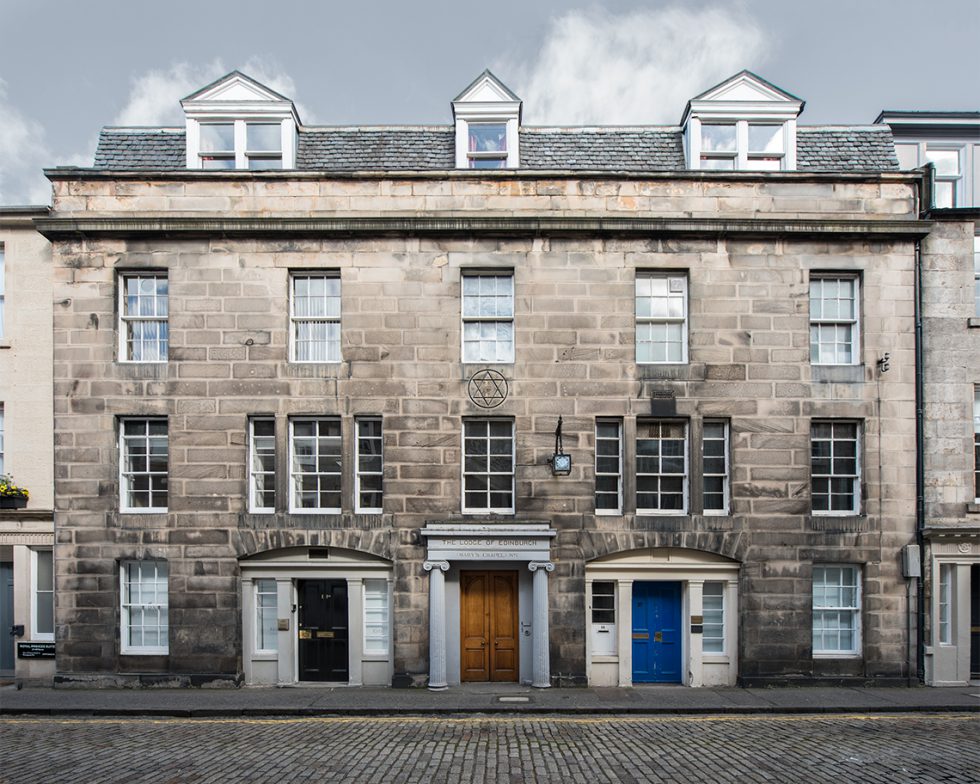
“The oldest written records for a Masonic lodge belong to Aitchison’s Haven Lodge, Muddelburgh, UK. They date back to 9 Jan 1599. The oldest written records for a Masonic lodge that is still in existence today are from The Lodge of Edinburgh (Mary’s Chapel), No 1, Uk. They date back to 31 July 1599.“. Most impressively, its first 5 pages incorporate the Schaw Statutes which are dated December 28, 1598.
Freemasonry is not a single global fraternity, there are many different Orders (Masonic Bodies). In this article I only wrote about the so called “Blue Lodge” or ‘Symbolic Lodge” degrees in Masonry (1-3: Entered Apprentice, Fellow Craft and Master Mason). Originally only Lodges for men were founded. At present day male Freemasonry Orders and Lodges are still the “the lion’s share” within Freemasonry. In 1893 ‘The International Order of Freemasonry Le Droit Humain‘ was founded, membership of which is available to men and women (on equal terms). ‘The Order of Women Freemasons‘ (founded in 1958) is an example of the various female only Orders that appeared.
You can read more about Lodges, their Rites, Symbolism, activities, et cetera in “What do Freemasons do?” (on Roel’s World).
Supposition: ‘Free’ in Freemason might suggest free as in ‘freethinking’ and ‘free will’. A Freethinker holds that beliefs should not be formed on the basis of authority, tradition, revelation, or dogma, and should instead be reached by other methods such as logic, reason, and empirical observation.
ANOTHER POINT OF VIEW
In “Free and Freemason“, an essay by German Bro. F. F. Schnitger (written for and published in 1889 in ‘Ars Quatuor Coronatorum vol. 2’ (Research Lodge Quatuor Coronati, London), Bro. Schnitger researched the meaning of ‘Free’ in connection with Free Mason’.
Bro. Schnitger writes:
“Free is evidently of Saxon origin, and it may therefore be permissible to enquire what meaning was in olden time attached to the corresponding ‘frey‘ and ‘frei‘.”
In this essay he also shared several quotes from Mathematician Gualtherus H. Rivius who said in his report on the ‘Mathematical and Mechanical Arts of Architecture’ (1558):
“Therefor did the ancients hold this art (painting) in such high honour and respect, that they did except the painter’s art from all other handicrafts, and did not call it ‘fabrilem’[1] but ‘pictūram’[2], and considered it a free art (Freye Kunst) and not handicraft (Handtwerck).”
[1] From Latin fabrilis, from faber (“workman”), relating to stonework, metalwork, woodwork, etc.
[2] from Latin pictūra (“a painting”), from pictum + -tūra, from the supine of pingō (“I paint”).
On the subject of Sculpture Rivius also shared:
“Sculpture – under which denomination we do not only understand the art of the ‘picture hewer’ and ‘picture carver’, but all such like artistic work of forming in all kinds of material – is indeed an excellent art and amongst all ‘artistic handiwork’ the ‘most free’ and particularly fit for a ‘noble’ mind, and has always been properly appreciated at such value by all sensible people, that is could never be separated or disconnected from other ‘free’ mathematical arts. The learned translator and composer of this important work on architecture and the other “free” mathematical arts recommends its use on the title page to all artistic handicraftsmen, work masters, stonemasons, master builders, cannon and rifle masters, painters, carvers, goldsmiths, and whosoever uses Compasses and Squire artistically.”
Bro. Schnitger then proceeded with:
“From the foregoing I feel justified in claiming that a Free Mason or Free Stone Mason was no more a man working in freestone then he was “free to be a mason;” he was not a handicraftsman, but an “artisan mason” instructed in the “free mathematical arts”. In other words, he was a man who understood the theoretical and mathematical doctrine of his craft, which need not exclude his own serving a practical apprenticeship.“
Supposition: Could ‘Free’ in Speculative Freemasonry also be interpreted as a reference of being educated in the Artes Liberales? The Fellowcraft Degree commends Freemasons to study the 7 Liberal Arts and Sciences, often visualised as the final 7 steps of the ‘Winding Stairs’.
Line of thought: “free mathematical arts“ and Freye Kunst → ‘Artes Liberales‘ (Liberales = Latin for free). Arithmetic and Geometry → the mathematical Liberal (free) arts.
SO … WHAT’S IN THAT NAME?
There you have it, sweet and all … several possible interpretations about what ‘Free’ might have meant in resume:
- A mason without a long-term commitment to any one employer.
- A mason who did not fall under the jurisdiction of city authorities and/or free from guild regulations.
- A mason who has/had been instructed in the Liberal Arts (liberales = free).
- A mason who is/was a Freethinker
- A mason who was a man free of serfdom (francs maçon)
- A reference to a different class of craftsmen (rough mason vs free mason)
For additional origin claims that might stir your imagination you might like to read: Freemasonry And Proclaimed Predecessors
Does one interpretation smell sweeter then the others?
I couldn’t tell you for certain, like many Brethren before me. And perhaps some mysteries should not be unveiled entirely but left to the imagination. For a society (with secrets), where symbolism and allegories play such a fundamental role, and so rich is of traditions, it probably should not matter.
It was though fun to speculate about Speculative Freemasonry!
Sources:
- Wikipedia (various pages – links in article)
- Ars Quatuor Coronatorum vol. 2 (Quatuor Coronati Reseach Lodge)
- Ars Quatuor Coronatorum vol. 10 (Quatuor Coronati Reseach Lodge)
- “The Origin of Freemasonry and Knights Templar (John Bennett)
- Notes made during various lectures by various authors.
