A philosophical, semiscientific, contemplative blog by Roelant (Roel) Hollander about Music, Sound, Saxophone, Photography, Arts, Sacred Geometry, Esoterism, Freemasonry, and more …
In this blog article I will share some information about the proclaimed relationship between Sound and Color from various sources throughout history. This blog article is not a scientific thesis or theory, but more like a compilation of various ideas, thoughts and theories (some scientific, others philosophical) throughout history.
Even though both light and sound can be visually “represented” by waves and the unit Hertz can be used for both, there are nonetheless at least as many differences as there are similarities. It is therefor very important to mention that sound and light are not the same “thing” and the effect they have when “interacting” with the world around us (as well as the effect they have on use beings) differs thus as well. More about this later. Because of this difference you can not simply “replace” one with the other. This said, for some people sound and light/color though can be “complimentary” and/or “enhance” the experience of both sound and light.
Note: The text quoted and shared images used belong to the authors I quote. I have provided links to their web sites, where you can find a lot more interesting information about this and other subjects.
EARLY RESEARCH
In the 13th century, Roger Bacon theorized that rainbows were produced by a similar process to the passage of light through glass or crystal.
In the 17th century, Isaac Newton discovered that prisms could disassemble and reassemble white light, and described the phenomenon in his book Opticks (1704).
Newton divided the spectrum into seven named colors: red, orange, yellow, green, blue, indigo, and violet. He chose seven colors out of a belief, derived from the ancient Greek sophists, of there being a connection between the colors, the musical notes, the known objects in the solar system, and the days of the week.Newton’s color circle (from Opticks) shows the colors correlated with musical notes. The spectral colors from red to violet are divided by the notes of the musical scale, starting at D. The circle completes a full octave, from D to D. Newton’s circle places red, at one end of the spectrum, next to violet, at the other. This reflects the fact that non-spectral purple colors are observed when red and violet light are mixed.
In the 18th century, Goethe wrote about optical spectra in his Theory of Colours. Goethe used the word spectrum (Spektrum) to designate a ghostly optical afterimage, as did Schopenhauer in On Vision and Colors. Goethe did create his own color-wheel, but did not specify a particular color-tone combination as Newton did (see above).
SENSATION OF SOUND AND COLOUR AND THEIR “DIMENSIONS”
“If our ears contained just a few individual sensing elements, each tuned to one particular absolute frequency, we might all be able to recognize the absolute “color” of audible tones just as well as we can recognize absolute red. However, the ear needs to respond over a much larger range of frequencies, and the dimensionality of the “space” of audible sensation is much greater, we can distinguish a much greater variety of spectral characteristics of sound than we can of light.
Roughly speaking, the coiled cochlea of the human ear has a varying elasticity along its length, so it can be regarded as a series of oscillators of different resonant frequencies, and these perform a fairly detailed spectral analysis of incoming sound waves, transmitting to the brain something a 3000 point spectral profile. The detailed mechanics of how the cochlea responds to stimuli are very complicated, and the study of this function is hampered by the fact that the mechanical properties change significantly if a cochlea is removed for study. Nevertheless, it seems clear that whereas the spectral analysis of optical stimuli has only three dimensions, the spectral analysis of aural stimuli has at least 3000 dimensions. It is not surprising that we (most of us) don’t memorize the absolute sensations associated with tones over ten octaves.” (Source: www.mathpages.com)
WHAT DO SOUND AND LIGHT HAVE IN COMMON?
– Sound and light both exhibit oscillatory wavelike characteristics with various frequencies, wavelengths, and amplitudes. – The sensed intensity is dependent on the amplitude of the wave. – Both propagate* at a finite speed. – Both exhibit Doppler shifts toward higher frequencies when the source of the wave is approaching us. – Both undergo refraction, diffraction and interference.
* Some scientist, theorists and natural philosophers such as Walter Russell state that waves of light do not propagate but ‘reproduce’ each other from wave field to wave field of space. The planes of zero curvature, which bound all wave fields, act as mirrors to reflect light from one field into another. This sets up an appearance of light as traveling, which is pure illusion.
WHAT IS THE DIFFERENCE BETWEEN SOUND AND LIGHT?
– The frequencies of visible light and audible sound differ from each other by more than ten orders of magnitude. Audible acoustic range: roughly 20 Hz to 20,000 Hz vs. visible optical range: roughly 380 trillion Hz to 760 trillion Hz. – Sound is a form of mechanical energy caused by vibrations of matter. Light is electromagnetic energy caused by interacting electric and magnetic fields. – Light waves are composed of transverse waves (meaning that the oscillations are perpendicular to its direction of “propagation”) in an electromagnetic field, while sound waves are mechanical longitudinal waves (meaning that the oscillations occur in the direction of propagation) causing alternating compression and expansion of matter. Regardless of the source of the sound wave – whether it is a vibrating string or the vibrating tines of a tuning fork – sound waves traveling through air are longitudinal waves. Through solids, however, sound can be transmitted as both longitudinal waves and transverse waves. – Sound requires a medium to propagate, light does not. Therefor while light does “propagate” through a vacuum (absence of a medium), sound does not. – The denser the medium, the greater the speed of sound. The opposite is true of light. – Electromagnetic waves (including light) is a “stream of particles” (photons). Sound does not consist out of particles. With other words, sound is only a wave, whereas light exhibits both wave and particle properties. – Light waves can be polarized, but sound waves cannot. – It’s also worth noting that while the frequency range of audible sound covers a factor of 1000, (about 10 octaves), the range of visible light covers only a factor of two (just one octave).
“IN THE MIX”
Another interesting difference between sound and light / color is what happens when you use more then one color or tone.
LIGHT & COLOUR: 1 + 1 = 1 (equals 1) When you take two or more colors and mix them, you get a “new” color, a unique color of it’s own. You will not be able to see anymore what exact colors were used to get to this color by just watching this new color. When you use light as medium the a color will become lighter (closer to white, additive – RGB) with every added color, when you use pigments (paint/ink) as medium the new color will become darker (closer to black, subtractive – CMYK).Results obtained when mixing additive colors are often counter-intuitive for people accustomed to the subtractive color system of pigments, dyes, inks and other substances that present color to the eye by reflection rather than emission. Additive color is a result of the way the eye detects color, and is not a property of light. There is a vast difference between a pure spectral yellow light, with a wavelength of approximately 580 nm, and a mixture of red and green light. However, both stimulate our eyes in a similar manner, so we do not detect that difference, and both are yellow light to the human eye (color vision).
SOUND/TONE: 1 + 1 ≥ 2 (equals or is greater then 2) When you play two or more tones together, those tones will not become a “new” single tone. You will still be able to differentiate the tones used. Combined tones could even create additional “tones” when played together due to the possible interaction between harmonics or interference between the played tones. With other words, when mixing sound/tones you can create a ‘poly-tone’ or ‘multicolored’ work of art, but when mixing light/colors you will end up with a ‘mono-colored’ or ‘monotone’ work.
Another good visualization of additive and subtracted light was made by Clay Taylor for his article “Light & Color Theory“. I do suggest you visit his page for more information!
SINGLE FREQUENCY (LIGHT/COLOR) vs. HARMONIC SERIES (TONE)
A musical tone is actually a whole series of frequencies (theoretically never ending) and thus not just one color (one frequency), but a whole series of colors. If you would mix the colors of all the harmonics of a tone together with paint, then you would end up with a “black-ish” color. Just as when you would mix all colors of light you would end up with white.
But, when we hear a tone, most of us predominantly hear the 1st harmonic (fundamental) and it’s multiples (2, 4, 8, 16, et cetera). Only very few people can clearly differentiate between the individual harmonics within the spiral of harmonics of that tone. With other words, there is a particular “tone” (“boosted” by it’s multiples) that “stands out”, the fundamental. And that is the frequency you can “base” the color on.
CONVERTING AUDIO TONES TO THE VISIBLE SPECTRUM OF LIGHT – COLOR
“The octave of visible light, extending from the color red to the color violet, is forty octaves higher than the middle audio octave, that which you would hear on a piano keyboard. Light, however, is measured by its wavelength, whereas sound in measured by its frequency.”
“Waves of light are quite short. For example, the center frequency of the color green has a wavelength that is 0.0000005132 meters long (0.5132 x 10⁻⁶ meters). To make this easy, we measure visible light in a unit called the Ångstrom (Å) (that is a capital Å with a little circle on top). One Ångstrom = 1 x 10⁻¹⁰ meters (that is 0.1 nanometers). The colors of the visible spectrum are measured in thousands of Ångstroms. As show in the following chart, the visible spectrum of light extends from about 7000 Å (red) to about 4000 Å (violet). Also shown in the chart are the center wavelengths for each of the seven basic colors; their corresponding audio frequencies; and the location of the musical notes of an audio octave translated to the the visible spectrum.”
“Thus, when we raise each note in middle audio octave by forty octaves we find its corresponding color harmonic. As shown in the chart below, the note “G” lies in the red area of the color spectrum. The note “A” raised forty octaves lies in the orange part of the spectrum. The note “B” lies in the lemon (yellow-green) part of the spectrum. The note “C” in the green band; the note “D” in the turquoise-blue band; and the note “E” lies in the violet band. Notice that the note “F” lies in the far violet area of the visible spectrum. This is near where the human eye range of color perception begins to drop off (although unique to each person). Also notice that the note F# lies even further from violet, in the near-UV (ultra-violet) area of the spectrum. Thus (when raised 39 octaves rather than forty octaves), it also it resides in the far-red (or near infra-red). Because of this, the note F# embraces the visible spectrum, and thus has some red and some violet, a combination that produces more of a purple color.”
Very similar, but slightly different is the tone-color combination below (another great visualization of the color-tone relationship made by Clay Taylor for his article “Light & Color Theory“. I do suggest you visit his page for more information!).
The difference with the color-tone combination of Nick Anthony Fiorenza is approx. a semitone. Cyan for example is represented by the tone “D” at Clay Taylor‘s concept and a “D♭” in Nick Fiorenza‘s concept.
Another interesting color-tone combination is mentioned in “Interference – A Grand Scientific Musical Theory” by Richard Merrick.The difference between his color-tone combination with that of Nick Anthony Fiorenza and Clay Taylor displayed above. Rich Merrick‘s “C” is “kind of blue”, like the “D” of Nick Fiorenza and the D#/Eb of Clay Taylor.Excerpt from “Synesthetic Coupling”
“There have been many attempts through history to establish an association between color and pitch, though none have been universally accepted. Composers like Berlioz, Debussy, Wagner and Scriabin all had ideas about which colors matched which tones. The Rosicrucian Order developed their own color mapping and even Charles Fourier suggested in his 1846 Theorie de l’Unite Universelle an alchemical connection between certain pitches, colors and metals.
One of the more recent proposals suggests that we should reduce light frequencies down to the speed of sound in order to produce a color mapping. While this last theory is a reasonable approach, physicists would argue against this, pointing out that that sound and light waves are not the same kind of energy. Science requires some other causal link or coupling.”
“Rather than use any of the above methods, we will construct our synesthetic model from Isaac Newton’s popular 12-step tertiary color wheel containing three primary colors, three secondary colors and six tertiary colors. Taken as two groups of six colors, the even group of primary and secondary colors can mix adjacently to produce an odd group of tertiary colors in much the same way as one wholetone scale mixes to the other. This suggests coherent light is perceived to mix harmonically just like coherent sound mixes into music harmony. This is without a doubt due to the fact that the visible light spectrum frequency doubles to form an octave of light just like an octave of sound.”
“Since the visible color spectrum ranges from about 375 terahertz on the low end to about 750 terahertz on the high end, the visible color spectrum naturally forms a 2:1 octave doubling of light frequencies like that of a musical octave. From this, we can proportionally map twelve colors to twelve tones by starting just below human visibility at 370 terahertz and then calculating twelve color frequencies by multiplying each preceding color by 2^(1/12), making sure to balance around the center of the visible spectrum. Doing this creates a logarithmic color scale that perfectly matches an equal-tempered musical octave. It also places each color within its corresponding spectral color band for the three cone photoreceptors on the retina of the human eye.”
Another excellent image, displaying the Color, Tone and Chakra relationship was made by Rich Merrick from his work “Interference Theory“, a “must read” if you are interested in this and related subjects!
Richard relates the middle Chakra (Green) to “B” instead of “C” though.
440, 432 (and 256) IN TONE AND COLOR
I have chosen a different color for the Major tonalities and their Minor parallel tonalities. I have chosen to base the color of the tonality on the tonic (unison). The reason I have done so is that the character and function of the tones and chords of the Major and Minor parallel tonalities differ, no matter that they contain the same set of tones. The Major tonalities/colors represent the appearance to the “outside world” (extraversion) and the Minor tonalities/colors represent the “inner world” (introversion).
The first thing you might have noticed, is that the difference in Concert Pitch results in a different colors. Not only does a difference in Concert Pitch change the color, what Temperament is used does play a role as well. Below a table with several Concert Pitches and Temperaments more often mentioned at Roel’s World.
NOTE: All colors were calculated at 16 degrees temperature and 45% relative humidity. When the temperature and humidity (as well as air pressure – PSI) changes, the pitch – and thus color – will change slightly as well. The same “tone” played on an instrument at sea level or on a mountain top can actually be “different” tones with www.flutopedia.com
Keep in mind that the differences optically (in color) are far less obvious then the aural differences (in sound). This has to do with the difference of the number of “dimensions” (3 optical “dimensions” vs. at least 3000 aural “dimensions” as mentioned earlier in this article). The aural differences are pretty obvious for most listeners.
WHY SOME RELATED RED TO “C”
If you have browsed the internet, you might have come across various articles and images that set C as Red. There are a couple of reasons why they might have done so:
The first Diatonic (Greek) Modein modern times called “Ionian” is that of C. Ionian (fist mode) / C = Red (first color of the spectrum). According to various sources though the Aeolian and Ionian were introduced by Heinrich Glarean in 1547. Originally the first mode is said to have been the Dorian mode (tonic on D) for it’s mathematical symmetry and not the Ionian scale. In that case Dorian mode / D = Red instead.
C is generally on top (first) in the Circle of Fifths and Chromatic Circle, red is the first of the visible colors thus C = Red.
Some composers might have placed C at red due to the relationship between the Zodiac sign Aries and the tone C (see Roel’s World article about Tone Zodiacs and Roel’s interpertation / implementation article). The tone C is generally seen as the starting point of a tone circle, as Aries is the first sign in the Zodiac Circle. Aries is “ruled” by the planet Mars and the color related to Mars is red. Thus: Red = Mars / Aries = C.
Even though some of the these reasons mentioned for using Red with C do make sense up to a certain degree, the actual frequency light-to-sound relationship tells us that in reality (nature) C is Green, not Red, as evident from work of Nick Anthony Fiorenza.
WHY DO I SUGGEST C TO BE GREEN?
From a music theoretic point of view we do find “Middle C” in the middle between the treble and bass cleft. Thus, relating the note / tone in the middle to the color in the middle of the color spectrum (green) makes sense.
You could also look at it from a “spiritual” point of view.In Sanskrit, Anahata (the 4th and “Middle” Chakra) is associated with balance, calmness, and serenity. Anahata means “pure” or “clean, stainless”, “unhurt, unstruck, and unbeaten”.
That seems to me like a good match with the tonality of C: no “accidentals“ (sharps or flats).The color traditionally used for the 4th Chakra is Green.
This is how the Chakra Tones sound if the color-tone conversion of Nick Anthony Fiorenza is used:
MY PREFERED COMBINATION: middle C, with the middle Color (green) and middle Chakra.
VARIOUS OTHER COLOUR-TONE COMBINATIONS
WALTER BOWMAN RUSSELL
Walter Russell, an American painter of the Boston School and a sculptor, an illuminate, a natural philosopher, a musician, an author and a builder connects tone and color in his book “The Universal One” (1929) on page 249 as follows:
It might be worth your time to read the works of Walter Russels, he provides a very interesting view point on many different subjects concerning natural philosophy and more. His color-tone combination is though very different from those mentioned earlier in the article!
Most common is the combination low pitch (tone frequency) with high wavelength (light) and visa versa. That would result from left to right (low pitch to high pitch) on the piano with Red via Orange, Yellow and Green to Blue and Violet.
What you might have noticed, is that unlike most of the tone-color combinations Walter Russell has “reversed” the following order of the spectrum in comparison to the tone pitches. That to me does not look very “scientific”, if one ignores the fact that wavelength and frequency are not the same and can not be converted one-on-one.Another interesting difference is that Russell added infrared to the spectrum, infrared is not visible to the human eye and thus a “color” we can’t see. If we on one hand only use tones / sound we can hear in a “concept”, then why would we relate / combine one of these tones we experience with one of your senses (ears) with a color / light we can not see with the “naked eye” (another one of our senses)? This does not make sense to me.
That Walter Russell has some “odd” views on the relationship between tone and color also becomes clear when we look at the following drawing:
What we see in this image is the color spectrum and its relationship to elements as well as tones. But, not all tones of the scale, only a part: Do, Re, Mi, Fa and Sol. Thus no La and Ti/Si.
What makes it a rather “odd” drawing, is that only 2 of the 5 tones mentioned are represented by one color each (Do / C by White and Sol / G by Yellow), but the other 3 tones are represented by 2 different colors each: Re (D) is represented by both Magenta (or as Russell called it in the previous image “Infra Red”) and Violet, Mi (E) is represented by Red and Blue and Fa (F) is represented by both Orange and Green.
The lack of “consistency” (in this case some tones are represented by one color, others by two) by itself makes a theory questionable.
More important: if the full visible color/light spectrum represents only Do – Sol, then what colors/light are/is “La” (A) and Ti (B) represented by? And why is C represented by White? White is generally “seen” as either all colors together (light) or the absence of color (paint).
This drawing of Walter Russell’s work just does not make sense, it is incomplete and inconsistent, probably one of the worst tone-color combinations suggested in history. If one thing, then it proofs that great minds might not be right about everything that they share with the world. 😉
ALEXANDER NIKOLAYEVICH SCRIABIN
Alexander Nikolayevich Scriabin was a Russian composer and pianist. Though Scriabin’s late works are often considered to be influenced by synesthesia, a condition wherein one experiences sensation in one sense in response to stimulus in another. His colour system, unlike most synesthetic experience, accords with the circle of fifths: it was a thought-out system based on Sir Isaac Newton‘s Opticks.
Note that Scriabin did not, for his theory, recognize a difference between a major and a minor tonality of the same name.
In his autobiographical recollections, Sergei Rachmaninoff recorded a conversation he had had with Scriabin and Nikolai Rimsky-Korsakov about Scriabin’s association of colour and music. Rachmaninoff was surprised to find that Rimsky-Korsakov agreed with Scriabin on associations of musical keys with colors; himself skeptical, Rachmaninoff made the obvious objection that the two composers did not always agree on the colours involved. Both maintained that the key of D major was golden-brown; but Scriabin linked E-flat major with red-purple, while Rimsky-Korsakov favored blue.
An interview for BBC and a TEDTALKS presentation by Neil Harbisson, born with achromatism (he does not see color), about how the implementation of technology can make him experience color through sound. He colors the C Major scale (starting in his interview with Red = F) as follows:
F
G
A
B
C
D
E
CONCLUSION
I personally find the tone-colour relationship as described by Nick Anthony Fiorenza, Clay Taylor or Richard Merrick as most likely to be accurate, there is mathematical and scientific reasoning that validates it. This is how nature seems to work and thus the most natural implementation.
For tone-color combinations in various articles on Roel’s World I have used the tone-colour relationship as provided by Nick Anthony Fiorenza.
This does not mean that if you have come to a different tone-colour combination that you are ‘wrong’!
In fact, the “highlighted” concepts by Clay Taylor and Richard Merrick for example are equally well created.
As unique beings the ‘data’ our brain receives from our senses and the interpretation by the brain of this “data” can vary from person to person. The shape of ones ears, in particular the “cochlea” (inner ear), effects the way sound is perceived, the same tone can sound ‘different’ (in timbre) from person to person … also in the perception of light / colour there can be differences, there are even ‘conditions’ mentioned in the literature on this subject where the relationship of wavelength/frequency and colour differ, for example the hypothetical case with the ‘inverted spectrum’ (someone with an inverted spectrum might experience green while seeing ‘red’ (700 nm) light, and experience red while seeing ‘green’ (530 nm) light), or for example a condition called Synesthesia. Synesthesia provides some atypical but illuminating examples of subjective colour experience triggered by input that is not even light, such as sounds or shapes.
IN OTHER WORDS: The possibility of a clean dissociation between colour experience from properties of the world reveals that colour is a subjective psychological phenomenon.
The Factor 9 concept is mentioned in the video called “Sonic Geometry: The Language of Frequency and Form” (by Eric Rankin and Alanna Luna). In this article we will take a closer look at the Factor 9 “formula”, it’s relationship to the Harmonic Series and the difference between the Factor 9 and “standard” temperamental implementation.
The “base frequency” or “Fundamental” of this grid is 9Hz. The other tones are the result of the implementation of the Harmonic Series. Depending on the Harmonic used as “starting point” of the a scale a different Musical Interval System is formed.
The number of tones in the scale formed from the Harmonic Series relates directly to the number of the Harmonic you start with. If you start from the 15th Harmonic, you would end up with a 15-Tone scale. This is not only the case when you use 9Hz as base frequency for this concept, this is simply the “nature” of the Harmonic Series.
For example:
12TH HARMONIC (TONIC A): 12-TONE SYSTEM
When we use A2=108Hzthe first degree of the scale (12th-24th Harmonic of 9Hz) to it’s octave A3=216Hz, we would end up with a 12-Tone Temperament. On octave above 216Hz we find A4=432Hz.
14TH HARMONIC (TONIC C): 14-TONE SYSTEM
When we use C3=126Hzthe first degree of the scale (14th-28th Harmonic of 9Hz) to it’s octave C4=252Hz, we would end up with a 14-Tone Temperament.
16TH HARMONIC (TONIC D): 16-TONE SYSTEM
When we use D3=144Hzas the first degree of the scale (16th-32nd Harmonic of 9Hz) to it’s octave D=288Hz, we would end up with a 16-Tone Temperament. D4=288Hz is a pretty familiar frequency for those who have been exploring 432-Tuning. We find the D4 at 288Hz with various 12-Tone Temperaments, such as the Pythagorean Temperament (in combination with Concert Pitch C4=256Hz or A4=432Hz) and Maria Renold’s “Scale of Fifths“. If you would like to use the 16-EDO system with Concert Pitch A4=432Hz, all frequencies (listed in the 3rd column) need to be pitched up with approximately 62 cents, the 16-EDO scale has “A4” at 416.8Hz, instead of 432Hz.
FACTOR 9 12T vs. 12-EDO vs. FIBONACCI-8 vs. RENOLD-I
The most “common” 12-tone scale belongs to 12-TET (12-Tone Equal Temperament) or 12-EDO (Equal Divisions of the Octave). I will try to “visualize” the difference between the “Factor 9 Temperament” and 12-TET in this article. If you do not know what a tuning system is made of, then please do read this article on my blog: Tuning Basics.
ABOUT 12-TET or 12-EDO
“12–EDO, perhaps better known as 12TET since it really is a temperament, is the predominating tuning system in the world today. It achieved that position because it is the smallest equal division which can seriously claim to represent 5-limit harmony, and because as 1/12 Pythagorean comma (approximately 1/11 syntonic comma) meantone, it represents meantone.
It divides the octave into twelve equal parts, each of exactly 100 cents each unless octave shrinking or stretching is employed. Its has a fifth which is quite good at two cents flat. It has a major third which is 13+2/3 cents sharp, which works well enough for some styles of music and is not really adequate for others, and a minor third which is flat by even more, 15+2/3 cents. It is probably not an accident that as tuning in European music became increasingly close to 12et, the style of the music changed so that the defects of 12et appeared less evident, though it should be borne in mind that in actual performance these are often reduced by the tuning adaptations of the performers.“
Below a table with cents, ratios and more, comparing 12-EDO with FACTOR 912T, Fibonacci-8 and Renold-I, based on A=108Hz. I have transposed the complete scale in order to include 432Hz in the table so we start from A3=216Hz.
Degree
Tone
12-EDO
Factor 9 12T
Fibonacci-8
Renold-I
0
A3
216
216
216
216
1
A#/Bb
228.8
234
230,4
229,1
2
B
242.5
252
240 or 243
243
3
C
256.9
270
259,2
256,4
4
C#/Db
272.1
288
270
273,4
5
D
288.3
306
288
257,7
6
D#/Eb
305.5
324
303,8
305,4
7
E
323.6
342
324
324
8
F
342.9
360
345,6
343,6
9
F#/Gb
363.3
378
360
364,5
10
G
384.9
396
384 or388,8
386,5
11
G#/Ab
407.8
414
405
410
12
A4
432
432
432
432
All frequencies above are rounded up to 1 digit behind the decimal point.
Below an example of a piece using the Factor 9 12-Tone scale (as listed above) by Derrick Scott van Heerden:
FACTOR 9 16-TONE By Derrick Scott van Heerden
“The factor 9 scale is really a harmonic scale, a one octave portion of the harmonic series repeated over octaves and played as a music scale on a multi-tonal instrument.
The long vertical column on the right (of the chart) shows the harmonic series for 9 Hz, while the bottom half shows the portion that makes the factor 9 scale repeated over 4 octaves to the right and left. There are a few missing notes in the factor 9 scale chart in the movie, here you can see that there are really 16 tones in each octave (16th to 31st harmonic).
Image on the right: “This scale / slice of the harmonic series contains many intervals found in ‘pure’ versions of our 12 tone equal temperament scale and makes it seem obvious that our modern day 12 tone scale must have it’s roots in the harmonic series.“
The most significant disadvantage of the Factor 9 Temperament is the specifications of some instruments, in particular acoustic instruments. Some acoustic instruments without temperamental issues are for example: the human voice, fret-less string instruments (like the Violin family), Trombone (a wind instrument without valves or tone-holes), the Harp and percussive instruments.
Naturally one could compose and produce music with modern Synthesizers, software with micro tuning capabilities or design / invent a new instrument based on this Temperament.
For instruments without micro-tonal tuning capabilities would be difficult to use the Factor 9 system, even in a 12-Tone scale.
NOTATION (SHEET MUSIC)
Up to a 14-tone scale the present notation system would work fine (adding a B#/Cb and E#/Fb to the scale). Notation of a 15-tone scale (or larger) using the traditional notation system can be a bit “tricky” and would require some time to study to be able to read it “prima vista“.
A 15-tone scale would look something like this (Easley Blackwood‘s notation system for 15 Equal Temperament):
A 24-tone scale would already require 3 variations in sharps and flats (24 Equal Temperament “Arab Tone System”):
SONIC GEOMETRY FIRST VIDEO: MISTAKES IN THE FACTOR 9 GRID
IMPORTANT FOOTNOTES ABOUT THE MOVIE “SONIC GEOMETRY:
Some numbers listed are simple miscalculations, but a more crucial mistake is that tones are missing in their grid!!!The scale/temperament displayed in the movie is a 13-tone system. But, after comparing the grid with the Harmonic Series we can conclude the grid shown in this video (12:52) is incorrect. Instead of a 13-tone system it would generate a 12 / 14 / 16-tone system if the implementation is done properly.
Also the “build-up” of the grid starts wrong, the “Factor 9” temperament is based on the tone D being 9Hz. If we set D as the first tone of the scale, then the first two frequencies listed in the 1st column belong to the “great octave” (stacking of 4.5Hz), while the rest of the tones listed in the first column belong to the “small octave” (above the “great octave”, stacking of 9Hz).
Movie screenshot:
Missing frequencies:
130.5(between C and C# in column 1) – “great octave” (stacking of 4.5Hz)
139.5 (between C# and D in column 1) – “great octave” (stacking of 4.5Hz)
243 (between 234 in column 1 and 525 in column 2) – “small octave ” (stacking of 9Hz)
486 (between 456 in column 1 and 504 – missing – column 3) – “1-line octave” (stacking of 18Hz)
504 & 522 (between 486 – missing – and 540 in column 3) – “1-line octave” (stacking of 18Hz)
972 (between 936 in column 3 and 1008 in column 4) – “2-line octave” (stacking of 36Hz)
1044 (between 1008 in column 4 and 1080 in column 4) – “2-line octave” (stacking of 36Hz)
1944 (between 1872 in column 4 and 2016 in column 5) – “3-line octave” (stacking of 72Hz)
2088 (between 2016 in column 5 and 2160 in column 5) – “3-line octave” (stacking of 72Hz)
Miscalculations: B in column 2 has to be 468 instead of 456, 643 in column 3 has to be 648 and 3755 in column 5 has to be 3744.
Another footnote to make is related to what is being said in the movie about Concert Pitch and instruments. In the movie Eric Rankin mentions that most modern musical instruments have been tuned to 432 for decades (until A4=440Hz became the International Standard). This is not correct, 432Hz has never been a standard, and only some old instruments seem to / might have been build for (or close to) 432Hz as Concert Pitch such as 435Hz (Diapason Normal). There are many old instruments in museums, as well as old Pitchpipe (Church) organs with various pitches ranging between A4=360Hz up to A4=460Hz. Instruments for Baroque music (1600-1750) for example, were designed for a Concert Pitch 415Hz.
When you have the separate instrument tracks of a song, then you do have the option to re-tune and RE-TEMPER the instrument tracks individually changing not only the concert pitch but the temperament as well.
The videos below provides information on how to use different Temperaments and Concert Pitches. These videos aren’t turorials about 432-tuning in particular, but 432Hz as Concert Pitch is being mentioned in the second video (03:46 – 04:00).
Other plugins that can be used to change the temperament, are Waves Tune and Antares Auto-tune. With both plugins you can select the scale, in the case of 432-Tuning we set it to Pythagorean. Now, it is important to know how to work with these plugins, so if you have never worked with them before, then I suggest you check some youtube videos and read the manuals.
Important is that you have to make sure that you do select the correct root (Waves Tune) / key (Antares Auto-Tune) and use formant correction. Also pay attention to the range (Waves (Tune) / Input Type (Antares Auto-Tune) settings of these plugins.
RECORDING IN PITCH & TEMPERAMENT IS ALWAYS BETTER!
Every form of “manipulation” will cause loss of quality to a recorded sound. The better the algorithm used with the software, the smaller the loss. Nonetheless, it is always preferable to tune the instruments you like to record to the right pitch and temperament, if possible.
A blog about using software and/or plugins to change the Concert Pitch. There are various applications (sound/wave editors) and plugins that can be used for changing the Concert Pitch. I am not going to blog about every available piece of software, most applications and plugins work pretty much the same, so I’ll just write something about the most popular applications used by “members” of the “432 Community”.
NOTE: if you like to change both Concert Pitch and Temperament of recorded material then read this article …
Audacity is probably the most popular freeware sound editor among members of the “432-Community”. This freeware application is available for all major operating systems (Windows, Mac OS X and Linux).
Online you can find various blogs, articles and step-by-step instructions how to pitch sound files created using A4=440Hz as Concert Pitch, to the prefered A4=432Hz Concert Pitch. What I have noticed is that the option to “Change Pitch” is suggested by most. Important to mention though, is that when only changing the pitch and not the tempo, there will be resolution loss, and the upper harmonics might sound “fake”.
The better method thus would be to “Change Speed“. When you change the speed of a piece of music, both Tempo and Pitch will change. This method is the equivalent of slowing down a turntable.
HOW TO: CHANGE SPEED
Assuming you do know how to start Audacity and open a sound file, I will get straight to “business” and assume you have loaded the file-to-be-speeded-down in Audacity. So, here’s what you need to do:
STEP 1: Select “Change Speed …” (found under the menu topic “Effect“).
STEP 2:
Enter -1.818 at “Percent Change” (check if the “Standard Vinyl RPM” is set to “n/a“). Then press “OK” to implement the Speed Change.
Congrats, you have done it!
Don’t forget to safe and/or export the file in the prefered format (it is best to keep the original format type to prevent additional quality loss). Do check the export “Options” when you export the file to make sure the “Bitrate”, “Quality” and “Channel Mode” is the same as the original.
USING A “CHAIN” (BATCH PROCESSING)
You can make “chains” with Audacity for batch processing. This is convenient if you like to edit multiple files at once.
Scroll down to read how to make a chain yourself.
To download: Right-click the link(s) to safe the file(s) to your machine. Place the chain file(s) in the following folder:
Windows 2000/XP: Documents and Settings\<user name>\Application Data\Audacity\Chains
Windows Vista/Windows 7/Windows 8: Users\<user name>\AppData\Roaming\Audacity\Chains\
OS X: ~/Library/Application Support/audacity/Chains/
Linux: ~/.audacity-data/Chains
Skip “MAKING THE CHAIN(S) YOURSELF” (below) and continue to “USING THE CHAIN(S)“.
MAKING THE CHAIN(S) YOURSELF:
Under “File” select “Edit Chains …”.
Click on the button “Add” (under the left column).
Enter the name of your chain, for example: “440-to-432-MP3”.
Click on the button “Insert” (under the right column).
Double Click “ChangeSpeed” and click on the button “Edit Parameters”.
Enter “-1.818” at the “Percent Change” and press “OK”.
Click once more on “OK” button to add the Command to the chain.
Click once more on the button “Insert” (under the right column) to add the export format to the chain.
For this part of this “How To” we double-click “ExportMp3” and press ok. The “ExportMp3” will be added under the “ChangeSpeed” to the chain. If the “ExportMp3” ends up above the “ChangeSpeed” in the chain, then use the “Move Up” or “Move Down” button to correct the order in the chain.
Press on the “OK” button to finish the edit and you will be ready to use it.
USING THE CHAIN(S):
Under “File” select “Apply Chain …” to select a Chain. For this example we will use the mp3 chain, our source files were mp3, and thus exporting it as such.
Click on “Apply to Files …” to browse to the folder containing the files, select the files and click on “Open”.
2 small windows will pop-up, one with the cue list with files, another one displaying the processing.
IMPORTANT: the processed exports will be stored in a folder called “cleaned” inside the folder containing the selected (original) files.
When the processing has been done, select “Close” under “File“. Audacity will ask you if you like to “Safe Changes?”. Press the button “No“. The chain has already exported (and closed) the processed files, to safe an “empty session” would be useless.
SOME FOOTNOTES:
1) Close any files you might have opened before applying a chain.
2) Keep in mind that when exporting Audacity will use the settings last used for exporting a particular format.
In order check/change the quality settings, you should load a file and click on “Export …” (Shift+Control+E).
A window will pop-up where you can select the format. Under the “pull-down” format menu you can find the “Options …” button. This button will trigger a small window to appear, where you can set/change the “setup” for format(s) you like to use. After you have modified the setup, press “Ok” to close the small window.
“Cancel” the “Export Window”, after all, we did not need to export anything, just check/change the settings.
Close the loaded file (without saving)
3) Chose the same format to safe the piece with as the original, conversion between different formats requires additional processing and can cause loss of sound quality. There is no use to convert a lower quality format to a higher quality format. If the original was MP3, then there is no use to select the 440 to 432 Flac or Wave chain, you would only change the size of the file, but not the sound quality.
Cymatics is the study of visible sound and vibration. Typically the surface of a plate, diaphragm, or membrane is vibrated, and regions of maximum and minimum displacement are made visible in a thin coating of particles, paste, or liquid. [ Read More ] ►
Why is this of importance? Well, we do know that sound has an effect on how we feel. Not just emotional, but physically as well. It is there for interesting to see what effect particular tones (frequencies) have on matter.
In the video below on the left you see a Cymatic experiment with various tones (frequencies), both when A4=432Hz is used as Concert Pitch, as well as A4=440Hz is used. The video on the right displays various tones (fequencies) related to (or very close to) tone frequencies in 432 Tuning generated with the Software Tonoscope*.
IMPORTANT NOTE:
The thickness and type of metal used, as well as the size of the grains are of influence in the relationship of frequency and pattern. If a different kind of metal is used and/or a plate of different size and thickness and/or another type of “sand”, the same frequency might create different patterns or fail to generate a proper pattern.
The video below where they compare 432Hz with 440Hz is thus NOT PROOF of 432Hz being “better”, it just tells us that that particular “setup” of plate and “sand” used works better with 432Hz-related frequencies then it does with 440Hz-related frequencies.
⚠ MYTH: MOZART, JIMI HENDRIX, BOB MARLEY, PRINCE … 432-ARTISTS?
From time to time stories about various known artist and composers such as Bach, Mozart, Verdi, and more recent Bob Marley, Jimi Hendrix and others pop up, with claims that these artists and composers wrote and/or performed music for concert pitch 432 and/or 432-tuning. Unfortunately most of these stories are rather “speculative” … are those stories urban legends or … ?
Q: Have the proclaimed “432 artists” and composers mentioned or noted anything themselves about using 432-Tuning?
A: In short, No (although both Verdi and Prince seem to have referred to 432Hz as reference pitch once). Most articles with these stories generally fail to provide proper references that support their claims. There are no links to interviews or documentaries nor to articles, autobiographies or memoirs by the artists in question themselves, sharing any information about the usage 432Hz as Concert Pitch and/or another Temperament then the present standard.
Q: Did the proclaimed “432 artists” and composers (always) compose for and/or perform their work using Concert Pitch A4=432Hz?
A: In short, No. I have not been able to find proper historical data (logs et cetera) about any artists and composer mentioned above of using A4=432Hz for (all) compositions. Perhaps the particular historical data has not been made “public”, but that would be odd, wouldn’t it? It is though rather strange (if not questionable) why some people proclaim composers did compose in 432, but can not deliver any proper historical evidence to proof their claim. Where is the hard evidence that proves their claims?
We do know that great composers – Mozart being one of them – traveled a lot (not only through all German-spoken countries, but in England, France and Italy as well) and must have come across various concert pitches used by musicians, orchestras, instrument builders and composers locally. A composer – when asked to compose a piece – had no other choice then to compose for and work with instruments with the pitch locally used. Naturally the choice of instruments used for a piece would influence the possibility and flexibility of tuning as well. A string quartet would be able to use a large range of possible concert pitches and temperaments, while a church organ would only work with the particular concert pitch it was designed for.
RECORDING METHOD
Various people have noticed that some mostly older recordings sometimes do sound a (little) bit lower (or higher) in pitch then 440Hz. Nowadays most artists record digitally, but a couple of decades ago all artist would record on tape. The “problem” with tape is that in time – when played often – tape could “stretch”. A direct result of tapes getting stretched out is that the pitch (and tempo) of a piece would drop a little. Another thing that we should keep in mind, is that the tape decks used had electrical (mechanical) motors to spin the tapes, that like any mechanical part got “worn-out” in time. Fluctuations / changes in pitch when using tape was there for not uncommon. Even using the same tapes on different tape-decks could result in a variation of pitch (and tempo).
INSTRUMENTATION
Another important thing to keep in mind is that not all instruments can change Concert Pitch. If also the Temperament needs to be changed, then some instruments like the guitar will be problematic. Almost all guitars and bass guitars have a 12-Tone Equal Tempered fret-board. Trombone is pretty much the only wind instrument that could play in any Concert Pitch and Temperament. Fretless String instruments have (generally) no problems with changing the Concert Pitch.
Most drum/percussion instruments – in particular membranophones – can be re-tuned. But some drum/percussion instruments – for example cow-bells – can not tunable, they are manufactured for a particular pitch.
Modern synthesizers have micro-tonal features that make it possible to change pitch and/or temperament. Older keyboards and synthesizers did not (always) come with these features.
Some instruments were designed to be played in 440Hz are for example: Fender Rhodes, Hammond Organ, Vibraphone and conical wind instruments like the Saxophone. If you see these instruments (original) on stage, then you can bet on it that the band is playing in 440Hz. When instruments that can’t change their pitch from 440Hz to 432Hz, then you can be pretty sure the recordings made and performances given were NOT with the use of Concert Pitch 432Hz.
More information about the Concert Pitch and Temperament capabilities of instruments can be read in the article “Instruments & Tuning“.
MOZART (AND OTHER COMPOSERS FROM THE “CLASSICAL PERIOD”)
The dates of the “Classical Period” are generally accepted as being between about 1730 and 1820. The “Classical period” falls between the Baroque and the Romantic periods. The among best-known composers of this period are Mozart and Beethoven. In Wolfgang Amadeus Mozart‘s time there was still no standard concert pitch. From country to country and even from region to region and city to city the concert pitch used could vary.
The instruments used by musicians and the concert pitch they were build for would differ as well. Some instruments, like string instruments, could be tuned easily to a different concert pitch. Other instruments, like Church (pitchpipe) Organs would not have this possibility.
You can find more information about instruments and their tuning capabilities here.
Some people have told me (through e-mail) that they have seen an authentic score from the hands of some of the great composers (like Mozart) with “A=432” written in the side-line. This might be very true (I have no reason to doubt the writers intentions). But this “evidence” has not been shared in public, so I can not deny nor confirm it’s authenticity. If it is true, why hasn’t anyone one else (then the specific individuals) have ever seen it? And why do these individuals do not share their evidence?
BOB MARLEY AND 432
This is maybe the most mentioned artist of “our time” in relation to 432-tuning. It seems though, that this claim is not based of facts, but the result of misinterpretation and perhaps mostly “wishful thinking”. So, why do some people proclaim Bob Marley to be a 432-artist?
INSTRUMENTS USED
The most important reason though why Bob Marley did not record and perform in 432Hz (as far as is know), is the instruments used by his band members.
In many pieces of Bob Marley instruments like a Fender Rhodes (an instrument that was build for 440Hz and has no microtonal capabilities) or an original Hammond Organ is used (some sources say a change in the power frequency could effect the pitch because the motor is speed locked to it, but this I can’t say for sure). On some of his albums and at some live performances a horn section participates. In particular when a saxophone is used (conical wind instrument), there will be intonation issues if Concert Pitch 432Hz is used instead of the Concert Pitch the instrument was build for (440Hz for most brands). With other words, when using such instruments, you have no other choice then to record (and perform) using 440Hz as concert pitch.
You can find more information about instruments and their tuning capabilities here.
LIVE PERFORMANCES
IF Bob Marley was a 432 composer/musician, would it then not be more logical if he would perform in 432Hz as well? Why then, was 440Hz used during all the live registrations?
CONCLUSION ABOUT BOB MARLEY AND 432-TUNING
I think it is more then clear that proclaiming that Bob Marley was a 432 artists is nothing more then a fairy tale of mythical proportion …
JIMI HENDRIX AND 432
In some articles Jimi Hendrix is mentioned of using 432Hz. Similar as with Bob Marley the recording method and medium used does play a role in various pitch differences detected by listeners. Hendrix, like Marley, used 12-TET guitars.
Often musicians have to re-tune their instruments in between pieces during a concert. Changes of temperature and even amount of moisture can detune instruments. Strings also lose tension (drop in pitch) as well due to the striking/plucking.
The amount of force that the strings of guitars are stroke or plucked with is much higher with Rock music then with many other music styles.
Another reason why Jimi Hendrix – and for that matter many other rock artists – could sometimes sound a bit “off-pitch” – in particular in live-recordings – is that many rock artists tuned by ear. A classic rock formation (with vocals, guitars, bass and drums) is not bound by Concert Pitch (only by Temperament), unlike Rock bands that also used keys (for example Hammond Organ).
JIMI HENDRIX AND Eb TUNING That Jimi Hendrix tuned his guitars different then most guitarists is fact though. He was one of the most known guitarists that used the so called “E♭ (E‐flat) tuning or D♯ (D‐sharp) tuning“. All of the strings are lowered by one semitone (100 cents). This is where the present A4=440Hz pitch standard and the “Baroque Pitch” of A4=415Hz come together (the difference between 440Hz and 415Hz is 101 cents). Using A4=415Hz instead of A4=440Hz does NOT really change anything though. The tone frequencies used with 440Hz as Concert Pitch are being used in both cases. You could say that all tone-names simply “shift” a semitone. A4 is no longer 440Hz, but A#/Bb is now. The reason why various guitarists tuned this way are a heavier tone / change of timbre, the possibility to use of heavier strings without decreasing playability and/or greater string flexibility (for legato and bending) without losing compatibility with 440Hz tuned instruments.
Jimi Hendrix is known for using Eb-Tuning, not 432-Tuning.
PRINCE & 432HZ
To end this article with something positive (specially for those who are disappointed after reading this article) … According to various articles Price has shown an interest in the 432Hz topic. In order to promote a new album release, he offered a rare engagement with his fans via Facebook on September 30, 2014.
“Join Prince for an exclusive Q&A on Facebook right here at 12pm PT/ 3PM EST!! Submit your questions below!!!”
That post is not available on Facebook though, nor is the Prince page in question active.
Who Dee J Fogee exactly is I don’t know, the website deejfogee.org is down (at least it was when I added this info) and the last post on the Facebook profile of Dee J Fogee was done on 5 December 2015.
QUESTIONS REMAIN:
Is it clear why Prince decided to post that link? How did he really feel about it? Was he serious or just creating a bit more “Controversy”? Was that post really made by Prince himself? At prince.org (the online fan community) fans are not sure what to think about it as you can read in “Q&A with Prince on Facebook today!” and “The frequency of A-432hz“.
Prince himself did not share any more thoughts or insights on this topic after that Facebook Q&A event. And we might never know the “truth” about this story, Price passed away on the 21th of April 2016.
NO RELEASES IN 432HZ
The albums he made – including those released after that Facebook posts – are not tuned to 432Hz, nor did he perform using 432Hz as concert pitch. For his music he used the standard 440Hz!
Many (recording) artists and composers leave unfinished and unreleased work behind when they die. Often work they were not completely satisfied about yet or had not found the right moment for to release it. Perhaps in the near future some 432Hz tuned pieces pop-up from his “vault”, who knows. But, for the time being there is no evidence nor proper reason to proclaim Prince used 432Hz for his music.
YOUTUBE AND 432HZ MUSIC VIDEOS
You might have come across videos of famous artists and bands such as Bob Marley, Jimi Hendrix, Pink Floyd, Enya, Coldplay, The Doors, John Lennon / The Beatles, Dire Straits, Jamiroqui … and many more that are available tuned to 432Hz. Important to keep in mind, is that those pieces were not uploaded by the bands, their management or label, but by fans of their music. These fans have down-pitched their music before uploading it onto Youtube.
! Only 432-tuned tracks available through the official Youtube Channel of artists/bands and/or their label are authentic. All other are not official (proper) representations of the works by those artists.
GENERAL INFORMATION: For all who have some difficulties working with sound editors, maybe a music player with real-time pitch control provides the solution. If you just like to listen to your music from your PC or Laptop, iPhone and Android, using one of the applications listed below will provide the easiest method to get in tune with Concert Pitch 432Hz!
IMPORTANT! – Keep in mind that the players mentioned in this article will not detect the Concert Pitch of the source. When another Concert Pitch is used then the 440Hz standard, the music will nonetheless be pitched in the same way as if it was in 440Hz. The real-time auto-pitching instructions as mentioned in this blog article only work for 440Hz tuned/pitched audio files.
NOTE! – Do keep in mindthat the change of Concert Pitch alone is not “432 Tuning”.
432-Tuning is Concert Pitch A4=432Hz + “Pythagorean Temperament”. With most Western music (and instruments played) the “Twelve Tone Equal Temperament” (12-TET) is used. These players will NOT be able to make real-time changes to the temperament! If you like to read more about the difference between “Concert Pitch” and “Tuning System” then you can find more info here.
With some players (VLC and Foobar) there is the option to adjust the rate. If you can adjust the rate, then use this option instead of pitching down. With the “adjust rate” option you change the speed (both pitch and tempo) so there will be no resolution loss. This method is the equivalent of slowing down a turntable and preferable over the pitch-change option!
The optimal speed (rate) is set to 0.981818 (VLC) or changed with-1.818% (Foobar). If the player/plugin you use can not use more then 2 digits behind the decimal point, then use a rate of -1.82% (A4=431.998Hz) or -1.81% (A4=432,036Hz), a “neglectable difference” (a difference that most people won’t be able to hear, actually). -1.8% will set A4 to 432,080Hz, less then 0.1Hz difference, still very close.
Players / plugins, that use cents or semitones should be set to pitched down with: -31.76665363342977 cents or -0.3176665363342977 semitones. If case you need to “round it off”, use as many digits behind the decimal point as possible. The smaller the number of digits behind the decimal point, the less accurate the result. If for for example use -31 cents / -0.31 semitones, then A4 becomes 432,191Hz, as with -32 cents / -0.32 semitones A4 becomes 431,942Hz.
If you are looking for a hardware auto-tuning high-end Hi-Fi music player, then do read the Roel’s World article about the EVO 432 Music Server!
NOTE: Personally I would recommend the VLC player instead though, it is more accurate and simply sounds better!
Foobar use to be the preferred software to use several years back. It was one of the first players for Windows that made listening to music pitched down to 432Hz in real-time relatively easy in reasonable sound quality. You did not needed to use sound editors anymore to manually pitch-shift your music collection anymore, a huge time-saver for most people.
INTERESTING FEATURE: You can install this application also on a portable device, like for example a Flash Drive. Then you can play the music on another PC/Laptop, without having to install the program on another PC/Laptop first.
But, for those who do prefer using Foobar, follow these instructions:
Unzip the SoundTouch plugin and place it in the map “C:\Program Files\foobar2000\components\“.
After installing the player and the plugin, open under “File” > “Preferences“. A control menu will pop-up.
Under “Playback” you can find the “DSP manager“. Activate SoundTouch DSP (see image below).
Select the SoundTouch plugin and configure (button above the Active DSPs list). Select the “Rate adjust” option and move the slider -1.82% (see image below). If your mouse movements are not precise, use the arrow keys on your keyboard to get it right.
Click “ok”, then on “apply” and you’re all ready to start listening.
FOOBAR & YOUTUBE
For those who prefer using Foobar for watching and/or listening to Youtube videos: Foobar 2000 can be setup to deal with Youtube streams as well.
To do so you need to download the Youtube component for Foobar 2000 here: http://fy.3dyd.com/download/. You can choose from 3 different versions, a standard version and 2 preconfigured versions (detailed information can be found on the fv.3dvd.com site). The difference is in default component settings. Standalone variant configured to play best quality from the formats which foobar2000 can play out of the box and without problems. Variant preconf_audio configured to use wider set of formats which can be played without problems only using 3rd party plugins which it contains. Variant preconf_video also has needed DirectShow filers to be able to play video without need to install them in the system.
INSTALLING THE YOUTUBE COMPONENT
Go to the Components page.
Click the “Install…” button and select the component archive, or simply drag it to the list.
Press “OK”, you will be prompted to restart foobar2000 in order to load the newly installed component.
WINAMP (freeware)
For WinAmp you can find a couple of plugins too. My experiences with these WinAmp plugins are less positive then the Foobar + SoundTouch plugin. I have tested 3 plugins for WinAmp, but noticed some “clicks” in the sound. Maybe those plugings work better with other version of WinAmp then I use. Nevertheless, you can give it a try if you like, here are the links:
In the ‘inspector’ window click the plus (+) at the bottom under ‘Fx Chain‘, choose AUPitch, click OK, then enter -31.7667 into the ‘cents’ field, click the x to close. To save this preset, click the file icon to the right of the plus (+), name your preset ‘432Hz’ or something and click OK, it is now saved. You may have to reselect this preset when Neutrino restarts (Instructions by Cole Hayley, using Mac OSX 10.6.8, Snow Leopard).
VOX + AU PITCH
Download from: http://www.macupdate.com/app/mac/24852/vox
NOTE: this setup worked for older versions of this player (see 4rd image above), the latest versions do not seem to have this option anymore.
Personally I would suggest you use VLC when using Linux (it’s the most accurate player for Linux so far).
But, you can run Foobar (or WinAmp if you wish) with Linux too. This is possible due to “Wine” (a compatibility layer capable of running Windows applications). More about Wine (and dowloads) at www.winehq.org
I personally like to use “PlayOnLinux“, it’s freeware and allows you to easily install (some, not all) Windows applications. More about PlayOnLinux (and downloads) at: www.playonlinux.com. An alternative for “PlayOnLinux” is “Crossover” by “www.codeweavers.com“. This application is not for free though.
NOW …
Install Wine (and PlayOnLinux/Crossover if you like). I will not provide instructions on how to install Wine and PlayOnLinux / Crossover. If you are a Linux user, you most likely already know how to anyway.
Install Foobar (standard, not portable) on a “virtual drive”.
Unzip the SoundTouch plugin.
Open the application directory of the “virtual drive” and place the SoundTouch plugin in “..\foobar2000\components\“.
432 PLAYER “432HZ” FOR ANDROID (freeware) – by Ophir Ophir used the Open Source code by Alambic WPF Music Player, and modified it change the Concert Pitch to A4=432Hz.
I came across the “Twelve True-Fifths Tuning” concept (by Maria Renold) through a facebook friend, Brain T. Collins, who mentioned this tuning concept on his web site, the Omega432.com. Brian T. Collins refers to the page of Graham H Jackson where the “Twelve True-Fifths Tuning” concept is explained. This concept is a great alternative implementation of the Pythagorean Temperament.
NOTES:
The frequencies listed in this blog article are the result of the original “Scale of Fifths” tuning method (discovered in 1962), also referred to as “Renold I” Temperament. Maria Renold later found out that Henricus Grammateus had constructed a similar scale in 1518 (source: Jorgensen, 1991, p.332).
In her work Maria Renold used alternative names for the black keys of the piano. C#/Db = “delis“, D#/Eb =”elis“, F#/Gb = “gelis“, G#/Ab = “alis” and A#/Bb = “belis“. For this article I will use the common tone names instead.
Maria Renold did continue experimenting and developing her concept, with the “Renold II” (also known as “Middle Tuning” temperament as result. This Renold-II temperament is described in the article Renold-II Temperament.
WHY AN ALTERNATIVE FOR THE PYTHAGOREAN TEMPERAMENT?
Well, the Pythagorean Temperament works with the stacking of perfect fifths. But, when we stack 12 perfect fifths, we do not end up at a the same note we started, but approximately a quarter-tone above. With other words, we don’t end up with a circle but a spiral. This actually happens with any perfect (pure, natural) interval (except for the octave) when stacked (and that does not work very well with a closed musical interval system). In order to close the circle, one or more 5th’s should be slightly decreased to end up with a perfect circle. Maria Renold though came up with an tempered version of the Pythagorean Temperament, using mostly Perfect Fifths and still create a working closed circle.
Graham H. Jackson explains on his site:
“For the “twelve true-5ths tuning”: you first set C at 256 Hz. Then you tune the 7 “white keys” by the circle of 5ths, using however natural 5ths. Then you divide the octave at C exactly in half (which can be done handily with a special tuning fork), and tune the 5 “black keys” by natural 5ths to that F#.
You end up with two series of natural 5ths: one of 7 notes, and one of 5 notes, linked by an “unnatural” interval of an augmented 4th (which is actually the same augmented 4th found in the equal-tempered system).“
SO, HOW DOES THAT WORK?
We know that the perfect fifth uses the ratio 3:2. We use the following formula for calculating the fifth:
When we follow the Circle clockwise, we go up a fifth. The outer “ring” with the capital letters is the Major Circle of Fifth, with inside the parallel minor Circle of Fifths.
As suggested by Graham H. Jackson, we start with from the tonic of the the C Major scale (the white keys on the piano). Now, the C Major scale contains the following tones: C – D – E – F – G – A – B.
When we start with C3=128Hz (as Renold suggested) and implement the formula we get the following:
In this article I will use the tone frequencies between C4=256Hz and C5=512Hz so it will be easier to “compare” to the tone frequencies on the modern standard.
If we continue stacking 5ths (• 3 / 2) after B6 (1944Hz), we pass Gb, Db, Ab, Eb and Bb, ending up with F10=22143.375Hz. If we would stack another 5th on top, we end up at C11=33215.0625Hz.
!!! A perfect C11 relative to C4=256Hz would be C11=32768Hz, not C11=33215.0625Hz !!!
With other words, the fifth between F10 and C11 would be imperfect. If we bring that F10=22143.375Hz back to F4, we will end up with 345.990234375Hz. This is about 4Hz higher then the “harmonic mean”. So, we have to use a different method, to get the harmonic mean right. This is where mathematical formulas can help us out.
CALCULATING THE ARITHMETIC, GEOMETRIC AND HARMONIC MEANS
When we calculate the means in between C4 = 256Hz and C5 = 512Hz we get the following
The arithmetical mean formula: (256 + 512) / 2 = 384Hz (G, the 5th above C). The geometrical mean formula: √ (256•512) = 362.038671968Hz (F# or Gb, the dim. 5th above C). The harmonic mean formula: (2•256• 512) / (256 + 512) = 341.333∞Hz (F, the 4th above C).
The arithmetical mean G = 384Hz was already part of the scale (the first perfect 5th we stacked on the C). Now we have calculated the harmonic mean as well, we can add F = 341.333∞Hz to the scale and we have completed the C Major scale.
C
D
E
F
G
A
B
C
256
288
324
341.333∞
384
432
486
512
If we start from the geometrical mean between C4 and C5, the F# (or Gb), stack 5 perfect fifths, and bring them back in between C4-C5, we get the following Major Pentatonic Scale of F# (or Gb):
F#/Gb
C#/Db
G#/Ab
D#/Eb
A#/Bb
362.039
271.529
407.294
305.470
458.205
Note: the frequencies noted above are rounded off on 3 digits behind the dot.
When we combine the C Major Scale and the F#/Gb Major Pentatonic Scale, we get the following Chromatic Scale from C:
C
C#/Db
D
D#/Eb
E
F
F#/Gb
G
G#/Ab
A
A#/Bb
B
C
256
271.5
288
305.5
324
341.333∞
362
384
407.3
432
458.2
486
512
In modern music we use only 12 tones. The consequence of this choice is that it is impossible to create a perfect system (a perfect circle of intervals using only perfect intervals), the natural “movement” sound makes when only using perfect intervals is spirally. And you can’t expect to see a spiral if you are drawing a perfect circle right? When we use Maria Renold’s “Scale of Fifths” concept and like to use a closed circle, then we end up with “just another” tempered version of the Pythagorean Temperament.
When we use the tone frequencies as listed above and calculate the amount of cents (rounded off) in between the Fifths, you notice that most intervals are about 0.1 cent off (lower or higher) from the 702 cents of the Perfect Fifth (Just Intonation). There are though two intervals – the Fifths between B and Gb/F# and between Bb/A# and F – that are smaller then the other 10 intervals:
C
G
D
A
E
B
Gb F#
Db C#
Ab G#
Eb D#
Bb A#
F
C
701.9
701.9
701.9
701.9
701.9
690
701.9
702.1
702.1
701.7
647.5
701.9
When we rearrange the circle chromatically we end up with semitones of 101.8-102.1 cents between every semitone, except in between between E-F and B-C, the only two semitone intervals of the Diatonic Scale:
C
C# Db
D
D# Eb
E
F
F# Gb
G
G# Ab
A
A# Bb
B
C
101.8
102.1
102.1
101.9
90.2
101.8
102.1
101.9
101.9
101.9
101.9
90.2
Below a list with the differences in cents and ratio between the Equal Temperament (present standard) and Maria Renold’s “Scale of Fifths” Renold-I Temperament, both using the Scientific Concert Pitch C4=256Hz.
TONE
12-TET C4=256Hz
M. R. SCALE OF FIFTHS
CENTS DIFFERENCE
RATIO f2 / f1DIFFERENCE
C4
256 Hz
256 Hz
0
0
C#/Db
271.2 Hz
271.5 Hz
1.9140234664560511
1.0011061946902655
D
287.4 Hz
288 Hz
3.6104998468059137
1.0020876826722338
D#/Eb
304.4 Hz
305.5 Hz
6.244825443055806
1.0036136662286466
E
322.5 Hz
324 Hz
8.033583088810076
1.0046511627906978
F
341.7 Hz
341.333∞ Hz
-1.858725915674287
-0.9989269339576626
F#/Gb
362 Hz
362 Hz
0
0
G
383.6 Hz
384 Hz
1.8043087084650533
1.0010427528675703
G#/Ab
406.4 Hz
407.3 Hz
3.8296946774990657
1.002214566929134
A
430.5 Hz
432 Hz
6.021689719949426
1.0034843205574913
A#/Bb
456.1 Hz
458.2 Hz
7.952746136304442
1.00460425345319
B
483.3 Hz
486 Hz
9.644782878502031
1.005586592178771
C5
512 Hz
512 Hz
0
0
For tuning by ear three tuning fork are needed: C4=256Hz,A4=432Hz and “gelis” (F#/Gb)=362,04Hz (Renold 1). How to tune by ear is described (scheme included) in Maria Renold’s book
Here an example how the Renold I temperament sounds (in comparison with Equal Temperament):
RENOLD-II
An alternative for the Renold-I Temperament (in particular for acoustic instruments) is the Renold-II Temperament.
Note: I do not guarantee the files bellow will work with your hardware and software setup. In case it does not, then try creating and exporting the “Scale of Fifths” yourself with Scala. Please, do feel free to send me a message if the provided files do not work for you, preferably with some info about the hardware, operating system (version) and software you have used.
“The Scale Of Twelve Fifths” (and more) can be found in the book “Intervals, Scales, Tones and the Concert Pitch C = 128Hz“. by Maria Renold. Information about “The Scale Of Twelve Fifths” can be found at Chapter 13, 21, 24 & 25 of this book.
Why is it that certain intervals, scales and tones sound genuine and others false? Is the modern person able to experience a qualitative difference in a tone’s pitch? If so, what are the implications for modern concert pitch and how instruments of fixed tuning are tuned?
Maria Renold tackles these and many other questions, providing a wealth of scientific data. Her pioneering work is the result of a lifetime’s research into Western music’s Classical Greek origins, as well as a search for new developments in modern times. She strives to deepen musical understanding through Rudolf Steiner’s spiritual-scientific research, and she also elucidates many of Steiner’s often puzzling statements about music.
The results of her work include the following discoveries: that the octave has two sizes (a ‘genuine’ sounding octave is bigger than the ‘perfect’ octave); that there are three sizes of ‘perfect’ fifths; that an underlying ‘form principle’ for all scales can be found; and, most importantly, the discovery of a method of tuning the piano which is more satisfactory than equal temperament. She also gives foundation to some of Rudolf Steiner’s statements such as: ‘c is always prime’ and ‘c = 128 Hz = Sun’.
MARIA RENOLD (1917-2003) spent her childhood in the United States, where her parents emigrated to found a eurythmy school in New York. She studied eurythmy and later violin and viola and toured with the Bush Chamber Orchestra and the Bush String Quartet. One of Maria Renold’s deeply-felt questions concerned the correct concert pitch. When she heard of Rudolf Steiner’s concert pitch suggestion of c = 128 Hz she put it into practice immediately, and experimented with it over many years in America and Europe. She also discovered a new method of tuning the piano, closer to the tuning of stringed instruments, arriving at the concert pitch of a4=432 Hz. First published in German in 1985, her book has become a modern classic of musical research.
On many web sites and blogs about 432-Tuning various presumed relationships between musical tuning and the presence of number 432 in other fields are shared to validate 432-Tuning. The number 432 can be found in a large number of “things”, in music, sacred geometry, astronomy, philosophy, religion, et cetera. But, numbers without units are nothing more then symbols, and symbols don’t sound! In order for something to “relate”, there have to be units and characteristics that match.
In this blog article I will take a look at some of the “evidence” presented by other web sites and blogs … Why? Well, misinformation is counterproductive for the development and implementation of 432-Tuning. It is important that we demystify the myths and get rid of the clutter. Hopefully this article contributes to that.
Now, important to note, is that I do not deny the similarities between patterns or formulas and ratios in music and those in for example (sacred) Geometry and Nature. Music – like anything in existence – has patterns and can be formulated and placed in perspective by the use of formulas and ratios.
BUT … not every pattern can be used to create music. Sound yes, but not all sound is music. The same can be said about Math, relationships between tones can be explained with mathematical formulas and ratios, and formulas can be used to generate sound, but not all sound is music! (and that of course depends on what you call “music”).
“432” AND SOUND (Hz) …
So, what about the unit used for sound? Well, there are various units used to measure sound, but when we speak about tuning we talk about “Pitch” and therefor the unit Hertz (Hz). If you do not understand what Hertz is, then I suggest you first read about it at Wikipedia.
In short: “Hertz is a particular number of occurrences of a repeating event per unit time.”
IMPORTANT: Not everything measured in Hz (like Electromagnetic Radiation, CPU clock rate, and Sampling Frequency / Sampling Rate) will relate to tuning, pitch and temperament.
So, if we would like to verify the relationship of the number 432 of “something” to 432Hz (sound) or it’s octaves (A3=216Hz, A5=864Hz, et cetera) then for that “something” should count:
A “particular number of occurrences” + repeating event + “time unit”.
WHAT HAS SIMILARITIES WITH PITCH (SOUND) RELATED HZ?
Electromagnetic radiation has a “wave-like” nature and like sound uses the unit Hz. Even though sound and light uses the same unit Hertz, they still differ more then they have in common.
WHAT DO SOUND AND LIGHT HAVE IN COMMON?
Sound and light both exhibit oscillatory wavelike characteristics with various frequencies, wavelengths, and amplitudes.
Both propagate at a finite speed.
Both exhibit Doppler shifts toward higher frequencies when the source of the wave is approaching us.
The sensed intensity is dependent on the amplitude of the wave.
WHAT IS THE DIFFERENCE BETWEEN SOUND AND LIGHT?
The frequencies of visible light and audible sound differ from each other by more than ten orders of magnitude. Audible acoustic range: roughly 20 Hz to 20,000 Hz vs. visible optical range: roughly 380 trillion Hz to 760 trillion Hz.
Light waves are composed of transverse waves in an electromagnetic field, while sound waves are mechanical longitudinal waves (alternate compression and expansion of matter).
Sound requires a “medium” to propagate, light does not. Therefor while light does propagate through a vacuum (absence of a medium), sound does not.
The denser the medium, the greater the speed of sound. The opposite is true of light.
The speed of light in a medium is constant. The velocity of sound in a medium can change.
Electromagnetic waves, including light is a “stream of particles” (photons). Sound does not consist out of particles.
Light waves can be polarized, but sound waves cannot.
It’s also worth noting that while the frequency range of audible sound covers a factor of 1000, (about 10 octaves), the range of visible light covers only a factor of 2 (just one octave).
Read more about the relationship between sound and light in the article “Sound & Light (color).
WHAT DOES NOT RELATE TO 432 IN SOUND (HZ) & MUSIC?
When the number 432 (or half: 216, or double: 864) appears, but with a different unit (other then Hz) and characteristics, then we can conclude there is no direct relationship with or to 432Hz (sound) other then the number itself and might be nothing more then symbolism..
In the examples below (I will only give a few examples, I am sure you can find many others as well) you can see there are no similarities in “characteristics” (NO “particular number of occurrences” + repeating event + “time unit”), clear examples of “swapping” units: Apples and Oranges!
These examples do not proof or validates 432Hz as concert pitch or music frequency is of real importance or has any real meaning!
THE NUMBER 432 AND ASTRONOMY & MATH:
The diameter of the moon is 2160 miles (432 / 2), the diameter of the sun is 864,000 miles (2 · 432).
A mile is a unit of length. No occurrences, no repetition, and not a time unit.
The distance from the center of the earth to the average height of the atmosphere. This value is given as 4320 arc-minutes.
An Arc-minute is a unit of angular measurement equal to one sixtieth (1⁄60) of one degree. In turn, a second of arc or arc-second is one sixtieth (1⁄60) of one arc-minute. Because one degree is defined as one three hundred and sixtieth (1⁄360) of a rotation, one minute of arc is 1⁄21,600 of 360 degrees. “Arc-minute” is NOT related to time, but Geometry and Trigonometry, (angle, degree).
THE NUMBER 432 AND HISTORICAL PLACES
It is true that in various historical places such as with the Latitude of Stonehenge, Height of the Great Pyramid, Buddah Statues in the Square of of the Borobudur Temple, a.o. the numner 432 pops up. The number 432 in these places relates to length, angle, degrees, et cetera. Units that do not correspond one-on-one to or are commonly “converted” to Hertz. The “connection” between these places and 432Hz-tuning is thus but a “symbolic” one.
MATH = SOUND ≠ MUSIC
Not every mathematical formula can be used for making music. Yes, any formula can render a series of numbers that can be used to generate sound. But sound and music are not synonyms, sound does not equal (≠) music.
This is in general the problem with tuning concepts made by mathematical minds with no (or insufficient) musical education and/or practical musical experiences. No matter how nice a formula looks on paper, the generated scale and/or Temperament could sound horrible nonetheless.
One of the most known tuning concepts exemplary of the mismatch between the formula on paper and the actual implementation, how it really sounds, is the “Ancient Solfeggio Frequencies” concept by Dr. Joseph Puleo and Leonard G. Horowitz. You can read more about this pseudo-scientific concept in my blog article “Myth: The Ancient Solfeggio Frequencies“.
MUSIC = MATH … and MATH = SOUND … but SOUND ≠ MUSIC.
MUSIC = MATH
All proper tuning systems used (now and in the past) can be explained with mathematical formulas. How? Well, we use ratios to determine the size of the intervals between tones.
EXAMPLE: 12-TONE EQUAL TEMPERAMENT (the present standard)
In twelve-tone equal temperament, which divides the octave into 12 equal parts, the width of a semitone, i.e. the frequency ratio of the interval between two adjacent notes, is the twelfth root of two:
Cymatics is the study of visible sound and vibration. Typically the surface of a plate, diaphragm, or membrane is vibrated, and regions of maximum and minimum displacement are made visible in a thin coating of particles, paste, or liquid.
[ Read More ] ►
432 AND THE “SCHUMANN RESONANCE”
Using the Schumann Resonance as “solid evidence” to “prove” the A4=432Hz concert pitch is very “circumstantial”. HOWEVER, it is reasonable to say the Schumann fundamental “could be”, “could become”, and/or “might have been” at 8Hz at various moments in time … [ Read more ]►
MISINTERPRETATIONS, DISINFORMATION, AND FICTION (MYTHS):
SAMPLING FREQUENCY (RATE), OFTEN MISINTERPRETED
The sampling rate, sample rate, or sampling frequency defines the number of samples per second (or per other unit) taken from a continuous signal to make a discrete signal. For time-domain signals, the unit for sampling rate is hertz (inverse seconds, 1/s, s−1). The inverse of the sampling frequency is the sampling period or sampling interval, which is the time between samples.
So, what does this mean?
Well, when an continuous (analogue) signal is converted to digital data, the analogue signal is “sliced” into a large number of parts (samples) with a ADC (analog-to-digital converter). These “slices” refer to particular points in time of the original continuous signal. A DAC (digital-to-Analog converter) uses this data to “re-create” the original analogue signal, as good as possible. The larger the number of samples, the smoother the curve of the reconstructed analogue signal will become, and thus the better the overall sound quality.
This process though does not effect the Tuning properties. “Hertz” in this case has nothing to do with “Pitch”, but refers to the number of samples (particular number of occurrences) taken from a continuous signal (repeating event) per second (time unit).
A4=432Hz (or for this matter C4=256Hz as well) has never been a standard. Those sources that suggest 440Hz replaced 432Hz as concert pitch are incorrect! [ Read more ]►
Often mentioned in alongside the “432Hz was the standard before 440Hz” myth, is yet another myth about a Nazi conspiracy (with Goebbels in a leading role). In this myth Goebbels is being held responsible for the introduction and standardization of the 440Hz C.P. [ Read more ]►
“432Hz IS THE SQUARE ROOT OF THE SPEED OF LIGHT”
This is one of the most flawed pieces of “evidence” offered by various sources online in support of 432-Tuning. Not only have they – who provide that info as “evidence” – failed to understand that sound waves and electromagnetic waves can not be related 1 on 1, they have also failed to realize that the Speed of Light is based upon electromagnetic waves traveling through a vacuum (no medium), while sound waves require a “medium” to travel (in a vacuum sound waves do not “travel”) … [ Read more ]►
“ALL CLASSICAL MUSIC BY BACH, BEETHOVEN, MOZART AND VERDI WAS ORIGINALLY COMPOSED AND PERFFORMED USING THE STANDARD OF A4=432HZ.”
This is one of those stories that keeps popping up online from time to time. What can we say about this?
The Concert Pitch that Verdi and Bach (I have not found any references concerning Brahms) have been said to be in favor of, is C4=245Hz. BUT, since composers like Bach did not use Pythagorean Temperament anymore, their A4 would have been 428-430.5Hz, NOT 432Hz.
There are hardly any historical reference at all that their work could have been “originally performed” in 432 in their days. Most instruments are designed for a particular Concert Pitch and Temperament. Only a small number of instruments can tune to any Concert Pitch and play in any Temperament. The C.P. and Temperament varied from region to region and from country to country. [ Read more about the standardization of the Concert Pitch ]►
YOUR “RESPONSIBILITY”
Dear reader … after reading this article I do hope you have at least become aware of the possibility that some of the information you might have been reading, sharing and might have believed to be true is at least worth (re-)investigating.
I would like to urge you to dig deeper and to no longer simply copy ‘n paste “info” (that might sounds appealing) from blogs and websites without checking it’s sources (if they have) and looking into the matter. If you like to “inform” (or perhaps even “educate”) others, then make sure you have studied the material well enough, or make absolutely clear to your readers you are sharing something that you have not checked thoroughly and might not be true!
This way people can truly trust you and you won’t be making an “ass” out of yourself.
If you share “information” that turns out to be misinformation simply because you have not researched it yourself (laziness? ignorance?), then you are just as “guilty” for misinforming others as the writers of those articles are!
If you notice something written in my articles that you think is not correct, then please do contact me with info / data / evidence to correct possible mistakes. Thank you.
A HOROLOGICAL AND MATHEMATICAL DEFENSE OF THE “PHILOSOPHICAL PITCH”
In this article Brendan Bombaci will shortly introduce his work: “A Horological and Mathematical Defense of Philosophical Pitch”. Even though I can not use his concept for my own music productions (since my saxophones are “stuck” in 12-TET at 440Hz), I do think it is worth the read for those interested in micro-tuning and temperament.
Roel
INTRODUCTION
I propose an alteration of the concert pitch standard outlined in ISO 16. As of now, it is set to A440 (A=440Hz), which has been chosen subjectively (rather than empirically as based upon the mathematical or geometrical values of art composition), as most all other concert pitch standards have been chosen throughout history. I have sought out various ways to make a compositionally cogent concert pitch standard, and I have succeeded at finding one that is perfectly tailored to synchronize with both the sexagesimal timekeeping system upon which all music is measured, and the 5 Limit Tuning system. It is well-known that this form of just intonation is the most consonant of all tuning systems, including that of equal temperament (whether or not equal temperament mostly corrects for the arguably noticeable near-Wolf fifths of just intonation). In as much, it is perfectly suited to be the model tuning system for this innovative new pitch standard, especially when one considers its fractional values for deriving each note of the chromatic scale. I will now explain both of my justifications in detail with some corroborative horological references.
TIME IN
It should be imagined that Western music, with an original meter basis of 4/4 that originally hinged upon the second hand of the clock for metering rhythm (a la the 120bpm Roman standard for marches) even before the second was academically identified [7], should have a pitch frequency that is similarly correlated. When tuning music to A440, most of the pitch frequencies are not whole numbers; the first octave of B (B1), for example, is 61.74Hz. If this were set to 60Hz instead, being the only note of the chromatic scale which comes close to synchronizing with the clock as a fractal continuance of the sexagesimal system, we would find the middle C note, C256, at the “scientific” or “philosophical” pitch of Joseph Sauveur (a mathematician, physicist, and music theorist) [1] and Ernst Chladni [1, 2], “the father of acoustics.” At the first octave of C, we would have the value of 1Hz, perfectly matching the second hand complication (movement).
Using 5 Limit Tuning set to C256, the frequencies of notes C4 (256), G4 (384), E4 (320), D4 (288), and B4 (240) are reducible to, respectively: 1, 3, 5, 9, and 15. You may notice that these notes, C, E, G, B, and D respectively, rearrange to a set of “stacking thirds,” in perfect chordal harmony. With the lowest C also standing in for its multiples of 2, 4, 8, 16, and 32, all of the numbers which are member to that set of stacking thirds are the very same numbers which comprise the numerators and denominators by which every chromatic note is derived (except 45, but this is still a harmonic of 15). This makes for more mellifluous tonal vibrations. In addition, the numbers 1, 2, 3, 4 and 5 represent the most commonly used values for meter in classical and modern music (with the 3 also standing in for its multiple of 6). There are important historical implications to this system, making it more geometrically, and even astronomically, intrinsic.
The helek (helakim, pl.) is an ancient and still used unit of time in Hebrew horology [4], which the second was extrapolated from. Further preceding helakim were the Babylonian names barleycorn or she, but no matter which name is used, all effectively mark the passage of 1/72nd of one degree of celestial rotation in a day. There are 1080 helakim per hour, and therefore 25920 helakim per day (and that many years in one astronomical Precession of the Equinoxes). This gives a discrete measurement unit that relates each minute to a visibly interesting astronomical cycle that has captured the imaginations of many cultures worldwide. Half of a day is akin to half of a precession of equinoxes, thereby; and likewise, periods of 2160 helakim are similar to the 2160 years of one astrological Age, meaning there are 12 Signs that pass in one day. Many historical European clock towers, such as the Torre dell’ Orologio in Venice, graphically purvey this along with the 24 hour segments. The conversion between helakim and seconds is this: 1 helakim = 3.333 seconds, or 60 seconds to every 18 helakim. 72 helakim, like the 72 years that pass in one degree of celestial precession, are equal to 4 minutes. 4 minutes multiplied by the whole 360 degrees equals 1440, the amount of minutes in one day. This is also the frequency in Hertz of the F# (the 7th interval, or perfect chromatic center) when tuned with the Philosophical Pitch and 5-Limit Tuning System.
Making the transition from helakim to seconds would only be a matter of deciding that the sexagesimal Babylonian calendar and navigational system should apply to a momentary measure for better precision. Musicians of the Middle Ages would have noticed that the divisionally attractive twelve factors of that system (1, 2, 3, 4, 5, 6, 10, 12, 15, 20, 30, and 60) are perfectly coherent with four of the five stacking thirds frequencies of the new 5 Limit Tuning system which was designed to fix Pythagorean tuning dissonance in thirds intervals. With the addition of the fifth stacking third (9/18/36hz, etc.: the 2nd interval D note), they altogether cross-correlate with all aforementioned time measurement references within the Precession of Equinoxes, paying ultimate homage to the more prolific origins of timekeeping.
On a more esoteric note, the contemporary system also corresponds in some cases to culturally relevant “sacred” geometrical figures, whether or not any ancient musicians played note values that represented the same cosmic motions their timing system held to. Some of the latter include the conversions: 1440/3.333 = 432.0432 (considered by some to be a “spiritually” correct concert pitch value), 360/3.333 = 108.0108 (roughly a quarter of 432), and 72/3.333 = 21.60216 (representing a figure resonant with half of the first solution, 432.0432). These are all numbers of Biblical, Gematria (Hebrew numerological), Buddhist, and Hindu reference, with the latter two being angle degrees within a pentagram that reference the phi ratio (and Fibonacci sequence) – a fundamentally common pattern which all biological matter utilizes for efficient growth – and the faces of the dodecahedral Cosmic Microwave Background itself [6]. Interesting as they are, these solutions are not the note values we should make standard, but rather intriguing sign posts that show the astro-horological bases for certain compositional conventions in both secular and religious visual (including architectural) and sonic art.
For the sake of remaining true to horology in sonic form, harking back to but making better sense than the “Music of the Spheres,” the usefulness and the intricate aesthetics of tuning to C256 is inarguably better than any other standard. It also becomes far more intuitive to explain, due to whole number relationships, how various notes interact with one another and with tempo bases. Any “brighter” compositional sound, such as desired by proponents of A440, can be manifested by simply transposing a song. Although doing so alters interval relationships (because just intonation is not equally tempered), just as playing in any key other than C256 generally will within this system, it offers a new way to realize music in the same way that modes within a key provide mood and depth. Many Western composers prefer this and use just intonation specifically to achieve enhanced dramatic effect; some people who do so are: John Luther Adams, Glenn Branca, Martin Bresnick, Wendy Carlos, Lawrence Chandler, Tony Conrad, Fabio Costa, Stuart Dempster, David B. Doty, Arnold Dreyblatt, Kyle Gann, Kraig Grady, Lou Harrison, Michael Harrison, Ben Johnston, Elodie Lauten, György Ligeti, Douglas Leedy, Pauline Oliveros, Harry Partch, Robert Rich, Terry Riley, Marc Sabat, Wolfgang von Schweinitz, Adam Silverman, James Tenney, Michael Waller, Daniel James Wolf, and La Monte Young. Perhaps, with the rationality I provide in this article, many more yet will.
REFERENCES
Bruce Haynes. History of Performing Pitch: The Story of “A,” pp 42,53 (Lanham, Maryland: Scarecrow Press, 2002).
Ernst Florens Friedrich Chladni. Traitéd’acoustique, pp 363 (Paris, France: Chez Courcier, 1809)
Hebra, Alex. Measure for Measure: The Story of Imperial, Metric, and Other Units, pp 53 (The John Hopkins University Press, 2003)
Mackey, Damien F. The Sothic Star Theory of the Egyptian Calendar: A Critical Evaluation, abr. ed. (Sydney, New South Wales, Australia: University of Sydney, 1995).
Luminet, Jean-Pierre, Jeffrey R. Weeks, Alain Riazuelo, Roland Lehoucq, and Jean-Phillipe Uzan. Dodecahedral Space Typology as an Explanation for Weak Wide-Angle Temperature Correlations in the Cosmic Microwave Background. Nature 425:593-595.
Sachau, Edward C. The Chronology of Ancient Nations. Kessinger Publishing.


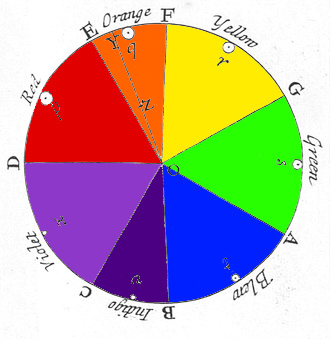
.jpg)
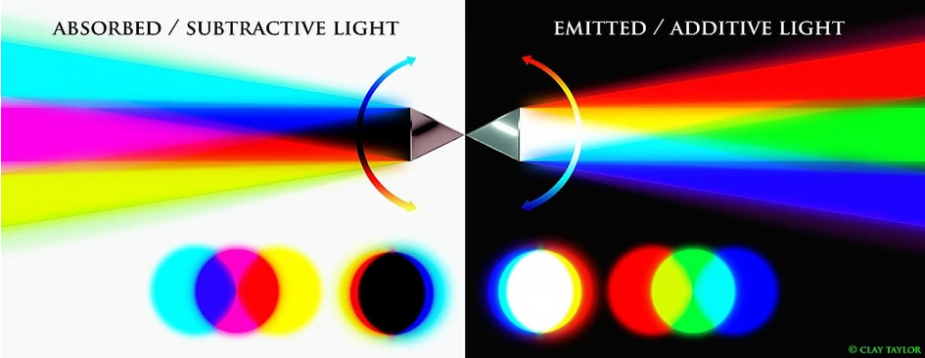
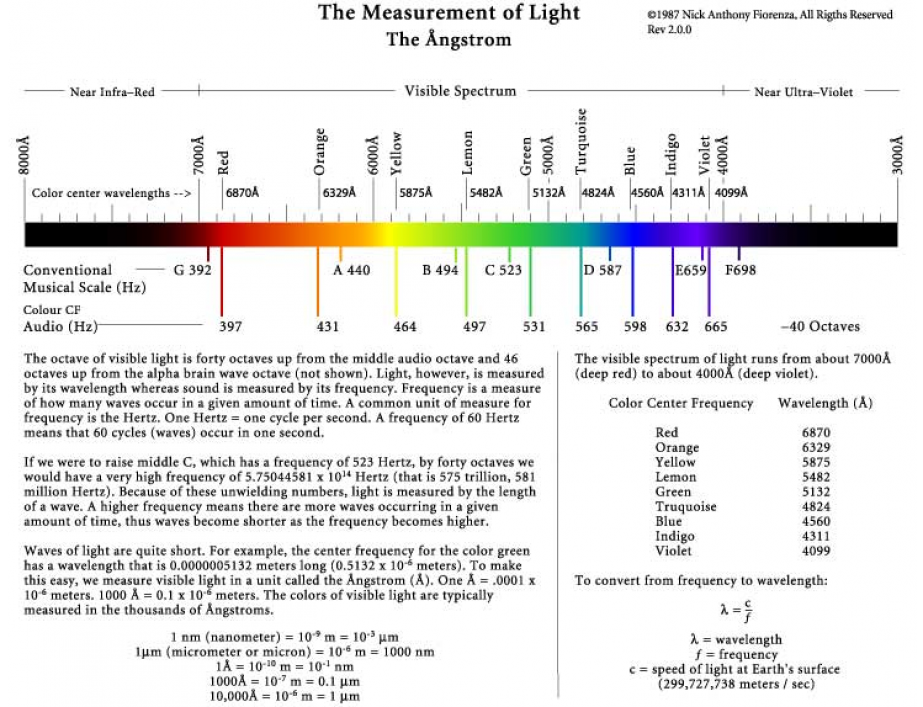
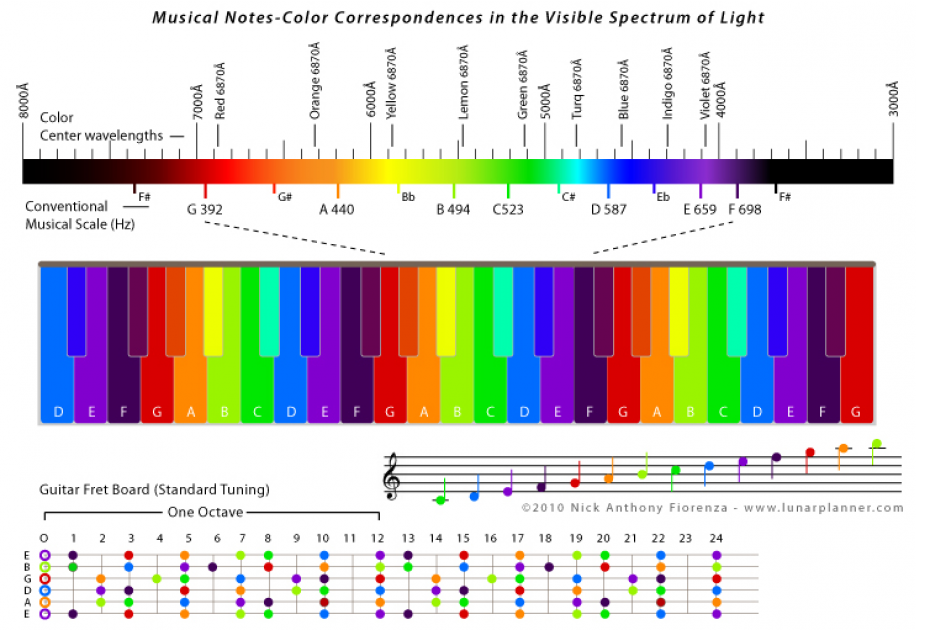
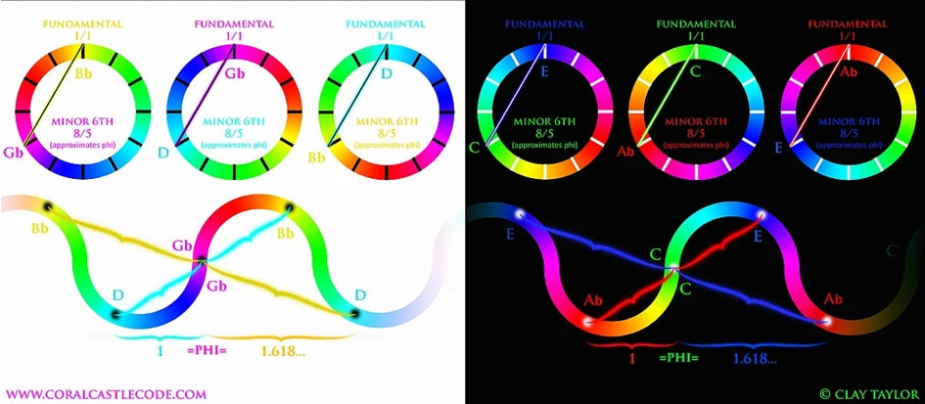
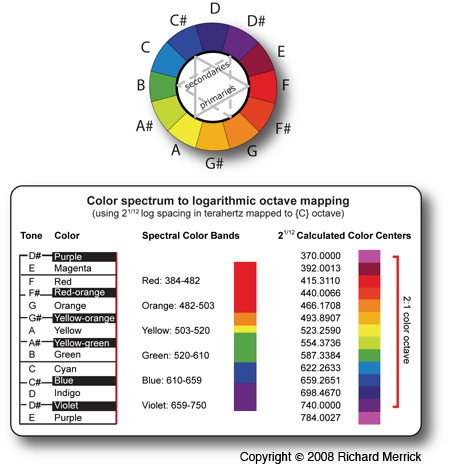
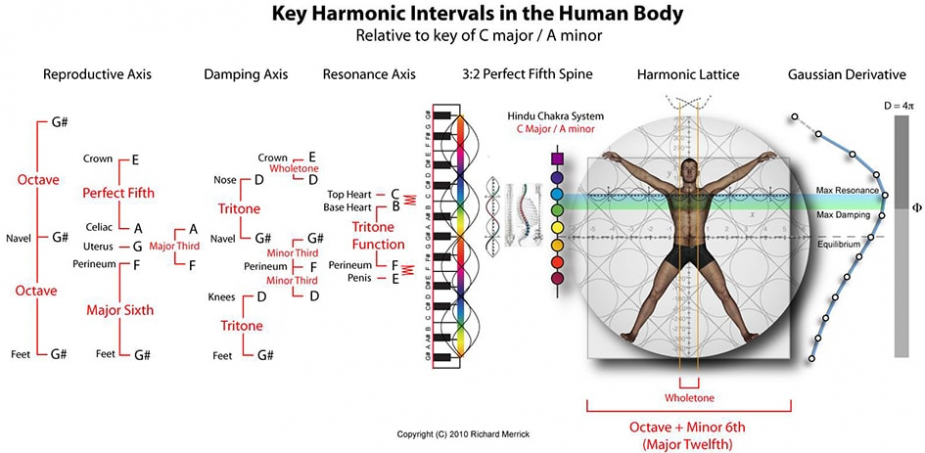



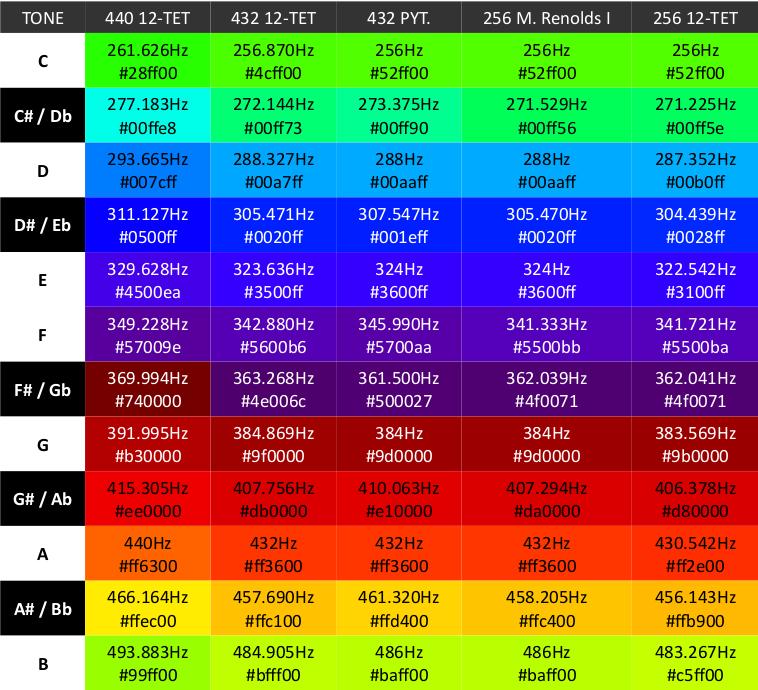
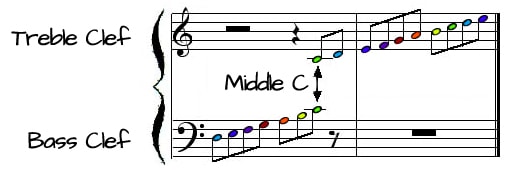
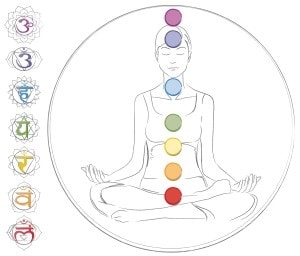
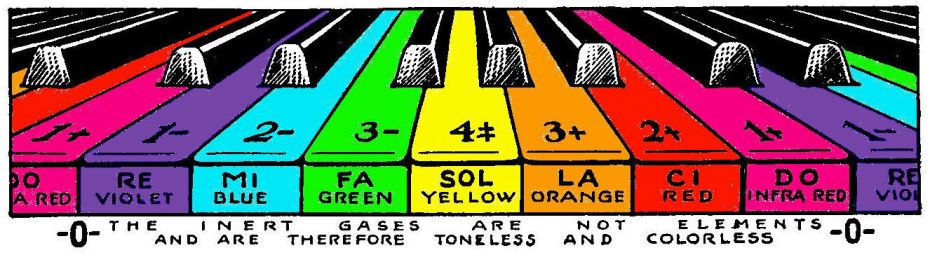

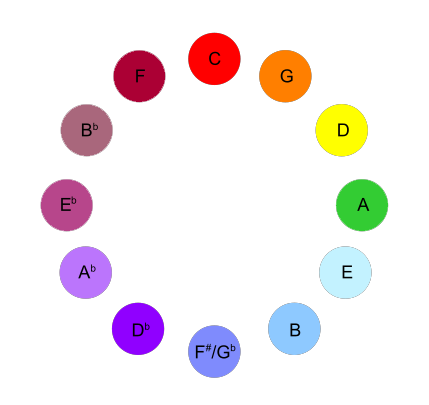

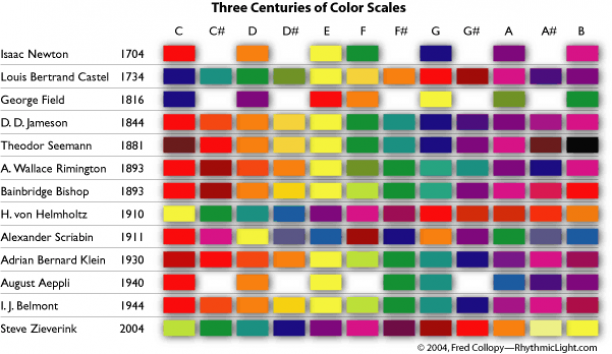

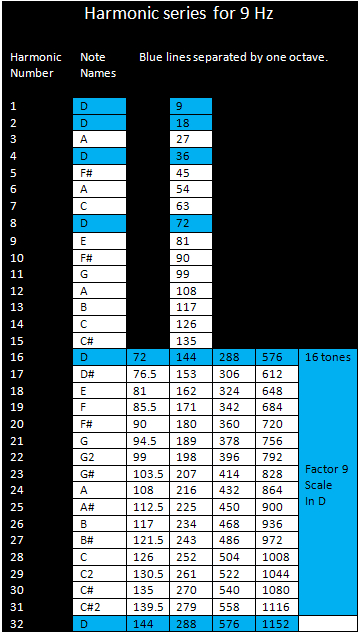


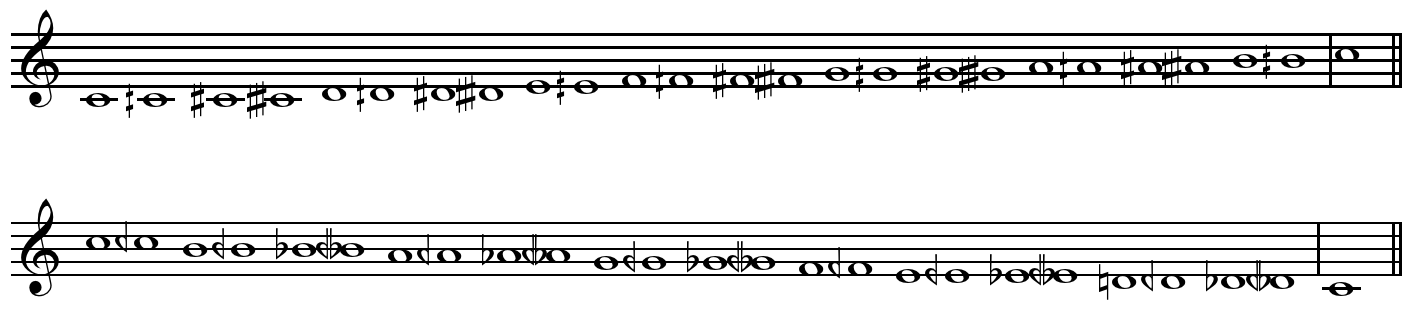
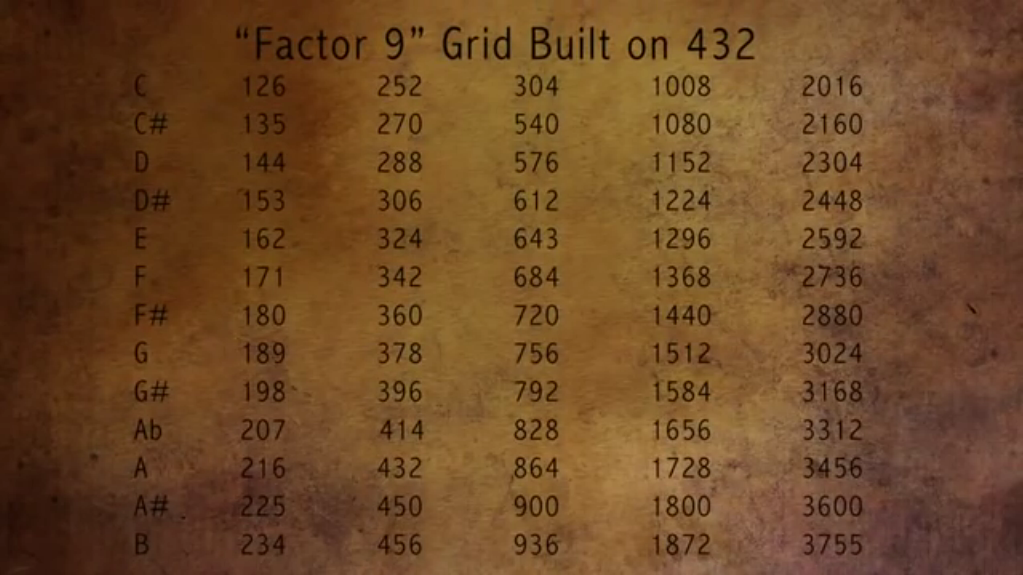

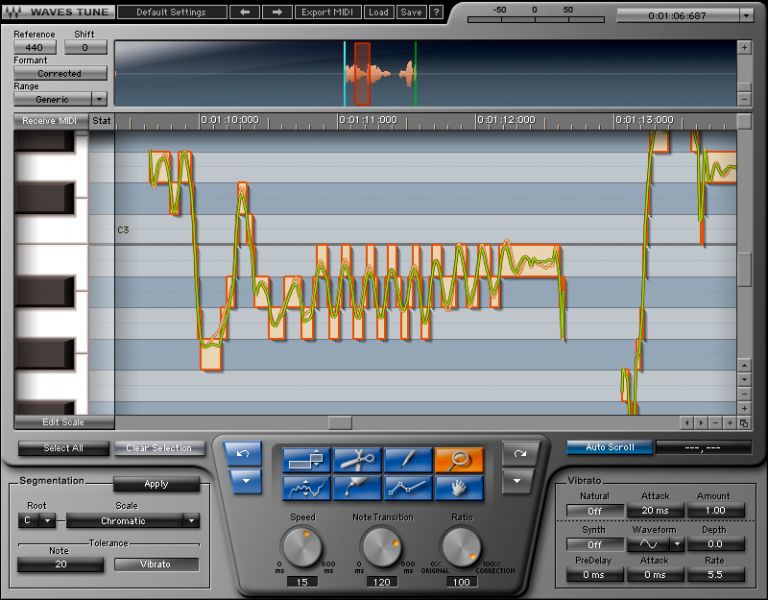
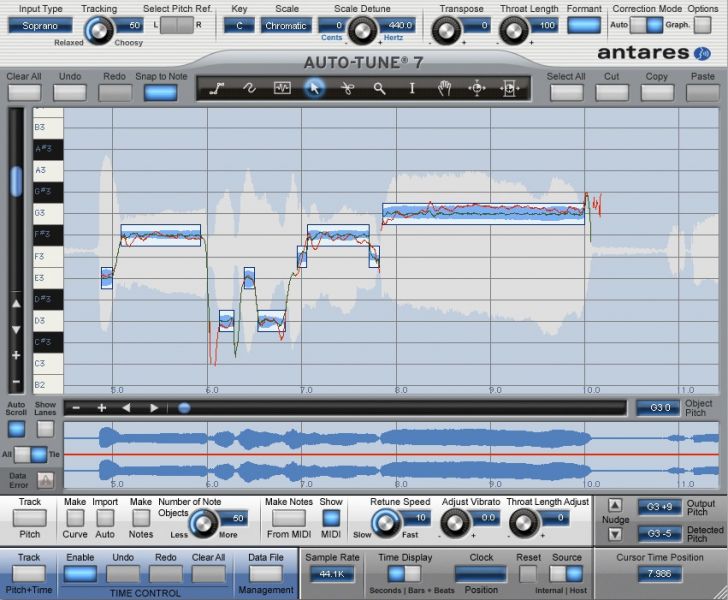
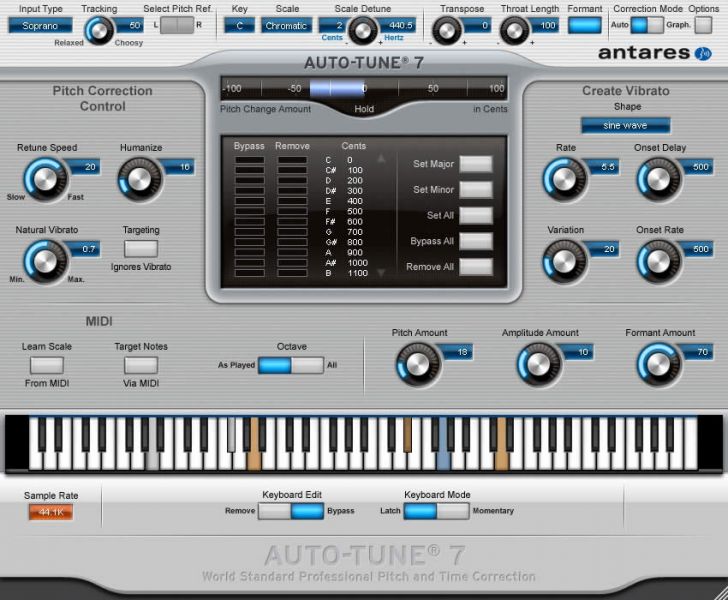

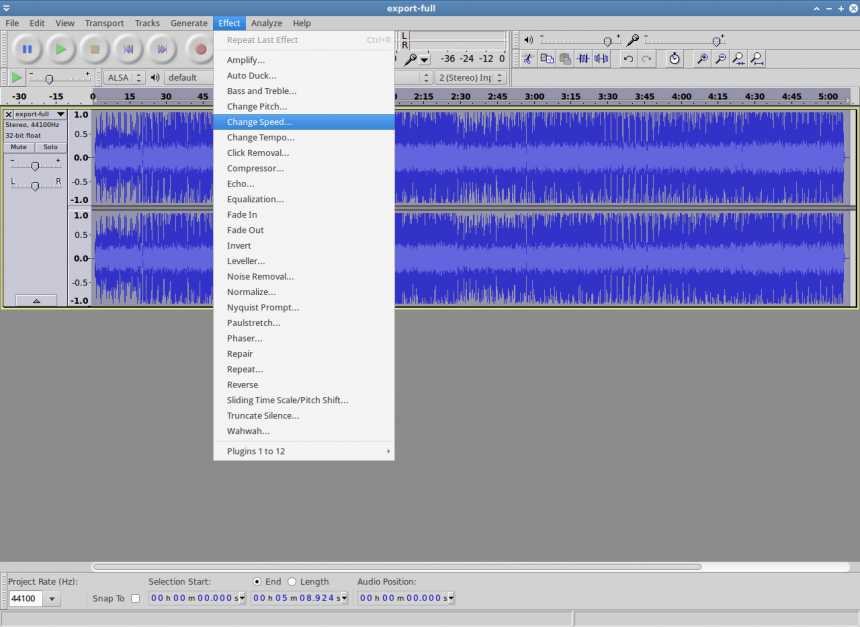
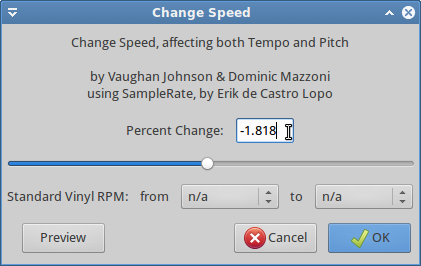
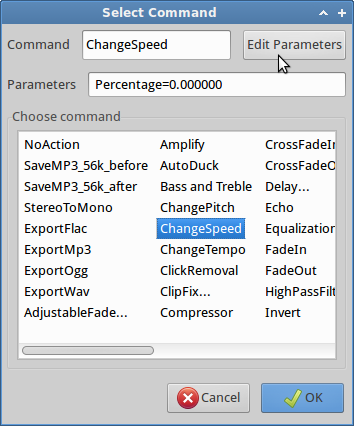
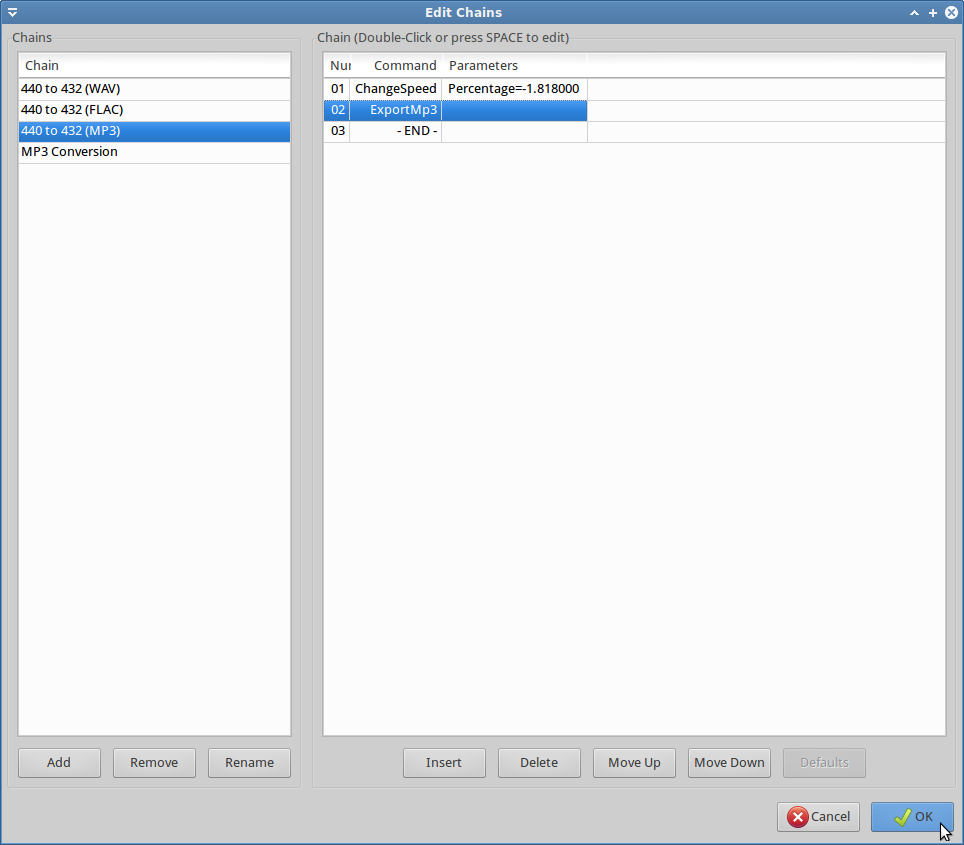
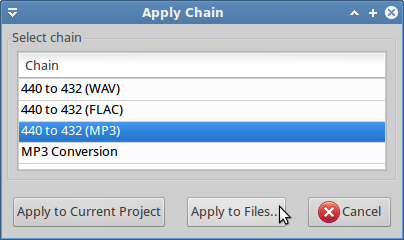
.png)


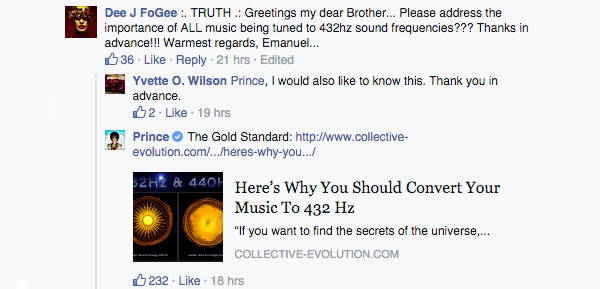
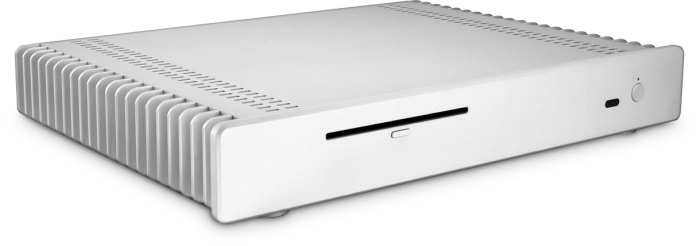
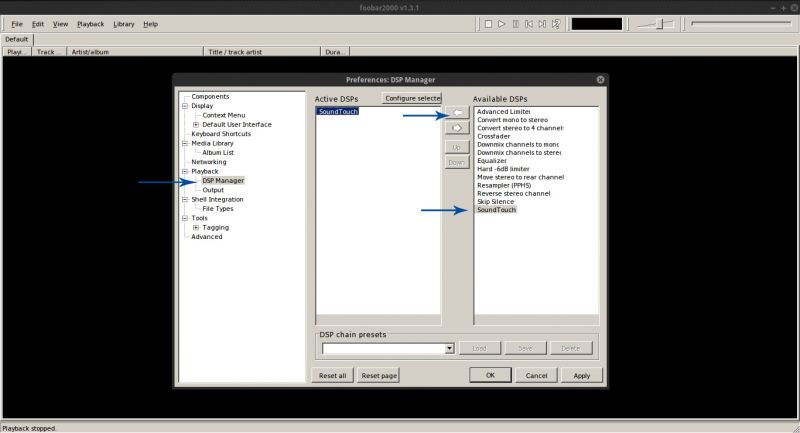
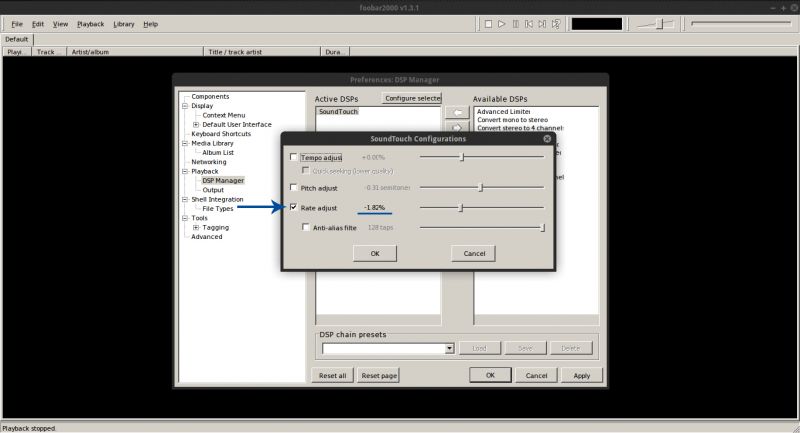
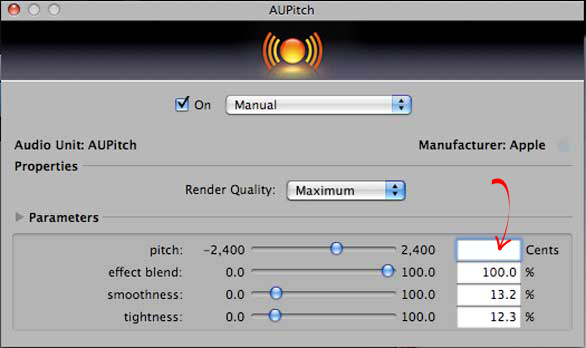
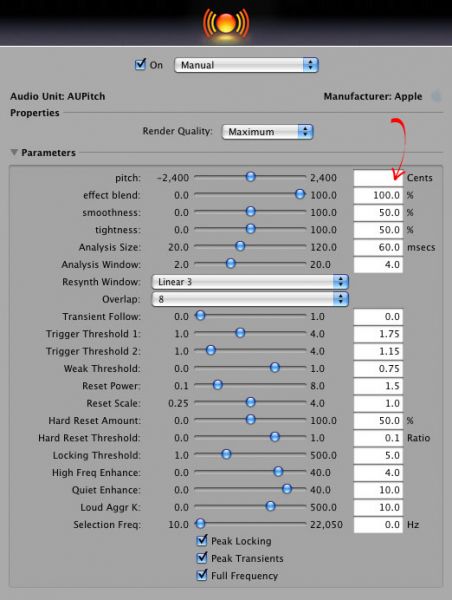
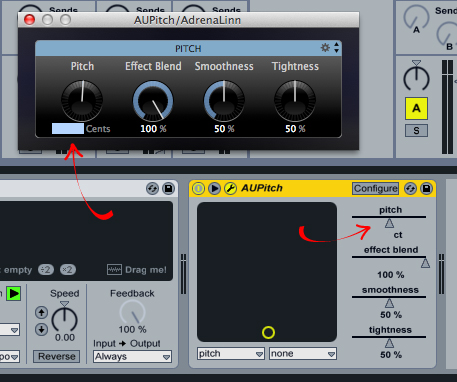
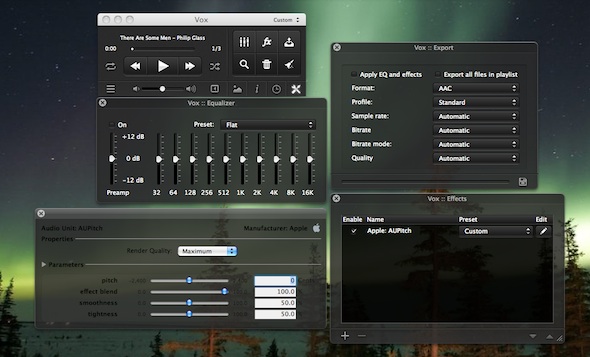
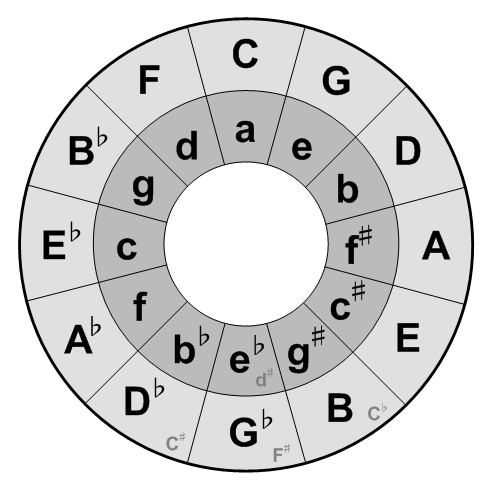 Now, let’s have a look at the Circle of Fifths: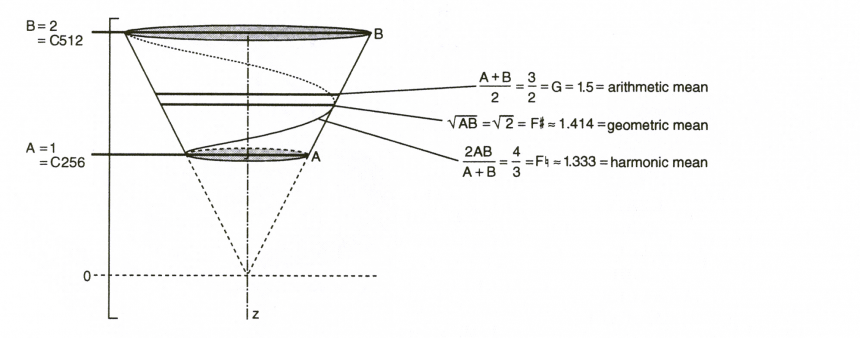
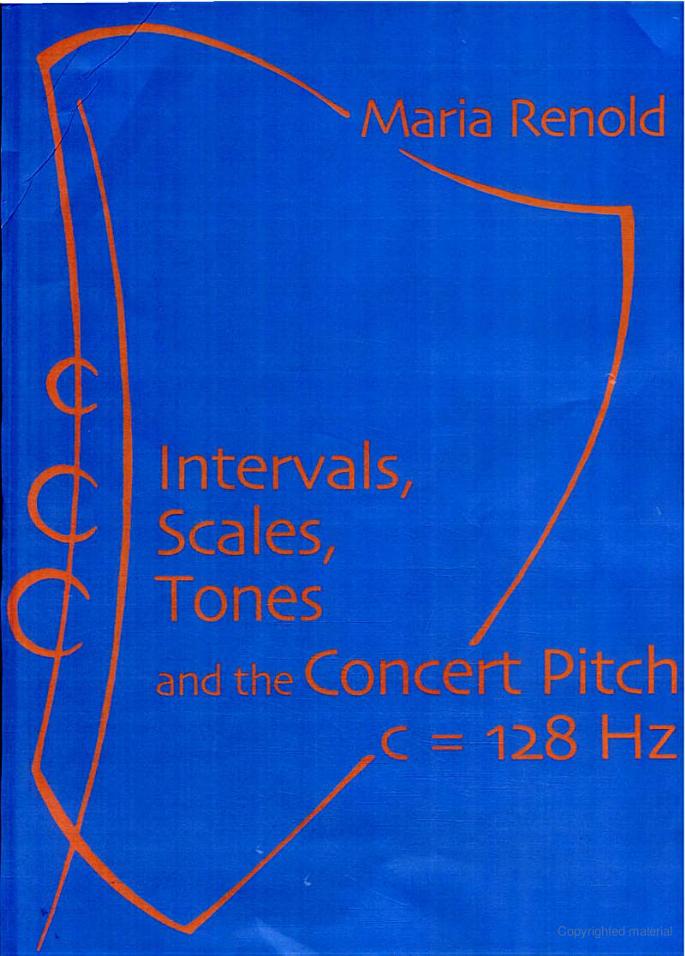 ISBN 9781902636467
![\sqrt[12]{2}=2^{\frac{1}{12}}\approx 1.059463](https://upload.wikimedia.org/math/6/6/e/66e5fe66512c1fccb0d5ab882bac7890.png)

