Blog » What is related to 432Hz and what is not?

Reading Time: 8 minutes January 20, 2014

On many web sites and blogs about 432-Tuning various presumed relationships between musical tuning and the presence of number 432 in other fields are shared to validate 432-Tuning. The number 432 can be found in a large number of “things”, in music, sacred geometry, astronomy, philosophy, religion, et cetera. But, numbers without units are nothing more then symbols, and symbols don’t sound! In order for something to “relate”, there have to be units and characteristics that match.

In this blog article I will take a look at some of the “evidence” presented by other web sites and blogs … Why? Well, misinformation is counterproductive for the development and implementation of 432-Tuning. It is important that we demystify the myths and get rid of the clutter. Hopefully this article contributes to that.

Now, important to note, is that I do not deny the similarities between patterns or formulas and ratios in music and those in for example (sacred) Geometry and Nature. Music – like anything in existence – has patterns and can be formulated and placed in perspective by the use of formulas and ratios.

BUT … not every pattern can be used to create music. Sound yes, but not all sound is music. The same can be said about Math, relationships between tones can be explained with mathematical formulas and ratios, and formulas can be used to generate sound, but not all sound is music! (and that of course depends on what you call “music”).

“432” AND SOUND (Hz) …

So, what about the unit used for sound? Well, there are various units used to measure sound, but when we speak about tuning we talk about “Pitch” and therefor the unit Hertz (Hz). If you do not understand what Hertz is, then I suggest you first read about it at Wikipedia.

In short: “Hertz is a particular number of occurrences of a repeating event per unit time.”

IMPORTANT: Not everything measured in Hz (like Electromagnetic Radiation, CPU clock rate, and Sampling Frequency / Sampling Rate) will relate to tuning, pitch and temperament.

So, if we would like to verify the relationship of the number 432 of “something” to 432Hz (sound) or it’s octaves (A3=216Hz, A5=864Hz, et cetera) then for that “something” should count:

A “particular number of occurrences” + repeating event + “time unit”.

WHAT HAS SIMILARITIES WITH PITCH (SOUND) RELATED HZ?

ELECTROMAGNETIC RADIATION
(radio waves, microwaves, Infrared, visible light, Ultraviolet, X-rays and Gamma rays) 

Electromagnetic radiation has a “wave-like” nature and like sound uses the unit Hz. Even though sound and light uses the same unit Hertz, they still differ more then they have in common.  

WHAT DO SOUND AND LIGHT HAVE IN COMMON?

  • Sound and light both exhibit oscillatory wavelike characteristics with various frequencies, wavelengths, and amplitudes.
  • Both propagate at a finite speed.
  • Both exhibit Doppler shifts toward higher frequencies when the source of the wave is approaching us.
  • The sensed intensity is dependent on the amplitude of the wave.

WHAT IS THE DIFFERENCE BETWEEN SOUND AND LIGHT?

  • The frequencies of visible light and audible sound differ from each other by more than ten orders of magnitude. Audible acoustic range: roughly 20 Hz to 20,000 Hz vs. visible optical range: roughly 380 trillion Hz to 760 trillion Hz.
  • Light waves are composed of transverse waves in an electromagnetic field, while sound waves are mechanical longitudinal waves (alternate compression and expansion of matter).
  • Sound requires a “medium” to propagate, light does not. Therefor while light does propagate through a vacuum (absence of a medium), sound does not.
  • The denser the medium, the greater the speed of sound. The opposite is true of light.
  • The speed of light in a medium is constant. The velocity of sound in a medium can change.
  • Electromagnetic waves, including light is a “stream of particles” (photons). Sound does not consist out of particles.
  • Light waves can be polarized, but sound waves cannot.

It’s also worth noting that while the frequency range of audible sound covers a factor of 1000, (about 10 octaves), the range of visible light covers only a factor of 2 (just one octave).

Read more about the relationship between sound and light in the article “Sound & Light (color).

WHAT DOES NOT RELATE TO 432 IN SOUND (HZ) & MUSIC?

When the number 432 (or half: 216, or double: 864) appears, but with a different unit (other then Hz) and characteristics, then we can conclude there is no direct relationship with or to 432Hz (sound) other then the number itself and might be nothing more then symbolism..

In the examples below (I will only give a few examples, I am sure you can find many others as well) you can see there are no similarities in “characteristics” (NO “particular number of occurrences” + repeating event + “time unit”), clear examples of “swapping” units: Apples and Oranges!

These examples do not proof or validates 432Hz as concert pitch or music frequency is of real importance or has any real meaning!

THE NUMBER 432 AND ASTRONOMY & MATH:

The diameter of the moon is 2160 miles (432 / 2), the diameter of the sun is 864,000 miles (2 · 432). 

A mile is a unit of length. No occurrences, no repetition, and not a time unit.  

The distance from the center of the earth to the average height of the atmosphere. This value is given as 4320 arc-minutes.

An Arc-minute is a unit of angular measurement equal to one sixtieth (1⁄60) of one degree. In turn, a second of arc or arc-second is one sixtieth (1⁄60) of one arc-minute. Because one degree is defined as one three hundred and sixtieth (1⁄360) of a rotation, one minute of arc is 1⁄21,600 of 360 degrees. 
“Arc-minute” is NOT related to time, but Geometry and Trigonometry, (angle, degree).

THE NUMBER 432 AND HISTORICAL PLACES

It is true that in various historical places such as with the Latitude of Stonehenge, Height of the Great Pyramid, Buddah Statues in the Square of of the Borobudur Temple, a.o. the numner 432 pops up. The number 432 in these places relates to length, angle, degrees, et cetera. Units that do not correspond one-on-one to or are commonly “converted” to Hertz. The “connection” between these places and 432Hz-tuning is thus but a “symbolic” one.

MATH = SOUND ≠ MUSIC
Not every mathematical formula can be used for making music. Yes, any formula can render a series of numbers that can be used to generate sound. But sound and music are not synonyms, sound does not equal (≠) music

This is in general the problem with tuning concepts made by mathematical minds with no (or insufficient) musical education and/or practical musical experiences. No matter how nice a formula looks on paper, the generated scale and/or Temperament could sound horrible nonetheless.

One of the most known tuning concepts exemplary of the mismatch between the formula on paper and the actual implementation, how it really sounds, is the “Ancient Solfeggio Frequencies” concept by Dr. Joseph Puleo and Leonard G. Horowitz. You can read more about this pseudo-scientific concept in my blog article “Myth: The Ancient Solfeggio Frequencies“.

MUSIC = MATH … and MATH = SOUND … but SOUND ≠ MUSIC.

MUSIC = MATH
All proper tuning systems used (now and in the past) can be explained with mathematical formulas. How? Well, we use ratios to determine the size of the intervals between tones.

EXAMPLE: 12-TONE EQUAL TEMPERAMENT (the present standard)
In twelve-tone equal temperament, which divides the octave into 12 equal parts, the width of a semitone, i.e. the frequency ratio of the interval between two adjacent notes, is the twelfth root of two:

\sqrt[12]{2}=2^{\frac{1}{12}}\approx 1.059463

There are many other Musical Temperaments (most more complicated then 12-TET), using various mathematical formulas to create other ratios then 1.059463. The most know Temperaments are the: Pythagorean Tuning, Meantone Temperament, Well TemperamentJust Intonation and Five-Limit Tuning.

For 432-Tuning the Pythagorean Tuning or modifications of if like Maria Renold’s “Scale of Fifths” is used.

CONCEIVABLE THEORIES & CONCEPTS:

CYMATICS – “THE SHAPE OF SOUND”

Cymatics is the study of visible sound and vibration. Typically the surface of a plate, diaphragm, or membrane is vibrated, and regions of maximum and minimum displacement are made visible in a thin coating of particles, paste, or liquid. [ Read More ] ►

432 AND THE “SCHUMANN RESONANCE”

Using the Schumann Resonance as “solid evidence” to “prove” the A4=432Hz concert pitch is very “circumstantial”. HOWEVER, it is reasonable to say the Schumann fundamental “could be”, “could become”, and/or “might have been” at 8Hz at various moments in time … [ Read more ]►

MISINTERPRETATIONS, DISINFORMATION, AND FICTION (MYTHS):

SAMPLING FREQUENCY (RATE), OFTEN MISINTERPRETED

The sampling ratesample rate, or sampling frequency defines the number of samples per second (or per other unit) taken from a continuous signal to make a discrete signal. For time-domain signals, the unit for sampling rate is hertz (inverse seconds, 1/s, s−1). The inverse of the sampling frequency is the sampling period or sampling interval, which is the time between samples.

So, what does this mean?

Well, when an continuous (analogue) signal is converted to digital data, the analogue signal is “sliced” into a large number of parts (samples) with a ADC (analog-to-digital converter). These “slices” refer to particular points in time of the original continuous signal. A DAC (digital-to-Analog converter) uses this data to “re-create” the original analogue signal, as good as possible. The larger the number of samples, the smoother the curve of the reconstructed analogue signal will become, and thus the better the overall sound quality.

This process though does not effect the Tuning properties. “Hertz” in this case has nothing to do with “Pitch”, but refers to the number of samples (particular number of occurrences) taken from a continuous signal (repeating event) per second (time unit).

More information available at Wikipedia.

432HZ WAS THE STANDARD BEFORE 440HZ

A4=432Hz (or for this matter C4=256Hz as well) has never been a standard. Those sources that suggest 440Hz replaced 432Hz as concert pitch are incorrect! [ Read more ]►

Often mentioned in alongside the “432Hz was the standard before 440Hz” myth, is yet another myth about a Nazi conspiracy (with Goebbels in a leading role). In this myth Goebbels is being held responsible for the introduction and standardization of the 440Hz C.P. [ Read more ]►

“432Hz IS THE SQUARE ROOT OF THE SPEED OF LIGHT”

This is one of the most flawed pieces of “evidence” offered by various sources online in support of 432-Tuning. Not only have they – who provide that info as “evidence” – failed to understand that sound waves and electromagnetic waves can not be related 1 on 1, they have also failed to realize that the Speed of Light is based upon electromagnetic waves traveling through a vacuum (no medium), while sound waves require a “medium” to travel (in a vacuum sound waves do not “travel”) … [ Read more ]►

“ALL CLASSICAL MUSIC BY BACH, BEETHOVEN, MOZART AND VERDI WAS ORIGINALLY COMPOSED AND PERFFORMED USING THE STANDARD OF A4=432HZ.”

This is one of those stories that keeps popping up online from time to time. What can we say about this?

  1. 432Hz has never been a standard. [ Read more ]►
  2. The Concert Pitch that Verdi and Bach (I have not found any references concerning Brahms) have been said to be in favor of, is C4=245Hz. BUT, since composers like Bach did not use Pythagorean Temperament anymore, their A4 would have been 428-430.5Hz, NOT 432Hz.
  3. There are hardly any historical reference at all that their work could have been “originally performed” in 432 in their days. Most instruments are designed for a particular Concert Pitch and Temperament. Only a small number of instruments can tune to any Concert Pitch and play in any Temperament. The C.P. and Temperament varied from region to region and from country to country. [ Read more about the standardization of the Concert Pitch ]► 

YOUR “RESPONSIBILITY”

Dear reader … after reading this article I do hope you have at least become aware of the possibility that some of the information you might have been reading, sharing and might have believed to be true is at least worth (re-)investigating.

I would like to urge you to dig deeper and to no longer simply copy ‘n paste “info” (that might sounds appealing) from blogs and websites without checking it’s sources (if they have) and looking into the matter. If you like to “inform” (or perhaps even “educate”) others, then make sure you have studied the material well enough, or make absolutely clear to your readers you are sharing something that you have not checked thoroughly and might not be true!

This way people can truly trust you and you won’t be making an “ass” out of yourself.

If you share “information” that turns out to be misinformation simply because you have not researched it yourself (laziness? ignorance?), then you are just as “guilty” for misinforming others as the writers of those articles are!

If you notice something written in my articles that you think is not correct, then please do contact me with info / data / evidence to correct possible mistakes. Thank you.


Creative Commons License

Blog » Myth – 432Hz & The Speed of Light

Reading Time: 4 minutes November 20, 2013

MYTH ⚠ 432Hz & THE SPEED OF LIGHT

“432 IS THE SQUARE ROOT (√) OF THE “SPEED OF LIGHT”.
(PSEUDOSCIENCE)

Some people like to suggest that 432Hz is the most natural concert pitch due to a presumed relation to the speed of light:  

“432 is the square root of the Speed of Light”.  

432 = √186624

The calculation above is correct … but does NOT make the statement right.

The actual speed of light is not exactly 186624, but (depending on the source) 299792458 meters/s. = 186282.397 miles/s. That is about 341.603 miles per second off. If you would use that number instead to calculate the square root, you get:

√186282.397 431,60444506515453634375

Some sources (nasa.gov) mention 186000 miles/s. If we use this number to calculate the square root:

186000 431,277173057

In both examples above we speak about the Speed of Light in a vacuum.

The difference between 432 and 431.6 or 431.2 might look insignificant, but I am pretty sure a math or physics teacher would not except “432” as answer, if the “assignment” was to calculate the square root of the Speed of Light (186282.397 or 186000 miles/s). 

Besides that, only if we use miles as unit of length for the Speed of Light, we come close to 432 when calculating the square root. Usage of the mile as an official unit of measurement is largely confined to the United Kingdom, the United States, and Canada. If we would use other units, like meters (√299792458 = 17314,51581766) or yards (√327857018.81 = 18106,822438241), or other miles, we would not end up with ≈432 as the square root.

USING UNITS …

Another thing we can say about this theory, is that – if you want to compare or “relate” two “things” with one another – you have to use values that work for/with both ‘things’. 

But we are not! 

We are trying to relate the unit Hz (a particular number of occurrences of a repeating event per unit time) to the unit of speed “miles per second” (the magnitude of the velocity – the rate of change of its position

After all, we are not talking about 186282.397Hz, but 186282.397 miles/s. when we speak about the Speed of Light. 

The unit “speed” and “Hz” can not simple be related, compared or exchanged 1 on 1 by one another!

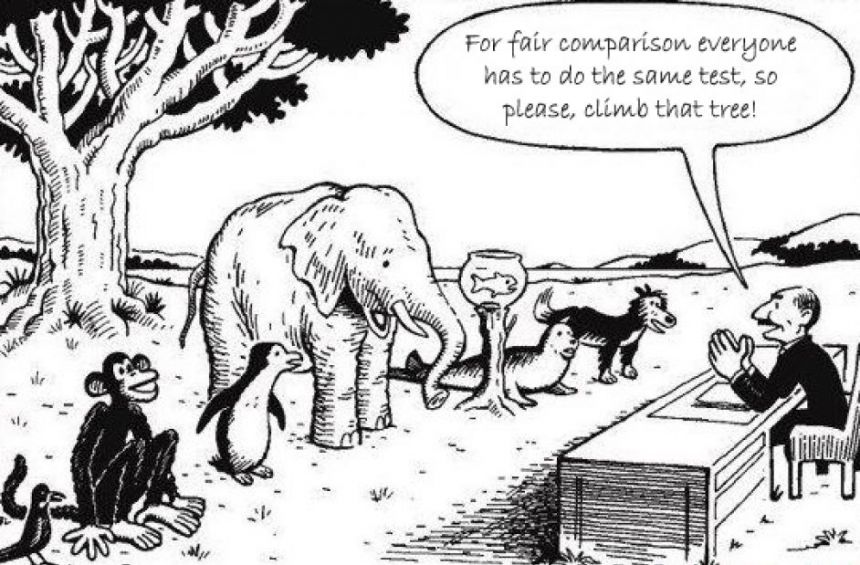
pleaseclimbthetree_3

CONDITIONS & DIFFERENCES SOUND AND LIGHT WAVES

Only when electromagnetic waves (radio, microwave, infrared, the visible spectrum we perceive as: visible light, ultraviolet, X-rays, and/or gamma rays) propagate* through a VACUUM, the electromagnetic waves “propagates” with the Speed of Light, at 186282.397 miles/second. Under other conditions (through a medium) light propagates slower.

* Some scientist, theorists and natural philosophers such as Walter Russell state that waves of light do not propagate but ‘reproduce’ each other from wave field to wave field of space. The planes of zero curvature, which bound all wave fields, act as mirrors to reflect light from one field into another. This sets up an appearance of light as traveling, which is pure illusion.

The properties of a sound wave always depend on the properties of the medium it travels through: no medium (vacuum) = no Sound. Sure, space isn’t a complete vacuum (specially gas clouds could be counted as “medium”), nonetheless … The speed of sound in air (c) = 343 meters/s at 20°C. The speed of sound through air could vary slightly, depending on the temperature, pressure and humidity. The speed of sound in water is about 4 times faster than this.

Do you see the first “problem” we run into?

We practically try to relate a particular frequency through a medium (air) to the  Speed of Light (186282.397 m/s.) in a “vacuum” (= no medium) in which the speed of sound waves would be pretty much “0” (nonexistent)!!!

OTHER DIFFERENCES:

  • The frequencies of visible light and audible sound differ from each other by more than ten orders of magnitude. Audible acoustic range: roughly 20 Hz to 20,000 Hz vs. visible optical range: roughly 380 trillion Hz to 760 trillion Hz.
  • Light waves are composed of transverse waves in an electromagnetic field, while sound waves are mechanical longitudinal waves (alternate compression and expansion of matter).
  • The denser the medium, the greater the speed of sound. The opposite is true of light.
  • The speed of light in a medium is constant. The velocity of sound waves can change.
  • Electromagnetic waves, including light is a “stream of particles” (photons). Sound does not consist out of particles.
  • Light waves can be polarized, but sound waves cannot.
CONCLUSION?

When simply looking at the numbers “432” and “186624” (186282.397) without proper context, one could easily draw wrong conclusions.

No matter how we look at it, there is no real direct relationship between the tone / frequency of 432Hz and the Speed of Light. The “432Hz & the Speed of Light” story is a pseudo-scientific fantasy.

IS THERE NO OTHER RELATIONSHIP BETWEEN SOUND AND LIGHT?

The answer to this question is … yes there is!
You can read more about it in blog articles: “Sound & Light (colour)” and “Sound (256Hz & 432Hz) and Colors“.


REFERENCES:

NOTE: The wavelenght Calculator linked to above, uses meters/s not miles/s, so you first have to convert miles to meters.


Creative Commons License

Blog » Myth: 432Hz was the standard before 440Hz

Reading Time: < 1 minute October 29, 2013

MYTH ⚠ 432Hz WAS THE STANDARD BEFORE 440Hz

(HISTORICALLY INCORRECT, PSEUDOSCIENCE)

Some online sources state that 440Hz replaced 432Hz as Standard. That is incorrect. 432Hz has NEVER been a National or International standard.

So far I have not found much information about old 432Hz tuning forks, generally good physical proof that a particular pitch was used.  I did come across a couple of references to 433Hz tuning forks:

  •  Around 1820: A=433Hz, London. “Pitch approved by Sir George Smart, conductor of the Philharmonic.”
  •  Around 1850: Broadwood Piano Co. tuner “low pitch” is said to be equal to A=433Hz.

I have not been able to find any other sources that provide concrete information with proper historical references to support the rumor. This does not mean no instruments were made that use 432Hz (like for example “Tibetan Bowls”). 432Hz was nonetheless never a standard Concert Pitch. There for I have to conclude this rumor is simply one of those “myths” that go around, concerning 432-tuning.

REFERENCES:


  • http://en.wikipedia.org/wiki/Concert_pitch
  • Alexander J. Ellis. “On the History of Musical Pitch,” Journal of the Society of Arts, (March 5, 1880). Reprinted in Studies in the History of Music Pitch, Amsterdam: Frits Knuf, 1968


Creative Commons License

Blog » Overtones & Harmonics … 432Hz vs 440Hz

Reading Time: 5 minutes October 27, 2013

HARMONICS / OVERTONES OF 432HZ VS 440HZ

RUMOR:  “432Hz TUNED MUSIC HAS MORE OVERTONES THEN 440Hz TUNED MUSIC.”

There are several articles available online about overtones and Concert Pitch 432Hz vs 440Hz. Some of these articles suggest / proclaim that 432Hz recorded (and/or pitched) music has more overtones then 440Hz recorded music.

Is this true and does that explain the difference in the change of sound?

OVERTONES

An overtone is any frequency higher than the fundamental frequency of a sound. The fundamental and the overtones together are called partials (a “partial wave” or “constituent frequency”).

HARMONICS

The term harmonic has a precise meaning – that of an integer (whole number) multiple of the fundamental frequency of a vibrating object. The term overtone is used to refer to any resonant frequency above the fundamental frequency – an overtone may or may not be a harmonic. Harmonic overtones are the fundamental frequency multiplied, for example of the fundamental 216Hz: 432Hz (216 x 2), 648Hz (216 x 3), 864Hz (216 x 4), et cetera.

PITCH, OVERTONES AND HUMAN HEARING

One of the reason for the proclaimed improvements of the sound of 432-pitched music is that lower pitches can potentially produce more overtones within the human hearing range. It is true that low tones can potentially produce more overtones within our hearing range then high tones can.

The human hearing range is commonly given as 20 to 20,000Hz. Under ideal laboratory conditions, humans can hear sound as low as 12 Hz. Some children are capable of hearing frequencies above 20,000Hz but with age this range will shrink usually beginning at around age of eight with the upper frequency limit being reduced.

It is important to understand that their is theoretically no limit to the number of potential overtones that can be generated. That we practically detect less overtones created by a piccolo Trumpet then by a Tuba is not because a piccolo produces less overtones, but many of it’s overtones might overshoot the high end boundary of our hearing.

So, to visualize the difference between two tones of different pitch I will calculate the number of the first overtone that overshoots 20,000Hz for A3 and A4 in the table below, starting with 432Hz and 440Hz as 1st Harmonic (Fundamental):  

1235102040478092
A3=216Hz4326481,0802,1604,3208,64010,15217,28020,088
A4=432Hz86412962,1604,3208,64017,28020,30434,56039,744

What we see in this table is that if we use 216Hz as fundamental, this tone could generate 92 overtones before we overshoot the 20,000Hz, but if we use 432Hz as fundamental, this tone could generate only 47 overtones before we overshoot the 20,000Hz.

So, YES, lower pitches can potentially produce more overtones within our ranges of hearing. 

BUT … does this also means that 432Hz music will have more overtones then 440Hz music, because of it’s lower pitch?

OVERTONES OF 432HZ VS 440HZ

Well, let’s just compare the difference between the tone fundamentals of 432Hz and 440Hz in a table: 

1235102040454647
4328641,2962,1604,3208,64017,28019,44019,87220,304
4408801,3202,2004,4008,80017,6001980020,24020,680

So, what the table above tells us, is that you could say that the tone 432Hz does generate 46 overtones before crossing the hearing limit, while 440Hz only generates 45 overtones before crossing the hearing limit.

So, the claim that 432Hz tuned music can contain more overtones (within the hearing range) is in true. BUT that difference is really small!

Even if we would take a tone in the lower register, let’s say for example A1=55Hz (if A4=440Hz) and A4=54Hz (if A4=432Hz), then a tone at 55Hz could in theory generate 363 overtones before overshooting 20,000Hz and a tone at 54Hz could in theory generate 370 overtones before overshooting 20,000Hz. 

I personally don’t think that that difference of 7 overtones (363 vs 370) is why 432-tuned music sounds different then 440-tuned music. 

So, if it’s not the change of the number overtones that make a noticeable difference, then what is?

FORMANTS, TIMBRE AND SYMPATHETIC RESONANCE

What really makes a difference is the formants, timbre and sympathetic resonance characteristic to the instrument / voice.

Continue reading the article: ‘Harmonics, Overtones, Formants, Timbre and Sympathetic Resonance‘.

ADDITIONAL FACTORS THAT PLAY A ROLE:

Of course not all sounds or instruments are equally rich when it comes to overtone production. Both for live performances and recordings various other things play a role, including:

  • The mic’s, amps, mixers, effect modules, cables, et cetera used.
  • The quality of the instruments used.
  • The “amplification” (Soundsystem – speakers, amps and/or other hardware) used.
  • The acoustics of the room you are in.

 … for recordings additional factors are:

  • The sample rate used during the recording.
  • The processing done during mixing and mastering.
  • The format of the “export”.
  • The (limitations of the) mediums the music is released on.

All of these aspects play a role and may determine if the lower pitch will actually be of any benefit to begin with. Of course we haven’t even mentioned the “condition” of your ears and bodily “sensitivity” (resonance) for the vibrations “floating” through the room …

A lot of “what if’s” ain’t it so?

POST PRODUCTION RE-PITCHING & OVERTONES

Changing the pitch of recorded material will NOT change / re-balance the harmonics of the instruments used for the recording. The number of overtones will NOT change when re-pitching recorded material! If you have a recording where the highest frequencies “die out” at for example 18kHz, then shifting the pitch down will not make a difference! No “additional” harmonics will appear “miraculously”.

The only thing that might change by re-pitching recorded material is the way the sound ‘interacts’ (acoustics) within the space were the music is played and thus how it is perceived by our senses and interpreted by our brains.

Post production re-pitching (like any other “manipulation” of the original recorded material) could cause loss of sound quality. This is most obvious with the higher frequencies (“high end”), in particular when only Pitch but not Tempo is changed (or visa versa). Only when both pitch and tempo are changed during post-production re-pitching, only then the loss of sound quality is “negligible”.

More information on how to change the concert pitch in post production if you do wish to do so …

CONCLUSION

Using a little lower pitch will make it theoretically possible to have more harmonics, but in reality the more harmonics claim is for most people under most conditions not of real impact. 

With other words:

IF the music was recorded at a top-level recording studio, by a skilled sound engineer … played with professional well build instruments … and the exports you listen to are use a very high sample rate and are uncompressed … and you are listening to this music with high-end (A Class) Hi-Fi system, in a balanced room (proper dimensions and acoustic treatment) … ONLY THEN you might be able to “benefit” from the difference in generated harmonics when a lower pitch is used.

BUTIF you are listening to MP3 exports on your telephone with 30 dollar in-ear headphones … then forget about the theoretically larger number of harmonics, they won’t be there.

REFERENCES:


Creative Commons License

Blog » Fibonacci 432Hz Temperament

Reading Time: 2 minutes October 27, 2013

FIBONACCI 432Hz TEMPERAMENT

This is the 432Hz related abstract of the blog article “Fibonacci & Tuning“. For more information and alternative temperaments do read the full article!

8-FIBONACCI (TEMPERAMENT)

Ratios made with the first 5 (unique) numbers of the Fibonacci series (1, 2, 3, 5, 8) are related to key intervals of musical temperaments:

  • 1/1 = Tonic
  • 2/1 = Octave
  • 2/3 = Just Fourth
  • 3/2 = Just Fifth
  • 3/5 = Just minor Third
  • 5/3 = Just Major Sixth
  • 5/8 = Just Major Third
  • 8/5 = Just minor Sixth

Some of the 13 tone interval ratios of 12-Tone scale contain numbers not found in the Fibonacci series, like the Perfect Fourth with ratio: 4/3. But you can use alternative mathematical formulas to replace those with using only Fibonacci numbers, in the case of the Perfect Fourth you could use 2/3·2 or 2/3 (8va)8va = ‘ottava’ = transpose an octave up.

For my 12-Tone “8-Fibonacci” I will use the numbers 1, 2, 3, 5 and 8 for the ratio formulas.

WHEN USING A4=432HZ AS BASE:

Ratios with
Fibonacci Numbers

Note in
Scale
Musical
Interval
When
A4=432Hz
1/1A3Tonic (1/1)216Hz
28/35A#/BbPythagorean Minor Second (256/243)230.4Hz

5·23232/8

B

Pythagorean Major Second (10/9)Just Major Second (9/8)

240Hz243Hz

3/5 (8va)CJust Minor Third (6/5)259,2Hz
5/8 (8va)C#/DbJust Major Third (5/4)270Hz
2/3  (8va)DJust Fourth (4/3)288Hz

32·5/25√2/1

D#/Eb

Just Tritone (45/32)Equal-Tempered Tritone (26/12)

303,75Hz305,470…Hz

3/2EJust / Pythgorean Fifth (3/2)324Hz
8/5FJust Minor Sixt (8/5)345,6Hz
5/3F#/GbJust Major Sixt (5/3)360Hz

24/3232/5

G

Pythagorean Minor Seventh (16/9)Just Minor Seventh (9/5)

384Hz388,8Hz

·5/8G#/AbJust Major Seventh (15:8)405Hz
2/1A4Octave (2/1)432Hz

WHAT ABOUT THE OTHER FIBONACCI NUMBERS?

Well if we use the next 2 numbers of the sequence for ratios we can add several more tones. The ORANGE bars are the tones related to number 13, the PURPLE bars to number 21. Here are a few …

Ratios with
Fibonacci Numbers
Note in
Scale
Musical
Interval
When
A4=432Hz
21/5 (-15ma)A#/Bb?226,8Hz

13/3 (-15ma)

B↓?

235Hz

3/21 (22ma)B↑?246,857…hz
8/13 (8va)C?265,846…Hz
13/21 (8va)C#?267,428…Hz
13/5 (8va)Db↑?280,8Hz
21/8 (-8va)D↓
?283,5Hz
8/21E?329,142…Hz
5/13 (15ma)F?332,307…Hz
21/13F?348,923Hz
13/8F#↓?351Hz

21/3 (22ma)

G↓?

378

3/13 (22ma)Gb↑/G#?398,769…
5/21 (22ma)G#↑?411,428…Hz

The arrows behind the tones (in column 2) tell you if the tones are a bit sharper () or flatter () in relationship to “8-Fibonacci”.

Naturally if you continue using more numbers of the Fibonacci Sequence (34, 55, …) you will be able to add many more tones in between those listed above … FIBONACCI TEMPERAMENTS:

  • 8-Fibonacci (1, 2, 3, 5, 8)
  • 13-Fibonacci (1, 2, 3, 5, 8, 13)
  • 21-Fibonacci (1, 2, 3, 5, 8, 13, 21)
  • et cetera.

This was the 432Hz related abstract of the blog article “Fibonacci & Tuning“. For more information and alternative temperaments do read the full article!


REFERENCES & CREDITS:

Banner images “Fibonacci Spiral” by Rahzizzle

WIKIPEDIA

OTHER


Creative Commons License

Blog » 432Hz & The Schumann Resonance

Reading Time: 4 minutes September 27, 2013

432Hz & THE SCHUMANN RESONANCE

⚠ AN IMPRACTICABLE “CIRCUMSTANTIAL” THEORY

On various sites that provide information about 432-tuning (Concert Pitch A4=432Hz or C4=256Hz + Pythagorean Temperament), the “Schumann Resonance” fundamental (at approx. 8 Hz) is often being put “on the table” as evidence: “8Hz is 5 octaves below C4=256Hz”. 

HOWEVER, is it correct to state that there is a relationship between the Schumann Resonance and concert pitch A4=432Hz? Does this proclaimed “relationship” really validate the claim that using 432Hz as Concert Pitch is “better”, more “natural”, more “in sync with Earth”?

SCHUMANN RESONANCE FREQUENCY FUNDAMENTAL IS IN CONSTANT FLUX

Various sources (including Wikipedia and lunarplanner.com) make note of the resonance frequencies to be in flux, under the influence of “solar-induced perturbations to the ionosphere”. So the pitch of the resonance frequencies could even be lower or higher then the (by some 432 enthusiasts) proclaimed 8Hz.

The Schumann Resonance frequencies were first calculated by physicist Winfried Otto Schumann in 1952, he reporting the lowest in the group to be about 10 Hz. They were later measured by the National Bureau of Standards at Boulder Colorado in the 1960’s where the 7.8 Hz nominal figure was discovered along with the 5.9Hz progressing overtones.

These resonances are NOT composed of fixed or specific frequencies any more than the collective mood of human surface consciousness is fixed. Changes occurring in these frequencies are quite normal and do not indicate anything out of the ordinary. All of these frequencies fluctuate around their nominal values. For example, the fundamental Schumann frequency fluctuates between 7.0 Hz. to 8.5 Hz. These frequencies vary from geological location to location, and they can even have naturally occurring interruptions.”

In actuality, there are several frequencies between 7 and 50 Hertz that compose the Schumann Resonances. These frequencies start at 7.8 Hz and progress by approximately 5.9 Hz. (7.8, 13.7, 19.6, 25.5, 31.4, 37.3, and 43.2 Hz.).”

“There has also been rumor circulating in some esoteric circles about the 7.8 Hz. Schumann frequency increasing and that this implies a raising of the awareness or spirituality of human consciousness. In my opinion, both points are nonsense built upon misunderstandings about the fluctuating and multi-frequency nature of the Schumann Resonances and about the nature of frequencies in general. Even if it were true (which would require a significant change in the physical size of the Earth or in her surrounding atmosphere), an increase in frequency does not imply an increase in awareness — on the contrary if anything.”

Nick Anthony Fiorenza – www.lunarplanner.com

TOMSK (Tomsk State University Russia)

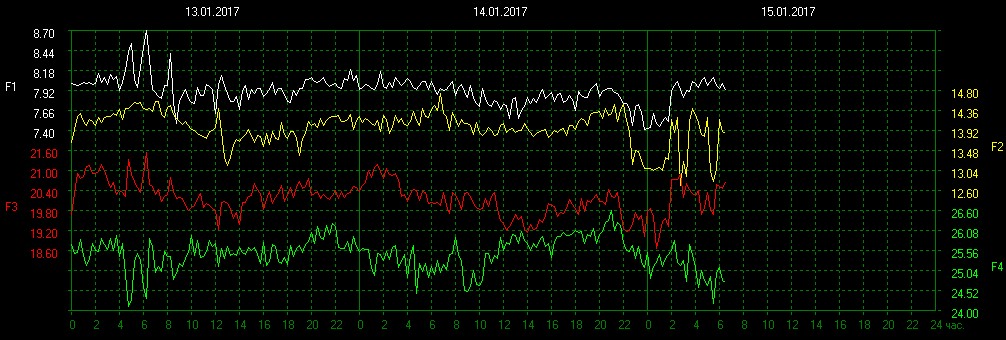
Local time in the graph below is expressed in hours of summer daylight saving time (TLDV). TLDV = UTC + 7 hours.

CLICK ON THE IMAGE BELOW (OR THE LINK ABOVE) TO SEE THE LATEST PLOTTED IMAGE!

TOMSK-example
VLF MONITORING STATION  (CUMIANA (TO), NW Italy, south Europe.)

Live data from The picture below shows 30 hours, and values are detected every 150s.

CLICK ON THE IMAGE BELOW (OR THE LINK ABOVE) TO SEE THE LATEST PLOTTED IMAGE!

last-plotted

Four traces are reported:

  • Geophone trace, it shows the average and peak signals coming from the geophone sensor, in 1-20 Hz range.
  • ULF noise 10 Hz, it shows the medium value between 3 and 30 Hz.
  • ELF noise 100 Hz, it shows the medium value between 30 and 300 Hz.
  • 2th SR frequency, it shows the frequency of second Schumann resonance (in Hz).
SCHUMANN FUNDAMENTAL AND MUSICAL TUNING

The idea that some 432 enthusiasts put on the table:

PYTHAGOREN @ A4=432Hz → C4=256Hz → 8Hz Fundamental.
In comparison: 12-TET @ A4=432Hz → C4=256.87Hz → 8,03Hz Fundamental.

In most sources an average of 7.8Hz is mentioned for the Schumann Fundamental. So, if we tune to C4=256Hz
(C-1=8Hz), would we then still be “in tune” with the Schumann Resonance Fundamental of 7.8Hz?

The 0.2Hz difference (in comparison with 8Hz) does not seem that much of a difference, but, when we look at 7.8Hz (C-1) and calculate C4 (the tone exactly 5 octaves above), we end up with C4=249,6Hz, a difference of 6.4Hz !!! with 256Hz. That is a rather large difference when it comes to tuning. 

Other online sources do mention other frequencies when it comes to the fundamental: 7.83Hz or 7.86Hz. With only a decimal difference of .03Hz or .06Hz the result of the tone Frequency 5 octaves above, would generate a significant difference:

7.80Hz fundamental → C4=249.60Hz → A4=419.77Hz (12-TET) / A4=421.19Hz (Pythagorean)
7.83Hz fundamental → C4=250.56Hz → A4=421.39Hz (12-TET) / A4=422.82Hz (Pythagorean)
7.86Hz fundamental → C4=251.51Hz → A4=422.99Hz (12-TET) / A 4=424.42Hz (Pythagorean)
8.00Hz fundamental → C4=256.00Hz → A4=430.54Hz (12-TET) / A4=431.99Hz (Pythagorean)
8.03Hz fundamental → C4=256.89Hz → A4=432Hz (12-TET) / A4=433.5Hz (Pythagorean)

CONCLUSION …

Using the Schumann Resonance as “solid evidence” to “prove” the validity of A4=432Hz as concert pitch is rather “circumstantial” (some would say “pseudo-scientific”).

HOWEVER, since resonance is in flux, then it is reasonable to say the fundamental “can be”, “could become”, and “might have been” at exactly 8Hz at various (short) moments in time. So, from “moment to moment” using A4=432Hz might make your music “in sync” with the Schumann Resonance fundamental frequency, with “Earth’s vibratory nature” … and “out of sync” at other moments too.

And so does 440Hz at moments … when in flux the pitch rises …

12-TET: A4=440Hz → C4=261.63Hz → 8.18Hz fundamental.
PYTHAGOREAN: A4=440Hz → C4=260.74Hz → 8.15Hz fundamental.

As you can see, 8.18Hz and 8.15Hz in the examples above is well within the flux range of the Schumann Resonance Fundamental. You could say that 440Hz is equally valid as Concert Pitch as 432Hz if the Schumann Resonance Fundamental is “leading proof”. 😉


REFERENCES:


Creative Commons License

Blog » Concert Pitch vs Tuning System

Reading Time: 5 minutes September 27, 2013

CONCERT PITCH vs TUNING SYSTEM

(A COMMON MISUNDERSTANDING)

A common misunderstanding when it comes to 432-Tuning is that many people do not understand the difference between “concert pitch” and “tuning system”. If you do not know the difference, then please, read this first!

In short:
Concert Pitch 432Hz = using reference tone A4=432Hz to tune to, without Temperamental specifications.
432-Tuning = using the reference tone A4=432Hz in combination with Pythagorean Temperament (or variation).


WHY IS ONLY CHANGING THE CONCERT PITCH NOT ENOUGH?

Well, when a piece was recorded using for example the 12-Tone Equal Temperament (12-TET, the present standard), pitching the whole piece down with -0.3166… cents is not sufficient. The “intervallic” relationship between the tones has not changed, when a change of Concert Pitch is implemented. Even though the A would then be in tune with 432-Tuning, the other 11 tones are still off pitch. The Temperament is still Equal Temperament. 

EXAMPLE: 12-TONE EQUAL TEMPERAMENT (the present standard)

In twelve-tone equal temperament, which divides the octave into 12 equal parts, the width of a semitone, i.e. the frequency ratio of the interval between two adjacent notes, is the twelfth root of two:

\sqrt[12]{2}=2^{\frac{1}{12}}\approx 1.059463

There are many other Musical Temperaments (most more complicated then 12-TET), using various mathematical formulas to create other ratios then 1.059463. The most know Temperaments are the: Pythagorean TuningMeantone TemperamentWell TemperamentJust Intonation and Five-Limit Tuning.

If your intentions are to use the 432-TUNING SYSTEM (not just 432Hz as Concert Pitch) you also need to implement The Pythagorean Temperament.

432 TUNING – USING THE PYTHAGOREAN TEMPERAMENT

PYTHAGOREAN TEMPERAMENT
The Pythagorean temperament is been noted as the only correct temperament when we talk about 432-tuning. The Most Harmonic Numbers concept uses this method.

Pythagorean tuning is a system of musical tuning in which the frequency ratios of all intervals are based on the ratio 3:2,  a ratio from the harmonic series. This ratio, also known as the “pure” or perfect fifth, is chosen because it is one of the most consonant intervals and easy to tune on by ear.

The Pythagorean Temperament is thus one of the oldest known “Just Intonation” (3-limit) Temperaments.

More information: Wikipedia

IMPORTANTWhen using the Scientific Pitch (C4=256Hz) and you wish A4 to be 432Hz as well, then there are NO alternatives for the Pythagorean Temperament (and variations on it)! Any other temperament used with C4=256Hz, will not result in A4=432Hz but by example with 12-TET in A4=430.5Hz (430.53824925657256Hz).

THE BEST ALTERNATIVE IMPLEMENTATION OF THE PYTHAGOREAN TEMPERAMENT:

TWELVE TRUE FIFTHS TUNING” (BY MARIA RENOLD)
Graham H Jackson explains this tuning system on his web site as follows: 

“For the “twelve true-5ths tuning”: you first set C at 256 Hz. Then you tune the 7 “white keys” by the circle of 5ths, using however natural 5ths. Then you divide the octave at C exactly in half (which can be done handily with a special tuning fork), and tune the 5 “black keys” by natural 5ths to that F#. You end up with two series of natural 5ths–one of 7 notes and one of 5 notes, linked by an “unnatural” interval of an augmented 4th (which is actually the same augmented 4th found in the equal-tempered system).” [ Read More ] ►

OTHER ALTERNATIVES FOR THE PYTHAGOREAN TEMPERAMENT?

Within the “432-Tuning community” there are those who favor other temperaments due to certain “limitations” of the Pythagorean Temperament, or simply because they prefer the usage of other perfect intervals (like a perfect Third) over the Perfect Fifth. If you could still call these methods of tuning “432-Tuning” is questionable (see blog “Concert Pitch” vs “Tuning System“).

Most popular alternative temperaments (not based on Perfect Fifths) used in combination with A4=432Hz are:

JUST INTONATION

In music, just intonation (sometimes abbreviated as JI) or pure intonation is any musical tuning in which the frequencies of notes are related by ratios of small whole numbers. Any interval tuned in this way is called a pure or just interval. The two notes in any just interval are members of the same harmonic series. Frequency ratios involving large integers such as 1024:927 are not generally said to be justly tuned. Just intonation is the tuning system of the later ancient Greek modes as codified by Ptolemy. More information: Wikipedia | XenHarmonic

FIVE-LIMITED TUNING (diatonic scale)

Five-limit tuning, or 5-limit tuning is a method to obtain a justly tuned musical scale. The frequencies of the notes of such a scale are obtained by multiplying the frequency of a given reference note (the base note) by powers of 2, 3, or 5, or a combination of them. More information: Wikipedia | XenHarmonic

FIBONACCI + CONCERT PITCH A4=432Hz

The clearest demonstration of Fibonacci being represented in music is seen in scales. 13: the Octave is made of 12 chromatic tones plus 1 the octave. A (basic) scale is composed of 8 notes. The 5th and 3rd notes create basic foundation of chords, based off a whole tone that is 2 steps above root tone, which is the 1st note of scale. Ratios found in the first 7 numbers of the Fibonacci series (0, 1, 1, 2, 3, 5, 8) are related to key frequencies of musical notes.
Read More ] ►

POST-PRODUCTION RE-PITCHING

CHANGING THE CONCERT PITCH IN POST PRODUCTION

If you would only like to change the concert pitch, then there are two ways to do so.

1) PREFERED OPTION: CHANGING THE SPEED
When you change the speed of a piece of music, both Tempo and Pitch will change. This method is the equivalent of slowing down a turntable. In order to get a -31.667 cents pitch change, you should reduce the speed with -1.818%.

How to: A “2-step” instruction how to change the Concert Pitch with Software.

2) SECONDARY OPTION: CHANGING THE PITCH
When you change the Concert Pitch from 440Hz to 432Hz, you need to pitch the audio-material down with -31.76665363342977 cents or -0.3176665363342977 semitones. If the software or hardware you use only allows you to use round numbers, you can set it to -31 or -32 cents. For electronic music -31 cents might work better (since that music is generally required to be more “punchy”), for acoustic music -32 cents seems to work out best in most cases.

IMPORTANT NOTE: When only changing the pitch and not the tempo, there will be resolution loss, and the high-end sounds might sound “fake”. That’s why option 1 (changing the speed) is the preferred option!

Q: CAN YOU RE-TUNE AND (RE-)TEMPER A COMPLETE SONG AT ONCE?

A: A complete song (1 file, for example .wav or .mp3 file) with various instruments tuned to 440Hz + 12-TET, can NOT be re-tuned to 432-Tuning (432Hz + Pythagorean or related Temperament). 

You can still pitch it -31.667…cents down, so the Concert Pitch changes from 440Hz to 432Hz, but the piece will not be “in tune” with the 432-TUNING SYSTEM, simply because the temperament has not been changed from 12-TET to Pythagorean (as explained at the introduction to 432-Tuning).

IF you have recorded the instruments on separate tracks though, a lot can be done! 

Some instruments that can not change the Concert Pitch and/or Temperament – or might be too hard to intonate when used with another concert pitch and/or temperament then they were designed for – can be re-pitched and (re-)tempered in post production (after recording). This is sometimes the “only option”, specially when working with instruments with tone-holes / valves / pistons (particularly conical wood winds / brass) or those that are made out of one piece (Didgeridoo, Penny Whistle, et cetera), as well as melodic percussive instruments (like Vibraphone, Marimba, et cetera). Unfortunately there is no solution for these (acoustic) instruments when performing live. 

How to: Change Concert Pitch + Temperament with Software

Some online sources proclaim re-pitching music from Concert Pitch A4=440Hz to 432Hz will positively effect the “overtones”. This is not true! [ Read More ] ►

RECORDING IN THE RIGHT PITCH & TEMPERAMENT IS BEST!

Every form of “manipulation” will cause loss of quality to a recorded sound. The better the algorithm used with the software, the smaller the loss. Nonetheless, it is always preferable to tune the instruments you like to record to the right pitch and temperament, if possible.

Some online sources proclaim 432-recorded music has more “Overtones” then 440-recorded music.
This is not true! [ Read More ] ►


Creative Commons License

Blog » 432Hz Tuning basics, how-to …

Reading Time: 6 minutes September 27, 2013

432Hz TUNING BASICS – INTRODUCTION

When you browse the internet for information about “432 Tuning”, you come across various interpretations and rumors on this topic. But, is the argumentation used correct?

If might be useful to read a bit more about the various rumors and myths before we focus on the actual tuning specifications. Therefor I compiled a blog article that shares more information about some the more persistent “claims” often made in 432-related articles, presented as “evidence” to “validate” the 432-tuning concept. To me those claims generally look more like “sales pitches” – (rather then tone pitches 😉 – or a method to appeal to people’s desire for “mystical” and “uber-magical” experiences.

So, if you like to sort out what is of real importance about 432-tuning and what not, you might like reading my article: 
432… WHAT IS RELATED AND WHAT NOT?


432HZ – A SHORT TIME-LINE

Before 432Hz became the “core frequency” of the 432-tuning concept, there was no pitch standard and various other concert pitches were used. One of these concert pitches does has a “connection” with the 432-tuning concept. This pitch of C4=256Hz is called the “Scientific Pitch“, or “Sauveur Pitch” or “Verdi Pitch“. Due to it’s “connection” these historical references will be listed below as well. 

C = 128Hz & 256Hz

18TH CENTURY 
French physicist Joseph Sauveur suggested in 1713 using C4=256Hz as concert pitch. In the years that follow, Ernst Chladni (a leading acoustician in his time), defined C=256Hz as the “scientific tuning” in his textbook on the theory of music. What temperament should be used was not specified, it is thus unclear if 432Hz would actually be used. 

19TH CENTURY 
Italian composer Giuseppe Verdi supported and promotes C4=256Hz for a period of time in the middle and/or late 1800′s. Verdi is said to have supported the French pitch standard (Diapason Normal) of 435Hz as well, but NOT 432Hz in particular. What temperament should be used was not specified by Verdi.

1921
Rudolf Steiner (the founder of Anthroposophy) mentioned C=128Hz, representing the “Sun” during one of his lectures. He did not specify the temperament to use, nor did he mention 432Hz.

1981
Hans Cousto discovers the “original frequency” of the sun (32.312,52Hz) and calculates its 8th lower octave to 126,22Hz. 

A = 432HZ

1985
Maria Renold publishes the first edition of her book “Intervals, Scales, Tones and the Concert Pitch 128 Hz” — a book based on Rudolf Steiner’s suggestion of using C=128Hz. This is one of the better documented tuning concepts called “the Scale of Fifths” where both 256Hz and 432Hz appear “side-by-side”.

1988
The Schiller Institute (the organization of activist Lyndon H. LaRouche) and Dr. Jonathan Tennenbaum insist that 256Hz is the correct reference frequency (middle C), that consequently sets A4 to 430.5 cycles (12-TET) and 432 cycles (JI / Pythegorean Temperament) and associate the frequency of 432Hz with the name “Verdi Tuning” (perhaps not a good “choice”: Verdi supported 256Hz and 435Hz, not 432Hz in particular.

1992
The first issue of “Fidelio Magazine” got published by the Schiller Institute together with LaRouche’s own political magazine “Executive Intelligence Review” (Volume 15, Number 32) from 1988, are the principal sources that “triggered” the entire 432Hz campaign. The articles “The Foundations of Scientific Musical Tuning” and “Revive Verdi’s tuning to bring back great music” are both available online.

2000
Ananda Bosman publishes his article “Universal Dances: A Musical Congruence towards the Global Song of the Omega Revolution” after reading ‘classical musicians Jonathan Tennenbaum’s essay on 432Hz tuning’ (“The Foundations of Scientific Musical Tuning” from “Fidelio Magazine” mentioned above), founding a new music trend first envisioned by him in 1997. The purpose is to “implement a harmonic music revolution in rave culture, using 8Hz and harmonic tuning in equal tempering.”

2007
Brian T Collins starts the Omega432 website. He strongly supports the Maria Renold Temperament “Scale of Fifths” (see Roel’s World article).

2011
Jamie Buturff makes a few videos and publishes them on YouTube, advocating a “Pythagorean” scale where A4=432 Hz. Jamie Buturff introduces a multiplication table of doubles and triples of the number 1, called “The Most Harmonic Numbers/Frequencies” (see Roel’s World article) which lists all the tone-numbers of the chromatic scale in “Pythagorean” tuning.

2013
Eric Rankin publishes his “Sonic Geometry: The Language of Frequency and Form” video, where he introduces the “Factor 9” Grid tuning of tones, which is nothing more than overtones 14 to 28 from the harmonic series (27 omitted), having as 1/1 the many-fold doubling of 9 Hz: 126. In hist first video several frequencies are missing in his grid though … more information about his video in the Roel’s World article “432Hz & the Factor 9“.


432 TUNING IS:

What a Tuning System is: Concert Pitch + Musical Interval System / Temperament
(If you do not know these terms, then please read this first!)

A Concert Pitch WITHOUT a Temperament defined is NOT a Tuning System. For more information about the difference between Tuning System and Concert Pitch, read this blog: “Concert Pitch vs Tuning System“.

CONCERT PITCH:

  • A4=432Hz 
  • C4=256Hz (Scientific Pitch) 

IMPORTANTWhen using the Scientific Pitch (C4=256Hz) there are no proper alternatives for the Pythagorean Temperament! Any other temperament used with C4=256Hz, will not result in A4=432HzThe difference between C4=256Hz and A4=432Hz is 905.8650025961624 cents. This interval is known as the “Pythagorean major sixth” (ratio 27/16).

For example if C4=256Hz, then:

  • (5-Limit) Just Intonation: A4=426.6Hz (426,666∞Hz)
  • Werckmeister I: A4=427.6Hz (427.5650147473363Hz)
  • Werckmeister II: A4=428.5Hz (428.45503625389244Hz)
  • Werckmeister III: A4=430.5Hz (430.53896460991314Hz)
  • 12-Tone Equal Temperament: A4=430.5Hz (430.53824925657256Hz)

According to John Charles Francis Bach might have used various temperaments that (in relationship with C4=256Hz) would set A4 to: 426.6Hz, 428.5Hz, 429.8Hz, 430.3Hz, 432hz and 433.8Hz. The temperaments mentioned by J. C. Francis created by Bach were based on a combination of Perfect Fifths and tempered Fifths (1/3 syntonic comma).

MUSICAL INTERVAL SYSTEM
12 tone closed system. 

PYTHAGOREAN TEMPERAMENT
The Pythagorean temperament (stacking of perfect fifths) is been noted as the only correct temperament when we talk about 432-tuning. The Most Harmonic Numbers concept is based on it, as is Maria Renold’s “Scale of Fifths”.

Pythagorean tuning is a system of musical tuning in which the frequency ratios of all intervals are based on the ratio 3:2, “found in the harmonic series.” This ratio, also known as the “pure” or perfect fifth, is chosen because it is one of the most consonant intervals and easy to tune on by ear.

More information: Wikipedia

RECOMMENDED (ALT.) INTERPRETATION OF THE PYTHAGOREAN TEMPERAMENT:

TWELVE TRUE FIFTHS TUNING” – RENOLD I & II (BY MARIA RENOLD)
Graham H Jackson explains this tuning system on his web site as follows:
 

For the “twelve true-5ths tuning”: you first set C at 256 Hz. Then you tune the 7 “white keys” by the circle of 5ths, using however natural 5ths. Then you divide the octave at C exactly in half (which can be done handily with a special tuning fork), and tune the 5 “black keys” by natural 5ths to that F#. You end up with two series of natural 5ths–one of 7 notes and one of 5 notes, linked by an “unnatural” interval of an augmented 4th (which is actually the same augmented 4th found in the equal-tempered system).” 

RENOLD I | RENOLD II ] ►

ALTERNATIVES FOR THE PYTHAGOREAN TEMPERAMENT?

Within the “432-Tuning community” there are those who favor other temperaments due to certain “limitations” of the traditional Pythagorean Temperament, or simply because they prefer the usage of other perfect intervals (like a perfect Third) over the Perfect Fifth. If you could still call these methods of tuning “432-Tuning” is questionable (see blog “Concert Pitch” vs “Tuning System“).

Most popular alternative temperaments (not based on Perfect Fifths) used in combination with A4=432Hz are:

JUST INTONATION
In music, just intonation (sometimes abbreviated as JI) or pure intonation is any musical tuning in which the frequencies of notes are related by ratios of small whole numbers. Any interval tuned in this way is called a pure or just interval. The two notes in any just interval are members of the same harmonic series. Frequency ratios involving large integers such as 1024:927 are not generally said to be justly tuned. Just intonation is the tuning system of the later ancient Greek modes as codified by Ptolemy. More information: Wikipedia | XenHarmonic

FIVE-LIMITED TUNING (diatonic scale)
Five-limit tuning, or 5-limit tuning is a method to obtain a justly tuned musical scale. The frequencies of the notes of such a scale are obtained by multiplying the frequency of a given reference note (the base note) by powers of 2, 3, or 5, or a combination of them. More information: Wikipedia | XenHarmonic

FIBONACCI + CONCERT PITCH A4=432Hz
The clearest demonstration of Fibonacci being represented in music is seen in scales. 13: the Octave is made of 12 chromatic tones plus 1 the octave. A (basic) scale is composed of 8 notes. The 5th and 3rd notes create basic foundation of chords, based off a whole tone that is 2 steps above root tone, which is the 1st note of scale. Ratios found in the first 7 numbers of the Fibonacci series (0, 1, 1, 2, 3, 5, 8) are related to key frequencies of musical notes.
Read More ] ►

A VARIANT I SOMETIMES USE DUE TO INSTRUMENT LIMITATIONS

MOST HARMONIC NUMBERS – TONIC CONCERT PITCH CONCEPT
The MHN TCP variant is a (partly modified) implementation/interpretation of the 432-Tuning concept. It’s made for those instruments that can not be “Micro-tuned” (From Equal Temperament to Pythagorean). 
Read More ] ►


PITCHING … HOW TO?

A common misunderstanding about “432 Tuning” is the idea that one would simply change the concert pitch from 440Hz to 432Hz (-8Hz, -0.31766… cents). As mentioned in the beginning of this blog, “432-Tuning” and “Concert Pitch A4=432Hz” is not the same thing. [ “Concert Pitch vs Tuning System” ]►

How to change the Concert Pitch + Temperament of existing audio files? [ Read More ]

How to change the Concert Pitch only of existing audio files? [ Read More ]

REAL-TIME 432 AUTO-PITCHING MUSIC PLAYERS

For all who have some difficulties working with sound editors, maybe a music player with real-time pitch control provides the solution. If you just like to listen to your music from your PC or Laptop (Windows, OS X and a Linux alternative), iPhone and Android, using some applications might provide the easiest method to get in tune with Concert Pitch 432

[ Read More ]


Creative Commons License

Blog » 432-Tuning Foreword

Reading Time: 9 minutes September 27, 2013

432-TUNING: INDEX

The information in the blog articles contains mathematical, scientific and philosophical concepts, historical references and most important the practical implementation in relationship to music for listening and dancing, not for meditation and/or ‘healing’. You can read my reason to omit from writing about meditation and healing here: 432Hz … a “special” frequency?.

If you discover some mistake(s) I made in my article(s), then please let me know, so I can fix it. Thanks!

EVIDENCE: DO YOU REALLY NEED IT?

If you have been browsing the web for a while searching for 432-related articles, you must have come across many blogs with similar information, proclaiming the validity of 432-Tuning by providing “evidence” (often rather speculative and hardly ever supported by proper source references). On my blog I will go deeper into some of the claims to provide a bit more clarity about this all.

But, before I do I would like to ask you a question: “Evidence, do you really need it?“.

To me the only correct answer to this question is NO!

Why you might think? Well, what makes us musicians, composers, producers and directors (and any artist for that matter – including painters, sculptures, poets, et cetera) different from the rest of the people? We are creative minds that use our art to express ourselves! We like to share our “view”, our “emotions” and our “understanding” of the world around us with others. What we do is per definition “subjective” and personal. Right?!

So, wouldn’t it be enough to say: “It’s because that’s how it sounds best to my ears, that’s what makes me feel good.” and isn’t that as a fair enough a reason and explanation for people that would ask you “Why 432Hz?”.

If you are truly a creative mind, then you don’t need evidence for what you do. You don’t need an explanation or proof. You simple have to “create” and share your creation with the world. Providing pseudo-scientific “mumbo-jumbo” and fairy tales will not make your “creation” any better or more “important”.

So, why would you share an article online with circumstantial evidence, speculations, misinterpretations of historical and scientific facts en sometimes even fiction? Are you really proving a point by providing unfunded claims, pseudo-scientific gibberish and historical gobbledegook? 

My suggestion: “Just follow your ears (and heart) and let the music speak for itself.

WHAT HAVE I BLOGGED ABOUT?

Click on the subject headers below to read more about it …

► 432 TUNING BASICS
Information about the Concert Pitch and Temperament used.

► CONCERT PITCH VS TUNING SYSTEM
A common misunderstanding when it comes to 432-Tuning is that many people do not understand the difference between “concert pitch” and “tuning system”. If you do not know the difference, then please, read this first!

► 432Hz … WHAT IS RELATED AND WHAT NOT?
On many web sites and blogs about 432-Tuning various presumed relationships between musical tuning and the presence of number 432 in other fields are shared to validate 432-Tuning. In this article I will to take a closer look at the number 432 and those proclaimed relationships.

MYTHS
There are various stories (myths) going ’round that have no historical or scientific value in validating the 432-tuning concept. These fictive and/or pseudo-scientific stories do more harm then good to the credibility of the 432-tuning concept:

MYTH ► A4=432HZ (OR C4=256HZ) WAS THE STANDARD
MYTH ► 432HZ AND THE SPEED OF LIGHT
MYTH ► BOB MARLEY, MOZART, PRINCE … 432 ARTISTS?
MYTH ► GOEBBELS’ RESPONSIBILITY FOR THE PITCH CHANGE FROM 432HZ TO 440HZ

► VERDI AND CONCERT PITCH 435Hz & 432HZ
A short article about Giuseppe Verdi’s support for the “Diapason Normal” (the French pitch of A4=435Hz) and his reference to 432Hz.

► 432-TUNED MUSIC HAS MORE OVERTONES?
Lower pitches can potentially produce more overtones within our ranges of hearing. But, will the change of the Concert Pitch from 440Hz to 432Hz really produce a noticeable difference in overtones? Why does the timbre of an instrument changes with the change of the Concert Pitch?   

► 432Hz … WHY USING A LOWER PITCH?
There would be various subjective reasons I could give, like that it sounds and feels better to me, but that might just be a matter of taste … I could also quote various authors that shared philosophical and/or “spiritual” point of views, but you could set that aside as a form of belief, superstition or religion … or even “pseudo-science” … right? So, I will share some general information about sound, vibration and resonance in this blog article and will try to explain what possible results can be when changing the pitch of an instrument.

► 432Hz AS INTERNATIONAL CONCERT PITCH? ONLY IF …
One aspect in the whole “432Hz tuning debate” is generally overlooked, but – in my opinion – of the utmost importance. If we want to implement a change in Concert Pitch – from 440Hz to 432Hz – then there is one very important aspect we have to keep in mind: instrument design.

► THE ASTRONOMICAL ZODIAC SCALE
This is a Musical Temperament by Roel Hollander. I is based on the the number of days of the Earth’s orbit when the Sun is between Earth and any one of the zodiacal constellations. Since each constellation is of different size and because the ecliptic passes through larger or smaller portions of each constellation and the speed of the Earth around the Sun varies along its orbit, the Sun is between the Earth and each zodiacal constellation for varying periods. When using the “Scientific Pitch” A4 becomes 431.8Hz.

► RENOLD 1 – THE SCALE OF FIFTHS BY MARIA RENOLD
I came across the “Twelve True-Fifths Tuning” concept (by Maria Renold), this concept is a great alternative implementation of the Pythagorean Temperament. In this blog article I will explain the concept.

► RENOLD 2 – HE SCALE OF FIFTHS BY MARIA RENOLD
After Maria Renold created – what later would be known as the “Renold-I” temperament – she continue experimenting and developing her concept. The result is what is known as the “Renold-II” (also known as “Middle Tuning” temperament.

► PYTHAGOREAN TEMPERAMENT or the “MOST HARMONIC NUMBERS (MHN) CONCEPT”
This concept brought to my attention by Jamie Buturff and represents the Pythagorean Temperament. In this article I share some thoughts about two implementations of this concept, the “Scientific Concert Pitch” implementation and the “Tonic Concert Pitch” implementation (an alternative I have used in the past).

► FIBONACCI AND CONCERT PITCH A4=432HZ
The implementation of the he Fibonacci Sequence in the usage of ratios when creating a Temperament. In this blog article I will explain how this is done.

► 432 & THE “FACTOR 9”
The Factor 9 concept has been explained in a video called “Sonic Geometry: The Language of Frequency and Form” (by Eric Rankin).  

► 432HZ & THE SCHUMANN RESONANCE
On various sites that provide information about 432-tuning (Concert Pitch A4=432Hz or C4=256Hz + Pythagorean Temperament), the “Schumann Resonance” fundamental (at approx. 8 Hz) is often being put “on the table” as evidence: “8Hz is 5 octaves below C4 = 256Hz”. HOWEVER, is it correct to state that there is a relationship between the Schumann Resonance and concert pitch A4=432Hz?

► 432HZ & CYMATICS
Cymatics is the study of visible sound and vibration. Typically the surface of a plate, diaphragm, or membrane is vibrated, and regions of maximum and minimum displacement are made visible in a thin coating of particles, paste, or liquid.

► 432HZ & 256HZ IN TONE AND COLOR
In one of my other blogs “Sound & Light (colour)”, I wrote something about the relationship of Sound and Light (color in particular). It is important to understand what Sound and Light have in common and how they differ. Sound and Light do relate, but are not the same.

► REAL-TIME 432HZ AUTO-PITCHING MUSIC PLAYERS
For all who have some difficulties working with sound editors, maybe a music player with real-time pitch control provides the solution. If you just like to listen to your music from your PC or Laptop, iPhone and Android, using one of the applications listed below will provide the easiest method to get in tune with Concert Pitch 432!

► REAL-TIME 432HZ AUTO-PITCHING VIDEO PLAYERS
While using sound editors is still something relatively easy, editing videos is not. There for using a video player with real-time pitch control could provides the solution. If you just like to listen to your music from your PC or Laptop, iPhone and Android, using one of the applications listed below will provide the easiest method to get in tune with Concert Pitch 432!

► EVO 432 MUSIC SERVER
The 432 EVO is a high-end music server competing with the best products (think Aurender and Lumin) created by “Klinkt Beter” (Dutch for: “Sounds Better”) located in Wetteren, Belgium. It adds live 432 Hz processing not available anywhere else. The 432 Hz processing is artefact free and is build on world class DSP. There’s no resolution or detail loss!

HOW TO: CHANGING THE CONCERT PITCH (POST PRODUCTION) 
A blog about using software and/or plugins to change the Concert Pitch post production. There are various applications (sound/wave editors) and plugins that can be used for changing the Concert Pitch. I am not going to blog about every available piece of software, most applications and plugins work pretty much the same.

► HOW TO: CHANGING THE CONCERT PITCH + TEMPERAMENT (POST PRODUCTION)
A blog about using software and/or plugins to change the Temperament post production. There are various applications (sound/wave editors) and plugins that can be used for changing the Temperament. I am not going to blog about every available piece of software, most applications and plugins work pretty much the same.

► 432HZ: DAWS, VIRTUAL INSTRUMENTS, PLUGINS & TOOLS
In this blog article I will place various information about 432Hz virtual (software) instruments, plugins, packages and more, for various DAWs (Logic Pro, Ableton Live, Melodyne), as well as useful software tools (such as Scala).

► 432HZ INSTRUMENTS
At present time there are only a relatively small number of instruments specially designed for Concert Pitch 432Hz. In this article I will share little bits of info and links about them.

► 432HZ SAXOPHONE REDESIGN LOBBY
I started this 432Hz Saxophone Redesign Lobby in December 2011, without much success. All companies I wrote e-mails and letters to did not seem to be interested. But In December 2014 – 3 years later – the 432Hz Sax was a fact, thanks to Enrico Marchioro and Borgani Saxophones.

► BORGANI 432 SAX
For saxophonists, composers (that like to compose for saxophone) and 432-fans in general this is great news. Till now the Saxophone could not be used optimally when using 432Hz as Concert Pitch due to some intonation issues. But, with the Borgani 432 Sax this might change!

MY VIEWS ON 432-TUNING?
  • 432Hz tuned music does not sound better then 440Hz tuned music per say. I have heard horrible sounding 432Hz-tuned music and amazing productions in 440Hz as well. At the and the musicianship, the hardware and software used and the skills of the sound engineer(s) are still key factors. Also not all music styles sound as well in 432Hz as they do in 440Hz. Some styles of music require more “punch” or “aggression” and thus to raise the pitch would be more “logical” then to lower it. For some music styles and recordings – in particular with acoustic instruments – 432Hz does seems to sound better though!!!
  • I am supporting the introduction of A4=432Hz as an official international recognized pitch, but I do not wish to “replace” the 440Hz standard with it. A “standard” should never “limit” people’s freedom. The view that only one pitch and one temperament should be used is one of narrow mindedness. Besides that, some instruments do not handle a pitch change very well. So in order for instrument manufacturers to start producing 432Hz tuned instruments, the 432Hz pitch needs to become an official standard first.
  • I am aware that the standards were introduced so you could practically play in any place with any other musician or formation without having to worry about tuning issues. I do question this reasoning though:

First of all: the majority of artists does not “job-hop” every other day. 

Secondly: the “selection process” with whom you work with takes place anyway (based on skill, musical preferences, experience, et cetera). Adding an additional factor (concert pitch of the instruments you use) to it, would not really over-complicate this matter (as long as instruments are available for the particular pitch). We live in times where communication is no longer a “limiting” factor. Many musicians use various tools to communicate, so when “calling” someone to ask about a possible musical collaboration you could simply include the question “We play use concert pitch xxxHz, can you handle that?”.

WHO AM I AND WHAT DO I DO WITH 432?
  • I am a musician, composer and sound engineer. I have studied a few years at the Music Academy (conservatoire) in Zwolle, The Netherlands, but did not finish my study and have no degrees whats however. I am for a big part a “self-made man”. I am NOT a scientist or specialist in any field and if that’s not “good enough” for you, then so be it. I do not proclaim knowing “the truth”, but “my truth” might be yours as well … do read the disclaimer on this blog for additional details. 
  • I have been actively reading, researching, experimenting and producing 432-pitched / 432-tuned music since the beginning of 2011. I started blogging about this subject in 2014.
  • The music that I have released using 432Hz (or other Concert Pitches) were pitched in post-production. The reason for this is that the instrument I play (the saxophone) does not handle the change in pitch (and temperament) very well, and thus require me to record in 440, the Concert Pitch my instruments were designed for.
  • All music produced before I came across the 432-concepts was released using the 440Hz standard. Even after my first 432Hz release I have continued using 440Hz, (not all colleagues I work with share my interest in 432-tuning). 
  • Only with some music I have released I have used Concert Pitch 432Hz / 432-Tuning, in particular using the “Most Harmonic Numbers Tonic Concert Pitch” concept. This concept is an alternative implementation of the “Most Harmonic Numbers” concept that itself was based on the Pythagorean Temperament. 
  • I have experimented with various software and plugins, using midi and wave, exploring various options and temperaments to hear, feel and put to practice most of the 432-tuning related info I share on this blog. Some of those tools used are mentioned in some blog articles.
  • I do NOT perform live using Concert Pitch A4=432Hz. As mentioned earlier the instruments I use do not work very well with 432Hz as Concert Pitch. Perhaps one day a saxophone will be designed that is in-tune with 432-Tuning.

! ADDITIONAL FOOTNOTE !
Unfortunately some people have not been able to respect a “difference of opinion” and have used rather insulting and demeaning words to describe my person online. It is OK to disagree and criticize the content of my blog, I don’t proclaim knowing the truth. We are all unique and have the right to have our own view on things.

But, if you wish to “judge” me then you should make an effort to learn to know me first, don’t you think? So, I would like to ask you kindly to think about this first before you write anything about my person. Thank you!

If you have any questions or comments, then feel free to send me a message or look me up on Facebook.

One or more articles on this blog have been used as reference for various online 432-related articles. The writers of the following articles have been so kind to make note of that (click on their names to visit their articles):

Derek GedneyFreek ZwanenbergLynda Arnold (ask.audio)Michael LevyDr. Coreen MorsinkFrederick Vanden Poel (Klinkt Beter)Gianmaria GriglioKosmas Lapatas, …

If you have mentioned me and/or provider a source reference to my blog, feel free to let me know, then I’ll add your article to the list as well.


Creative Commons License

Blog » Most Harmonic Numbers (MHN) a.k.a. “Pythagorean Tuning”

Reading Time: 5 minutes September 27, 2013


“MOST HARMONIC NUMBERS” (MHN) CONCEPT, (BETTER KNOWN AS THE PYTHAGOREAN TUNING)

The list of frequencies in this article form the Pythagorean Tuning (or 3-limit Just Intonation) – more about that later in the article – and has also been shared online by Jamie Buturff as “Most Harmonic Numbers” (MHN), around the time I wrote this article (2013). He referred to Stanford University as it’s source of origine.

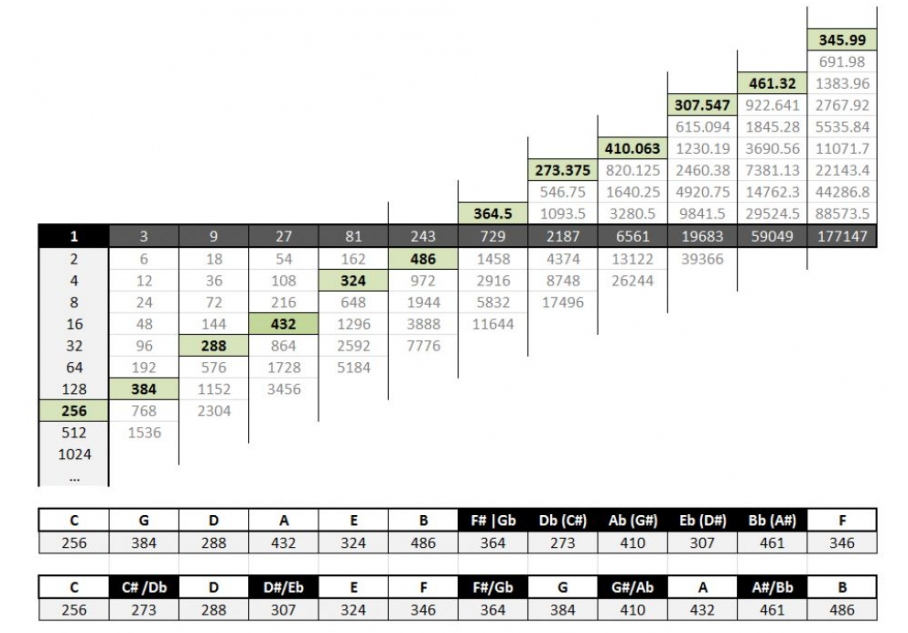
The reason why it was coined “Most Harmonic Numbers”, was mostly due to the perfectly rounded numbers that it generated when applying the 3:2 ratio, as seen in the table below: from the grey horizontal line downwards, the result of doubling. When you double an integer (whole number, for example 1, 3, 9, et cetera), one never ends up with a decimal number. From a mathematical, music theoretical and ecstatic point one could say all those numbers are “most harmonic”. The interval between the tones are a Just Fifth (3:2) apart, one of the most important intervals due to it’s melodic and harmonic function in music.

One has to keep in mind though, that even though a series of numbers might look perfect, or mathematical formulas seem flawless, that that does not mean it sounds well. With other words: MUSIC = MATH and MATH = SOUND … but SOUND MUSIC. More about that later in this article.

MHN RELATIVE TO TWELVE-TONE EQUAL TEMPERAMENT:

The intervals between the tones when calculated using the Pythagorean Perfect Fifth (ratio 3:2) and those calculated using the 12-TET method are rather different. Below a table that displays the modifications required when using the Most Harmonic Numbers in comparison with 12-TET at Concert Pitch A4=440Hz.

TONESHMN FREQUENCY (Hz)CENT CORRECTION
DO C512 -37.6312241210787 
SI / TIB486-27.855595894044
 Bb / A#461.320
-18.0837059915098 
LAA432-31.7666536334292
 Ab / G#410.063
-21.9907990325915 
SOLG384-35.6747298650793 
 Gb / F#361.500
-25.8996731339595
FAF345.990-16.1266721682703
MIE324-29.8139799005726 
 Eb / D#307.547
-20.0360353716339 
RED288-33.7230226885739 
 Db / C#273.375
-23.948955024014 
DOC256 -37.6345327289834 

The cent correction listed above, is the amount of cents (not percents!) difference between the frequencies of the tones according to C4=256Hz (concert pitch) 12-TET (temperament), and what the tones when using the the Most Harmonic Numbers concept should be.

In the table above we find the following columns:

  1. Solfeggio Syllables (not the “Ancient Solfeggio Frequencies“).
  2. Tone names.
  3. Most Harmonic Frequency (between C4 and C5).
  4. Cent correction (in comparison with 12-TET under concert pitch A4=440Hz)

Another way to visualize some of the tones of the “Most Harmonic Numbers” table can be seen in the video by John F. Sase below:

MOST HARMONIC NUMBERS – Scientific Concert Pitch

The MHN-SCP concept works for instruments that use micro-tuning, as well as fret-less string instruments and trombone (a brass/wind instrument without buttons/tone-holes/pistons), using Concert Pitch C4=256Hz (Scientific Pitch)

“Scientific pitch is an absolute pitch standard that sets middle C (or C4) to 256 Hz. It was introduced in the early 20th century. A4 on this scale is approximately 430.5 Hz, noticeably different from the current concert pitch standard of 440 Hz. It is no longer used by concert orchestras but is still sometimes favoured in scientific writings for the convenience of all the octaves of C being an exact round number in binary counting. The number to the base ten, (256)10, is equal to (100000000)2 to the base two. More usefully, the octaves of C remain a whole number all the way down to 1 Hz (in either counting system).
— Wikipedia

IF “micro-tuning” is possible with the instruments you use, try to temper (re-tune/pitch) your 12-tone instrument to the following tone-frequencies / cent correction (see colum 3 & 4). Pitching using cents is more accurate then changing the concert pitch using “rounded off” frequencies numbers.

LIMITATIONS OF THE MOST HARMONIC NUMBERS CONCEPT:

Since the 432 “Most Harmonic Numbers” is actually knows as “Pythagorean tuning” (Circle of Perfect Fifths), any “limitations” related to the Pythagorean temperament do reflect on this concept as well. There for I will share some information and thoughts about it. 

Everyone who knows a bit about temperaments, must have read about the disadvantages of the Pythagorean Tuning system. Below some bit’s and pieces of information about the “problems” concerning Pythagorean Tuning.

Pythagorean tuning was a system of just intonation which tuned every note in a scale from a progression of pure perfect fifths. This was quite suitable for much of the harmonic practice until then (See: Quartal harmony), but in the Renaissance, musicians wished to make much more use of Tertian harmony. The major third of Pythagorean tuning differed from a just major third by an amount known as Syntonic comma, which musicians of the time found annoying.

Pythagorean tuning also had a second problem, which Meantone temperament does not solve, which is the problem of modulation, which is restricted because both have a broken circle of fifths. A series of 12 just fifths as in Pythagorean tuning does not return to the original pitch, but rather differs by a Pythagorean comma, which makes that tonal area of the system more or less unusable. 

Pythagorean tuning ignores A♭, and uses only the 12 notes from E♭ to G♯. This, as shown above, implies that only eleven just fifths are used to build the entire chromatic scale. The remaining fifth (from G♯ to E♭) is left badly out-of-tune, meaning that any music which combines those two notes is unplayable in this tuning. In the case of Pythagorean tuning, all the fifths are 701.96 cents wide, in the exact ratio 3:2, except the wolf fifth, which is only 678.49 cents wide, nearly a quarter of a semitone flatter.

In meantone temperament, this effect is even more pronounced (the fifth over the break in the circle is known as the Wolf interval, as its intense beating was likened to a “howling”).

If the notes G♯ and E♭ need to be sounded together, the position of the wolf fifth can be changed. For example, a C-based Pythagorean tuning would produce a stack of fifths running from D♭ to F♯, making F♯-D♭ the wolf interval. However, there will always be one wolf fifth in Pythagorean tuning, making it impossible to play in all keys in tune.

Because of the wolf interval, this tuning is rarely used nowadays, although it is thought to have been widespread. In music which does not change key very often, or which is not very harmonically adventurous, the wolf interval is unlikely to be a problem, as not all the possible fifths will be heard in such pieces.

As you have read, the circle Pythagoras had in mind, is not perfect, it simply doesn’t close.

If I may quote Richard Merrick (www.interferencetheory.com) from his work “Interference – A Grand Scientific Music Theory”:

“Pythagoras found that pitch follows a logarithmic spiral of frequency into infinity. For example, when the last pitch in stack of twelve perfect 5th intervals is transposed down next to the starting tone, there remains a small gap of about a quartertone.”

Al Leone writes in his work “The Totality of God and the Izunome Cross“:

“When you climb the great pyramid of universal diversity and arrive at its apex, at Unity, at God, you can understand how all we see, and all we can’t, could have come from a single frequency – what Susan Alexjander had noted Dr. Larry Dossey as calling the “Great Tone”. And it is Pythagoras’s Cycle of Fifths that we can again thank for this truth. We saw that when you follow it around to complete the Cycle, you don’t return to where you began.”

A MUCH BETTER ALTERNATIVE

If you think about using the MHN SCP concept / Pythagorean Tuning, then I would like to suggest using a tuning system developed by Maria Renold, based upon it. Why? Well, as mentioned earlier in the article, Pythagorean Tuning (and thus the MHN SCP concept) is “flawed” by design: when stacking 12 perfect Fifths you would “overshoot” the Circle of Fifths, the circle does not close. Maria Renold developed a concept that fixed the issues concerning the “wolf interval”, the “false Fifth”. And thus I would recommend using it instead …
Read more ] ►


Creative Commons License